🔮 Exponential View #555: Ukraine’s drone first; the China syndrome; the San Francisco Concensus; slop-timism, McK…
Welcome to our 555th Sunday edition – mark it with 55% off for 24 hours, capped at 55 readers. Don’t miss it. 🔮 Exponential View #555: Ukraine’s drone first; the China syndrome; the San Francisco Concensus; slop-timism, McKinsey cuts jobs & speech-to-reality++An insider's guide to AI and exponential technologies
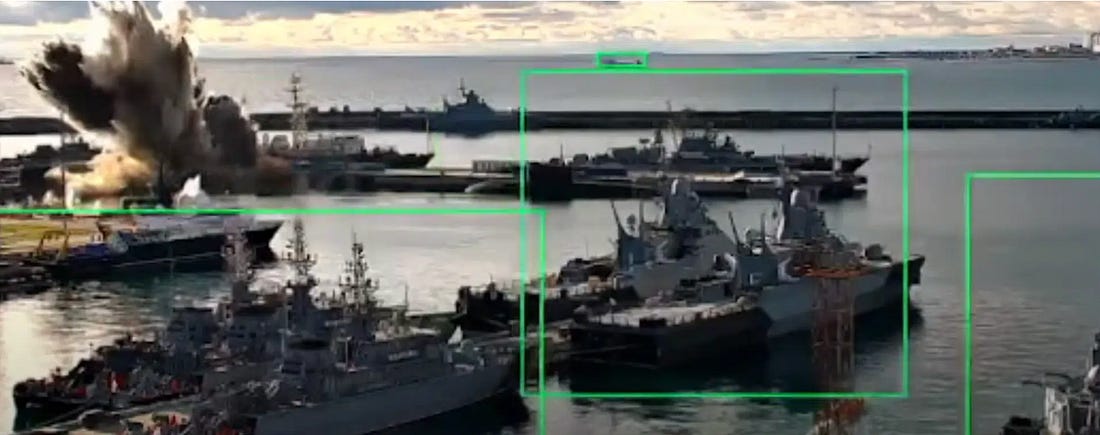
Hi all, Today’s our final Sunday edition of 2025, open to all. From Monday, we move to our holiday schedule – no Sunday editions until 11 January and a pared‑back weekday rhythm. You’ll still hear from us. I’ll host a member‑only 2026 briefing on January 7. If you’re a paying member, you’ll receive the invitation — please RSVP here. (Not a member yet? This is a great time to join.) If you are based in London🇬🇧, please scroll to the bottom of today’s edition where I ask for a favor. Enjoy the reading and happy holidays! Azeem Old hierarchies are collapsingThe Cold War’s defining symbols, the US nuclear carrier and the silent Soviet submarine, represented a clash of industrial-scale superpower might. I explained in my book back in 2021 how the logic was inverting. That inversion is now without doubt. Ukraine’s Sub Sea Baby UUV, costing a fraction of Russia’s $400M Kilo-class submarine, just breached a fortified harbor to strike at point-blank range. Without a Navy, Ukraine has more than “matched” Russia at sea. It changed the accounting, as the Russians need to protect every vulnerability from systems both hard to detect and cheap enough to risk repeatedly. For Moscow, it’s the worst bargain in warfare.
Meanwhile, China’s hypersonic missiles and stealth platforms are pushing US carriers so far offshore that their air wings risk irrelevance. In wargames, “we lose every time,” says one military boss. The carrier has gone from being the Queen, able to reach every corner of the board, to being the King, protect at all costs. No wonder the Pentagon refers to this as “Overmatch.” (More details here.) Where superpowers once competed to build the most imposing platforms, smaller actors now exploit exponential tech to invert the cost-imposition calculus: Ukraine’s drone swarm renders Russia’s Black Sea Fleet obsolete, while China’s A2/AD network negates America’s carrier supremacy. The 20th century’s totems of power are becoming the 21st century’s most vulnerable liabilities. But “drones beat ships” or “cheap beats expensive” isn’t the takeaway. The point is that exponential technologies collapse the old prestige hierarchy. The decisive edge shifts from owning the biggest tchotchkes to building the fastest adaptation loop. See also:
The politics of catching upFor years, extreme ultraviolet lithography (EUV) has been treated as the West’s unassailable hardware moat. It’s often described as the most complex machine ever built, used to print the world’s most advanced chips. See this video primer to understand its importance: 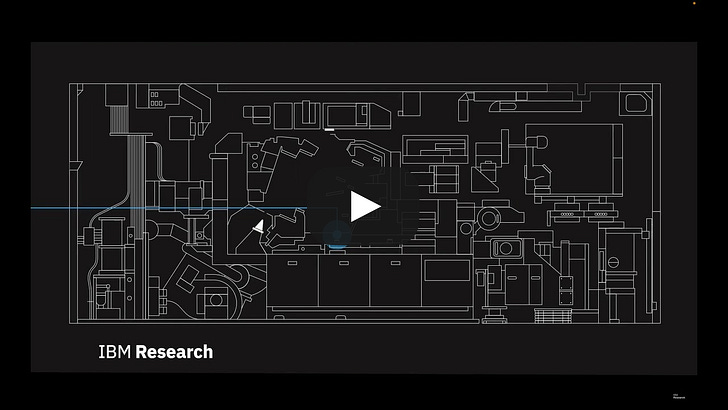 EUV was the one technology Western analysts assumed China could not replicate. After all, ASML, the Dutch firm holding a global monopoly, has shipped zero EUV machines to China since 2019. That assumption is now under strain, as we learn that a Chinese lab unveiled a working EUV prototype in early 2025, with a plan to deploy domestic tools for chip production by 2028–2030. If confirmed, this upends the calendar, which was once anchored in the mid-2030s. Export controls designed to maintain a ten-year buffer may soon look like a fence built five metres behind the finish line… Worth noting, this timeline is not a given. A single ASML EUV tool is built from roughly 100,000 parts supplied by about 5,000 suppliers. Replicating the physics is one thing. But replicating that ecosystem is another. Frontier mass production requires many machines, high uptime, stable yields, and a deep web of optics, light sources, resists, metrology, and replacement parts. Credible skeptics note that China may be salvaging components from older ASML tools or sourcing them through secondary markets. Still, China has repeatedly beaten Western expectations when narrowing supposedly long-lasting technology gaps. EUV has been the West’s last clean chokepoint in compute. If this bottleneck loosens, the idea of chip dominance as a stable geopolitical lever becomes far less certain. See also:
What the Valley believesWhen I visited Silicon Valley in 2023, I noted the following in my reflections at the time:
Two years later, that implicit faith has crystallized into what Eric Schmidt calls the “San Francisco Consensus,” a set of premises that unite those leading the AI development:
While I don’t disagree with these premises, I’d note that the Valley has always rightly believed in exponential improvements and has been repeatedly wrong about where that technology leads. The same technologists who promised the internet would democratize knowledge gave us filter bubbles and platform monopolies. The consensus describes what believers expect to build. It has little to say about what happens next. Eric, too, acknowledges as much. This is where Europe’s skepticism can have value, even if it’s often misdirected. The bitter taste of the platform era left many European founders and policymakers doubtful of Silicon Valley’s claims about technology’s benefits. Fair enough. But equally, it would be a mistake to assume this means AI isn’t powerful – it is. The question is who shapes what it becomes. We need these perspectives to meet and work together more than ever. As Eric says,
See also:
Scaling orbital computeAI’s main scaling wall is energy, both to power chips and to cool them, as I’ve argued many times over. Data centers are no longer background infrastructure; they’re competing for land, power and political attention. As those constraints tighten on Earth, proposals to move compute off-planet are becoming more attractive. Investor Gavin Baker calls data centers in space “the most important thing in the next three to four years.” The benefits are: ~30% more usable solar flux than Earth’s surface under ideal conditions, no weather or atmospheric absorption, “free” cooling via radiators and lasers through vacuum. Of course, there will be engineering obstacles to solve. When batteries started attracting skepticism, the debate fixated on energy density and cycle life. But the decisive factor was manufacturing scale: over three decades, learning curves drove a 97% drop in cost per kWh – this turned batteries, once exotic technology, into universal infrastructure. Orbital compute sits at a similar inflection. The physics largely works but the constraint is industrial scale. If launch costs fall toward ~$200/kg by the mid‑2030s on Starship‑class trajectories¹ and hardware follows comparable learning curves, space‑based compute could go from speculative to strategically viable. Quick takesAI, technology & science:
Markets:
Society and culture:
An ask for our London communityWe’re hunting for an office with 10-12 desks, easy access to meeting rooms, and a flexible, grown‑up environment. Ideally near Great Portland Street, Tottenham Court Road, Bloomsbury or Marylebone. We’re open to partnerships in exchange for space, too. If you have a lead on a spare floor, studio, or a flexible space we can grow into, get in touch. Thanks for reading! 1 “Starship‑class trajectories” means launch profiles made practical by SpaceX’s Starship: very heavy payloads, full reusability, frequent flights, and much lower cost per kilogram to orbit.
|




Similar newsletters
There are other similar shared emails that you might be interested in: