2025 was a big year for this newsletter (and PostHog).
We published 28 posts that were read over 1M times.
We started the year at ~38k subscribers and ended it at over 100k.
PostHog launched error tracking, PostHog AI, LLM analytics, a fully revamped experiments experience, mobile session replay, an MCP server, a job board, Deskhog, our install wizard, a new website, and much more.
We also raised a Series D and Series E and are now at 159 people and hiring many more.
To wrap up 2025, we’re rounding up the most noteworthy of our work this year.
Collaboration sucks – Charles Cook‘s anti-collaboration manifesto was our most popular post of the year with 112,220 views, 167 shares, and a considerable amount of controversy.
50 things we’ve learned about building successful products – A roundup of many lessons we’ve learned while building PostHog also made the front page of Hacker News, leading it to be our second most popular post.
32 things we’ve learned about building a startup that scales – Charles’ reflections on culture, hiring, product, and marketing as PostHog has grown from 11 people to over 150 rounds out our top 3.
We’re lucky to have Lottie’s illustrations liven up nearly every edition of Product for Engineers. Of the dozens of hedgehogs she drew this year, here are her two favorites:
Although we’re proud of every post we published, not every one was a winner. Here are three that didn’t get the attention we thought they deserved:
The deadline doom loop – James’ post against deadlines is still one we often reference internally and is basically the guide to how we do scheduling at PostHog (spoiler: we don’t).
WTF is activation and why should engineers care? – Activation is one of the product metrics we care the most about (and you should too). This post was a deep dive on how to do it.
Good taste makes great products – As everyone’s worried about AI taking their jobs, one concept stood as a valiant guardian: taste. Danilo’s post on taste’s importance and how to build it provides a much-needed guide.
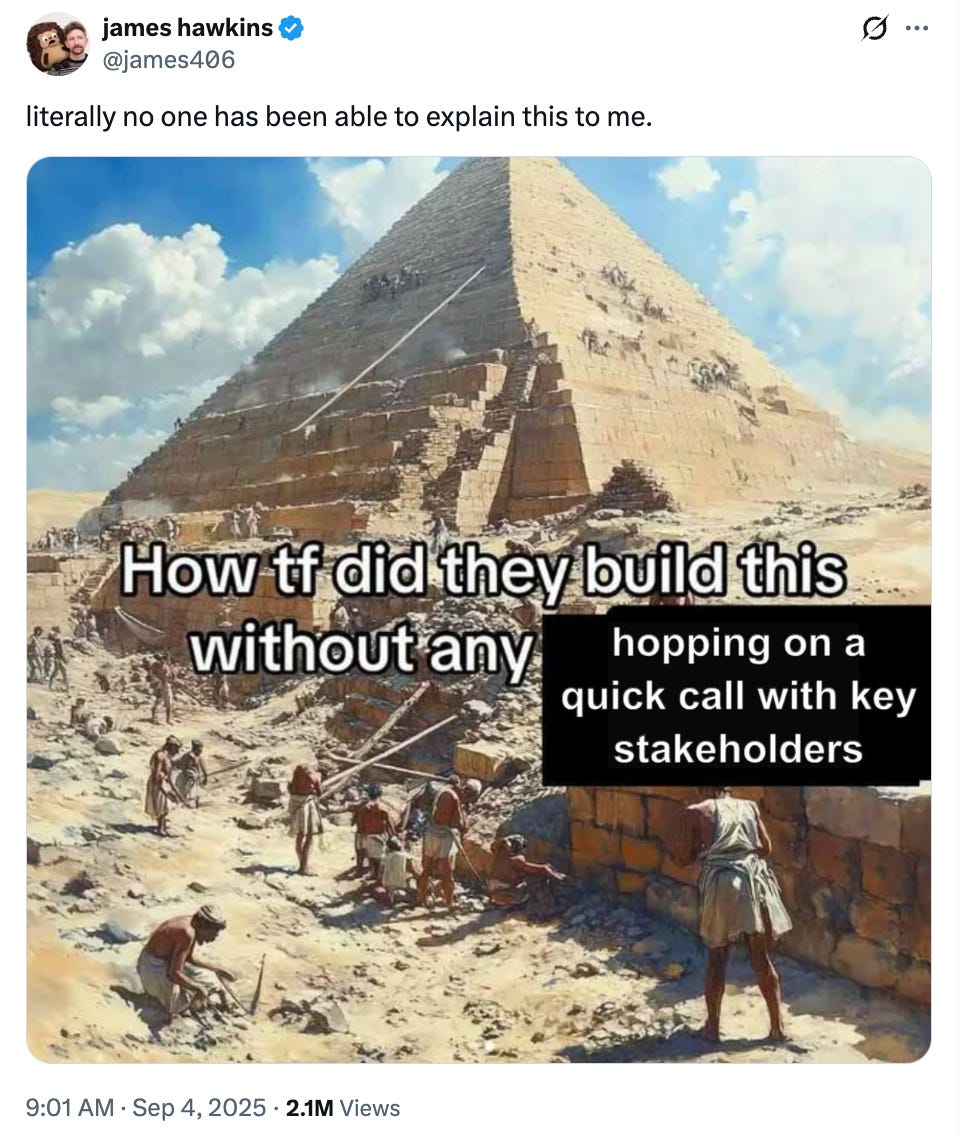
Name a more iconic duo: James Hawkins and quick calls.
Beyond being popular or unpopular, here were our favorite posts to work on:
Ian: What engineers get wrong about communication – Communicating well is a mystical aspiration. I learned a lot about what that actually means (and how to make it happen) while writing this post.
Andy: Glue teams vs back-office teams – Michael is one of PostHog’s most talented and delightful engineers. His post is a great example of the writing culture of PostHog at its best, and a great exploration of a subtle but important dilemma that faces every company sooner or later.
Charles: Non-obvious SEO advice for startups – It’s marketing-y but I always appreciate Andy’s SEO wisdom.
We had the goal of “going weekly” multiple times this year without realizing we were basically repeatedly running into the good/fast/cheap tradeoff as blocker. To ship the quality of newsletters we want to ship weekly, we simply need more people.
Newsletters provide a secondary benefit of crystallizing what our team has already figured out. There is a lot of internal knowledge that we are able to solidify into a clear insight and share because of the newsletter.
Unfortunately, Substack as a platform continues to develop in a way that’s misaligned with us. It focuses on creators with paid subscriptions, but this newsletter is free and always will be.
You can’t predict which newsletters are going to do well or poorly. In another universe, “The deadline doom loop” is our most popular newsletter of the year and “Collaboration sucks” is a dud.
No matter what you do, you’ll always be writing, editing, and tweaking up to the time you publish. Publishing consistently frees you from needing to make every post perfect.
It may surprise you, but our founders don’t just live inside their computers. Here are their best talks from this year:
Here are some less well known tools our team loves:
Atuin – The shell tool some “legitimately can’t live without”. It solved remembering CLI commands for them.
Flox – Goodbye broken developer environments. We migrated this year and “it’s worked exceptionally well for avoiding weird one off config issues.”
0github – A heatmap diff viewer for code reviews. The starting point for code reviews to discover sections that deserve real attention.
Orbstack – Basically our whole team has migrated over from Docker.
Mergiraf – “If you aren’t using mergiraf to solve Git merge conflicts, you are missing out.”
Want to help us make 2026 even better? We’re hiring:
Words in 2025 by Andy, Ian, Charles, Lior, James, Michael, and more who thank you for not completely summarizing everything we write with AI. Maybe next year…