The engineeringification of everything
The engineeringification of everythingWhy every role seems like an engineering role now (and what it means for you)
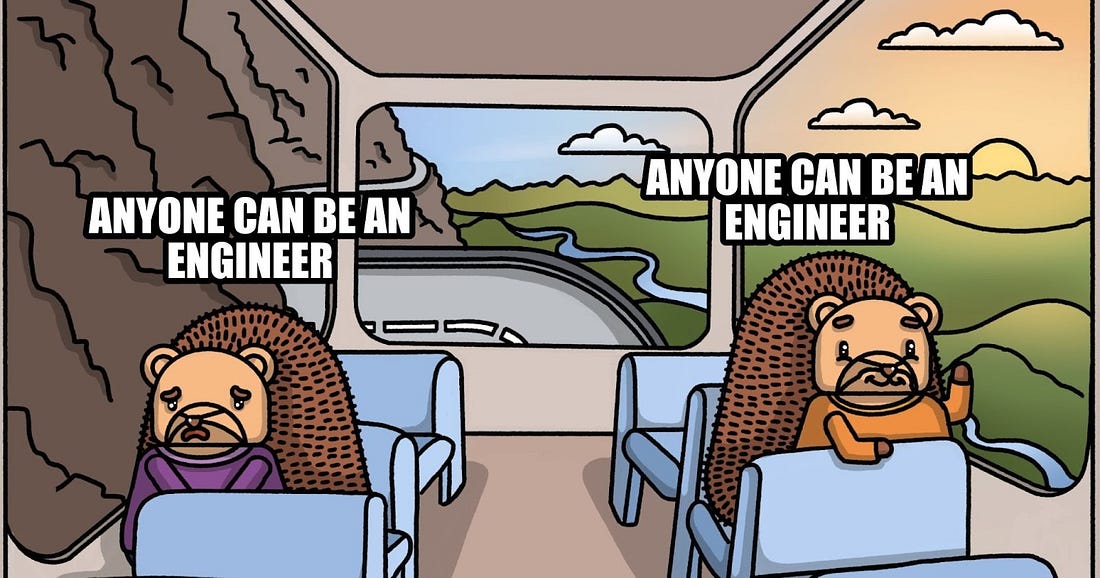
Engineering has escaped the codebase. The tools, mindset, and identity increasingly shape every function. Spend enough time in startup circles and you’ll hear this engineeringification of everything:
This raises two questions:
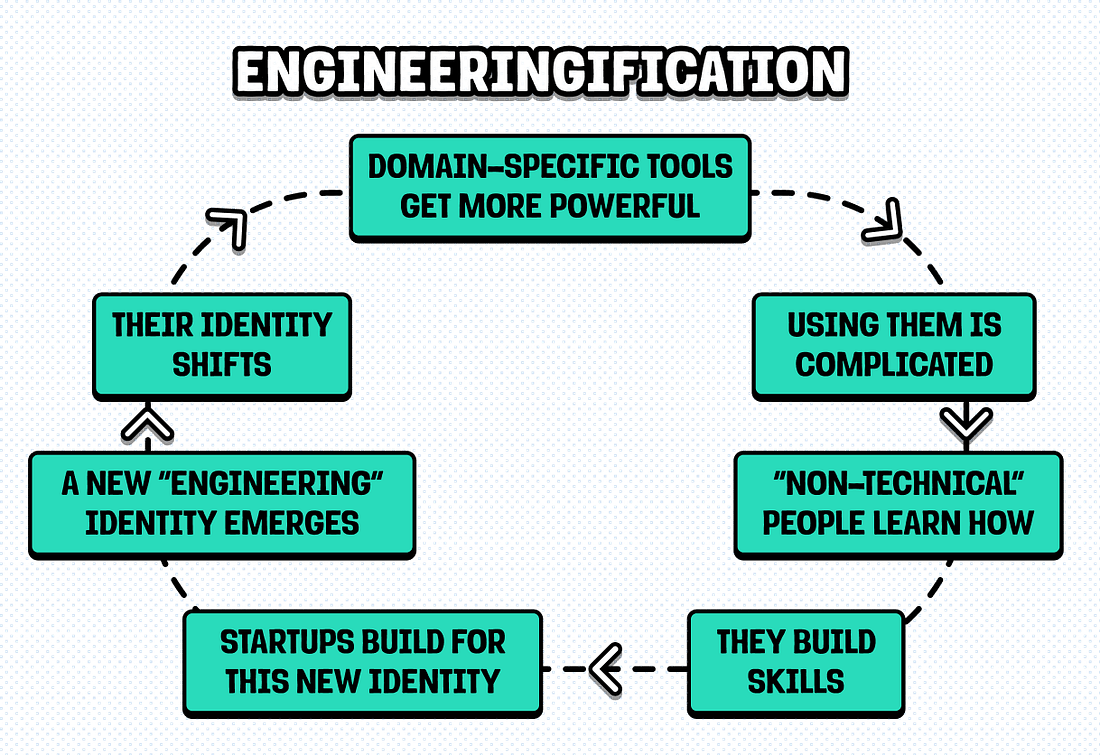
This post answers both of these. The engineeringification loopThe spread of engineering tools, skills, and identity into non-engineering roles, AKA “engineeringification,” is driven by a feedback loop that looks like this:
Take the role of design engineer as a specific example:
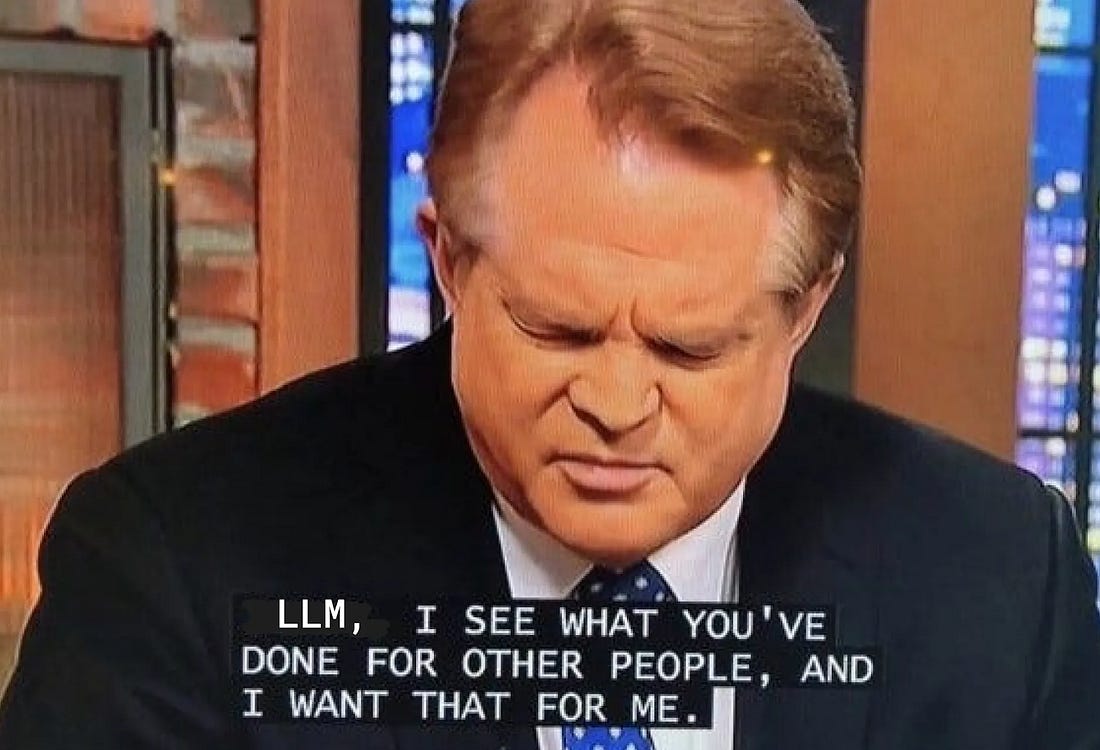
Tools change skills, skills reshape identity, and identity demands new tools. Why is engineeringification happening now?People have been building powerful tools for many roles for a long time now. What makes this time different? 1. LLMs make it possibleLLMs make complex, domain-specific tools more accessible. Seemingly every tool has an AI assistant, an MCP server, or an AI-powered alternative. Non-technical people can learn how to use the powerful tools once exclusive to engineers faster and easier. With them, they can:
2. Capital makes it inevitableEngineeringification is a good business (we know because we’re in it). It’s where B2B SaaS is heading as companies are willing to pay for it, VCs are willing to invest in it, and playbooks for success exist. You can see this reflected in the growth and valuation of AI-powered B2B SaaS startups serving non-engineers like Sierra, Lovable, Fin.ai, Bolt.new, Decagon, Clay, and Replit. The capital flooding into the space improves the tools, provides users more capabilities, encourages new startups entrants, and increases marketing toward the engineeringification of identities. 3. Identity makes it permanentThe final driver of engineeringification is identity. Once people start seeing themselves as engineers, the loop becomes self-sustaining. You don’t have to look far to see this shift in action. YC job posts show how non-technical roles are increasingly engineering focused:
Engineeringification gives individuals new autonomy while saving engineers time. Success encourages non-technical people to expand their skills and use the tools more. As they spend more time on engineering-like work, they begin to identify less with their old role as it undersells the value of their work and how technical they are. Instead, people identify more with what they’re building and the people who build (AKA engineers). This new identity eventually crystallizes often via blog post, conference talk, meetup or even tweet. Think Andrej Karpathy on vibe coding, Anthropic hiring a prompt engineer, and Vercel promoting design engineering. New identities compound the loop: people adopt it, tools are built for them, and marketing reinforces it. This feeds the cycle all over again. The meaning of engineer is changingWhat it means to call yourself an “engineer” is a sensitive topic. It’s literally illegal to call yourself one without accreditation where I’m from. Engineering once meant a specific set of skills in a bounded domain reinforced with formal training and gatekeeping. This remains true in physical domains as failure has physical consequences, but software’s low cost of failure makes gatekeeping harder to sustain. Boundaries are eroding. The defining line of engineering is moving away from “who is allowed to build” toward “who has the ideas and dedication to actually build it.” It’s less about knowing all the theory and more putting it into practice. To some, this looks like a loss. Engineering feels deprofessionalized: more self-taught practitioners, less depth, titles lose meaning. For many more, it’s a gain: more autonomy, faster iteration, increased leverage and a better ability to ship solutions to real, valuable problems.
Should you be worried?The line between technical and non-technical work isn’t disappearing, it’s being redrawn. Whether you’re an engineer or not, the winners will be those who think like builders:
Those who embrace the engineeringification of everything will find themselves riding the wave it is creating. The Words by Ian Vanagas who, after all this, is still a bit skeptical of the “content engineer” role. If everyone is becoming an engineer, what better newsletter to subscribe to than this one? 🦔 Jobs at PostHogWe’re hiring for many kinds of engineers (and almost engineers) like: 📚 More good reads
📺 PostHog on YouTubeAre you asking the right questions in interviews? James Hawkins argues not. 
|






Similar newsletters
There are other similar shared emails that you might be interested in: