How Companies Assess Fit of Engineers on a Behavioral Interview
- Gregor Ojstersek and Steve Huynh from Engineering Leadership <gregorojstersek@substack.com>
- Hidden Recipient <hidden@emailshot.io>

Hey, Gregor here 👋 This is a free edition of the Engineering Leadership newsletter. Every week, I share 2 articles → One paid edition and one free edition, with a goal to make you a great engineering leader! Here are some of the recent popular paid articles you might have missed: How Companies Assess Fit of Engineers on a Behavioral InterviewUnderstand how companies assess both the “role fit” and “company fit” and determine the level with 4 specific dimensions.
This newsletter is sponsored by CodeRabbit. Fewer findings. Only real risks.
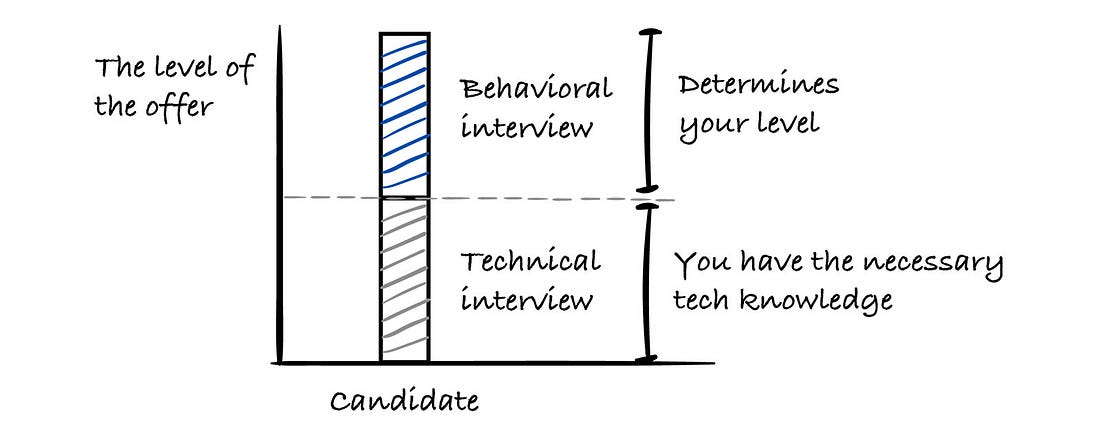
AI-generated code can introduce vulnerabilities that are easy to miss in a pull request. CodeRabbit Security continuously reviews your codebase for complex bugs and security risks, using full-codebase context to follow data flows, dependencies, and patterns beyond the latest diff. Run CodeRabbit Security on your own repositories today. Thanks to CodeRabbit for sponsoring this newsletter. Let’s get back to today’s thought! IntroMost engineers put a LOT of effort into preparing for tech interviews, they practice solving many of the leetcode-type problems (yes, still in 2026), prepare for system design interviews, and other similar types. I focused a lot on that part as well when I was interviewing for Senior+ engineer roles in the past. But what many people forget (me included in the past!) is that the tech interview is there to check the box of whether the person has the right knowledge and necessary technical skills. But companies still need to answer these questions:
All of these are determined in the behavioral interview. And it’s crucial that you do well on it. To help us know exactly what companies look for to assess the fit and level of a potential hire, luckily, Steve Huynh will share with us today his insights from conducting nearly 1,000 interviews at Amazon. Let’s introduce our guest author and get started. Introducing Steve HuynhSteve spent almost 20 years at Amazon as an engineer, growing all the way to becoming a Principal Engineer. During that time, he was an Amazon Bar Raiser, conducting a lot of interviews with potential hires while also training other interviewers.
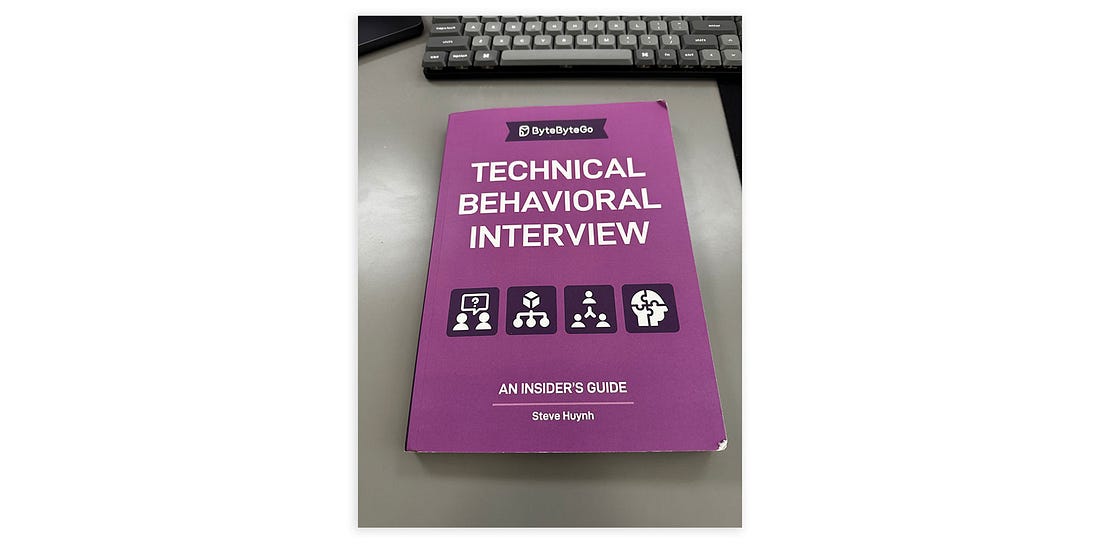
Today, Steve is kindly sharing an excerpt of the chapter adapted for this newsletter, from his book Technical Behavioral Interview: An Insider’s Guide.
I also got a copy of the book and can attest to both the quality and depth of information. If you are looking to improve your behavioral interviews, this should be your go-to book. Let’s start! Technical skills alone don’t determine your offer
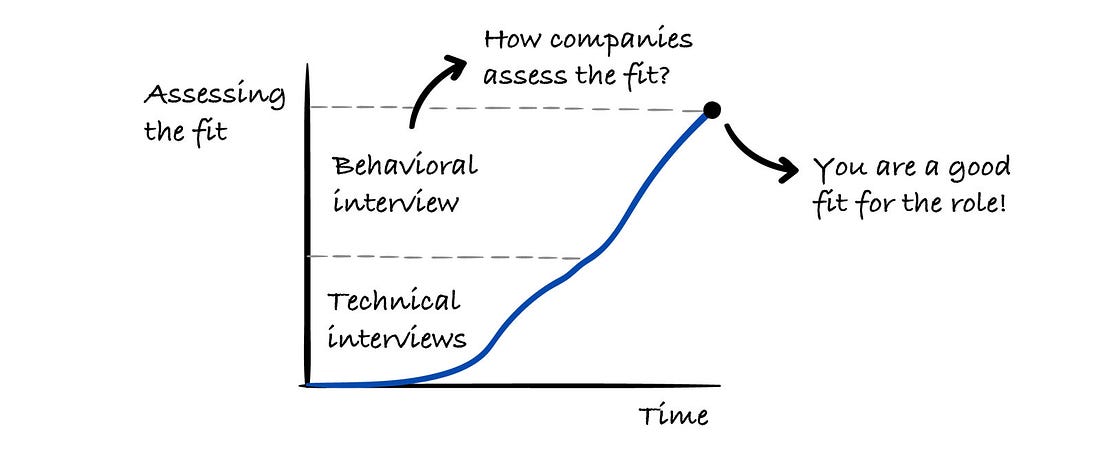
The primary consideration for any tech role is whether you have the technical skills to do the job. Companies will assess this mostly through tech interviews, like, coding challenges, system design, or whatever technical evaluation matches the specific role. If the candidate can’t demonstrate the core technical capability, nothing else matters. But technical skills alone are not enough. Companies learned this the hard way by hiring smart people who couldn’t work effectively in their environment. That’s why behavioral interviews focus on 2 additional types of fit:
Can you handle the specific challenges and working conditions of this position? A backend role at a fast-growing startup requires different capabilities than a backend role at an established enterprise. The technical skills might be similar, but the role demands will be different.
Will you do well in the environment in which this organization operates? They want to see if your working style, decision making style and values align with how the company operates. And companies use behavioral interviews to answer 2 critical questions:
Here is how it works:
Signals to detect fitCompanies can’t just directly ask: “Would you fit here”? Because, I don’t believe any candidate would answer the question with “No”.
Let’s go through both specific role and company fit signals, next. Specific role fit signals:
Specific company fit signals:
The same story can send different signals to different companies. This is very important to keep in mind:
A lot of it comes down to what the company culture is, so always look at it backwards from the company perspective, and put your focus on demonstrating the qualities that a specific company values. Let’s go through some specific examples of what you need to watch out, based on what kind of a company and the role you are interviewing for. Common “mis-fits”Even a talented candidate will get rejected if they are not a good fit. It’s important to understand that the same behaviors that are positive at one company can be a poor fit at another. Let’s go through some examples. Example 1: Being independent versus work collaboratively This covers both how you work and how you make decisions. Some companies need people to take a problem, own it, and return with a solution. Some expect you to bring the team along with you at every step. Companies asking you to do work on your own also want you to make calls on your own, and companies asking for collaborative work want buy-in from the group on decisions. If all your stories are about going off and building something by yourself, consensus-driven companies will worry that you’ll steamroll people or make decisions without informing anyone. And if every story needs group agreement before you act, companies that value individual ownership will ask if you can make a decision without a meeting. Example 2: Shipping fast versus being thorough Startups need to experiment fast, ship MVPs and iterate based on feedback, while companies in healthcare or finance need to validate carefully before any release. This tension also shows up in how teams think about code quality. Some organizations will happily spend extra weeks to perfect the architecture, while others want a working solution as soon as possible, even if the code needs cleanup later. A startup might be bored by methodical testing stories and a medical device company might be scared off by your “ship it and fix it” stories. Example 3: Being a technical expert versus focusing on pragmatism There are organizations that value technical expertise and clean architecture above all else. Others need practical solutions on time, even if imperfect. If you try to focus on perfect code, you will fail in a deadline-driven company. If you accept technical debt everyplace, you will fail in a company that maintains critical infrastructure. Example 4: Innovation versus stability Some roles are about innovating and challenging the status quo, others are about maintaining and optimizing existing systems. If you say you are constantly reinventing established processes, teams that value stability won’t think you’re a good fit. Alternatively, stories that demonstrate you follow only established patterns will fall flat with teams seeking creative problem solving. Example 5: Being direct versus diplomatic Some cultures value radical candor and want you to say exactly what you think. Others value harmony and communication in an effort to not burn any bridges. If you are too blunt, you will not fit in well at a relationship-focused company. If you are not direct enough, you will not like working at a company that values “disagree and commit.” Example 6: Do you make data-driven decisions or focus on intuition? Some companies need data to justify each decision (“data-driven” cultures) whereas others trust their judgment and go more on gut feel. Showing that you make decisions based on instinct does not impress analytical companies, and telling a company that values experienced judgment that you conduct 3 A/B tests to choose a button color will get you struck off their list. Example 7: Are you a specialist or generalist? Big companies often look for deep experts who master 1 domain, while smaller companies need people who like to wear multiple hats. This is crucial to understand when you are showcasing your experince through stories.
Now that we understand how the “fit” works, let’s go through 4 dimensions that determine your level. The 4 dimensions that determine your level
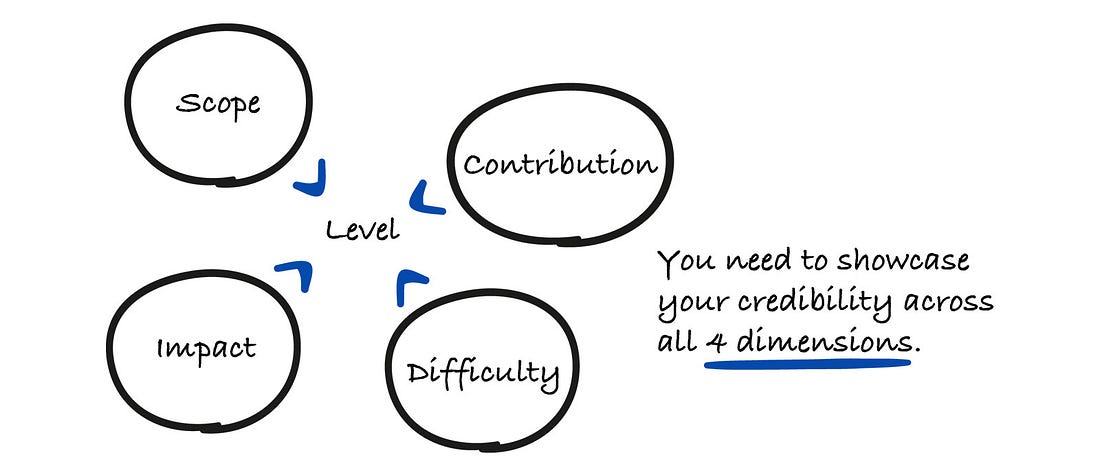
Companies measure your level across 4 dimensions that are present across every story you tell. Each dimension represents a different part of your ability. Together, they show the company where you operate most effectively. We’ll go through each, next, and also define what’s expected for a specific level. Scope
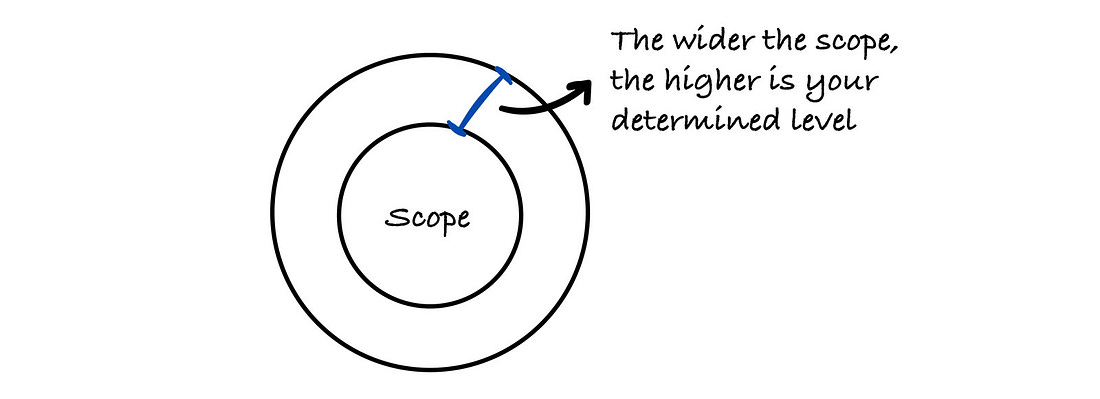
Scope provides a measure of the number of people on your team and, extending outward as you advance, whose work was affected by your actions. The greater the number affected, the higher your level for this dimension. Entry Level:
Mid Level:
Senior Level:
Staff Level:
Principal Level:
Contribution
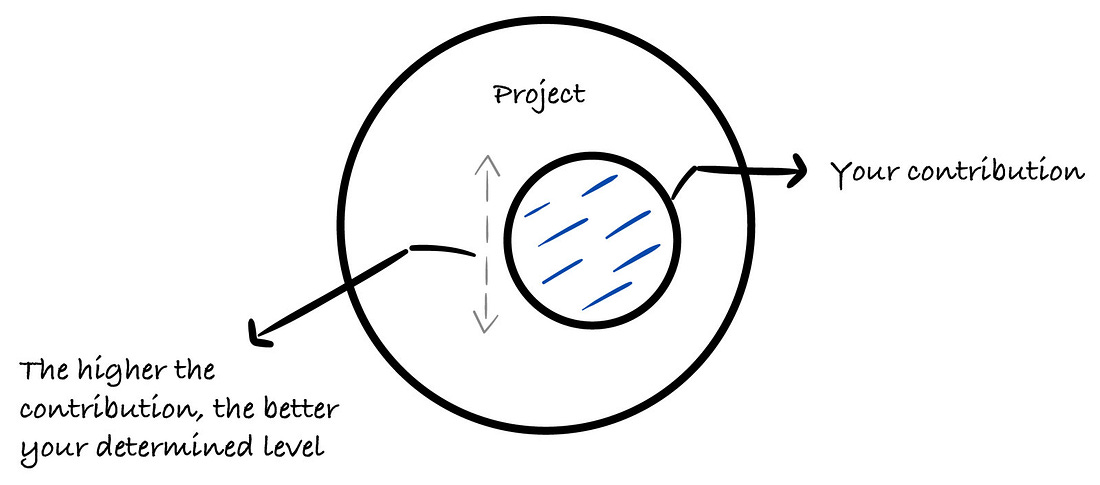
Contribution captures what you did, not what happened around you. It is important to be precise about the line between “I” and “we.” Companies will expect to see evidence of increasing leadership and ownership as you advance in your career. Entry Level:
Mid Level:
Senior Level:
Staff Level:
Principal Level:
Impact
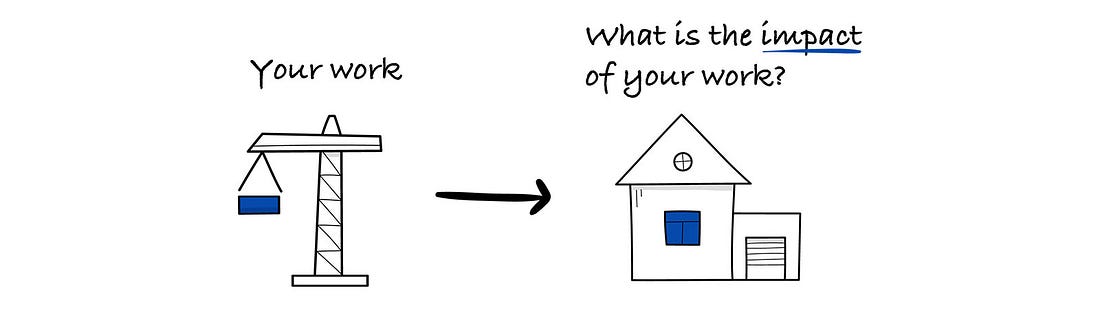
Impact shows what changed for the better as a result of your work. Companies want to see that your work produced results worth the investment. Strong stories put numbers on the impact and connect technical wins to business or user outcomes. Entry Level:
Mid Level:
Senior Level:
Staff Level:
Principal Level:
Difficulty
Difficulty reflects the complexity of problems you’ve tackled, the constraints you have faced, and the trade-offs you have managed. Under this category, solving easy problems with big impacts is less impressive than hard problems solved well. Entry Level:
Mid Level:
Senior Level:
Staff Level:
Principal Level:
Putting it all together
Both role fit and company fit determine not just whether you will get an offer, but also whether that offer will position you for success. Understanding fit helps you know which of your experiences will connect most with what the company values. Small companies need someone who ships fast and figures things out alone. And enterprises need someone who navigates processes and builds consensus. Neither is inherently better than the other. They’re simply different environments that reward different approaches. Last wordsSpecial thanks to Steve for sharing all these important insights! Make sure to check him out on LinkedIn, and also check out his book Technical Behavioral Interview: An Insider’s Guide for more info on how to do well on behavioral interviews. Liked this article? Make sure to 💙 click the like button. Feedback or addition? Make sure to 💬 comment. Know someone that would find this helpful? Make sure to 🔁 share this post. Whenever you are ready, here is how I can help you further
Get in touchYou can find me on LinkedIn, X, YouTube, Bluesky, Instagram or Threads. If you wish to make a request on particular topic you would like to read, you can send me an email to info@gregorojstersek.com. This newsletter is funded by paid subscriptions from readers like yourself. If you aren’t already, consider becoming a paid subscriber to receive the full experience! You are more than welcome to find whatever interests you here and try it out in your particular case. Let me know how it went! Topics are normally about all things engineering related, leadership, management, developing scalable products, building teams etc. Invite your friends and earn rewardsIf you enjoy Engineering Leadership, share it with your friends and earn rewards when they subscribe.
|







Similar newsletters
There are other similar shared emails that you might be interested in: