| TL;DR | ♟️ Start your new role like a strategic CPeO, not an HR admin | 🚦 Signal “I am strategic” in your first 90 days | 🎧 Listen to the newsletter here | This newsletter edition is brought to you by Zelt 💛 | |
|
| | | 50% off ends Friday, 16 Jan 2026 | It’s my birthday month! 🎂 | To celebrate, enjoy 50% off all Bootcamps & STEP UP MBA with BIRTHDAY2026. | This happens only once a year — don’t miss out! | |
|
|
|
| | | Reflection: I am starting a new role. How do I onboard myself and be seen as a strategic HR leader from the start? | | | | HR Leaders |
|
| Start your new role like a strategic CPeO, not an HR admin | “When you get promoted into a new role in the same company, you carry your old baggage,” my previous manager, Monica, once told me. Wise words. | A new role in a new company is a brilliant chance to reset – to show up as the future version of you, not the old one you already outgrown. | But most of us drag our baggage right in with us. 😱 | We land in the new seat and the instinct kicks in: prove ourselves quickly. We scan for problems, roll up our sleeves, start fixing. It feels responsible. It feels competent. It feels like leadership. | It isn’t. | If you want to be seen as a strategic leader from day one, you have to stop onboarding yourself back into the very corner you were trying to escape. | 🧳 Decide what baggage you’re NOT bringing into your new role | Before we get into the practical “how-to” (that’s coming in part two), let’s start with the mindset shift. | Your actions in the first few weeks speak louder than any vision deck you share. Your first impression becomes the lens through which the business will perceive you for the rest of your tenure. Of course you can change it later — but why make it harder for yourself? | So before you start a new role, ask yourself: | | ❝ | | | What are the 3 habits you will leave behind? |
|
| The habits that instantly peg you as… | | Here are some examples HR leaders have told me they’re leaving behind: | Becoming the crutch that hides deeper issues: weak leaders, bad structures, unclear ownership. (This one is my absolute favourite 🫶) Diving too deep, too fast into every problem they can see. Taking responsibility for all fixes simply because they could fix them. Scoping work so broadly, then drowning in their own ambition. Acting as the parent-child translator between leadership and the org.
| Strategy is a choice: Make yours before you even start | When you leave those habits behind, you stop onboarding yourself as the over-functioning executor who keeps the organisation alive through sheer willpower. | That’s not strategic leadership — that’s saviour mode dressed up as helpfulness. | And remember: your start-up desperately wants someone who will make the chaos feel less chaotic. They need a leader who can help them climb out of it — not someone who climbs in and tries to hold it all together from the inside. | So make the choice early. In your first 90 days, keep it simple: | Build credibility, not dependency. Build clarity, not comfort. Build a strategic foundation, not an operational safety net.
| Everything else is noise. | | Sponsored: Dear 2026, all I want is… | – Less “work about work”
– Time to think
– Employee data in one place that I can actually trust
– HR systems that work for me, not the other way around
The good news is, you no longer have to wish for it.
Meet Zelt — the HR system to help you spend less time firefighting and more time leading strategically.
Ready to make your 2026 HR wishlist come true?✨ |
| |  |
|
|
|
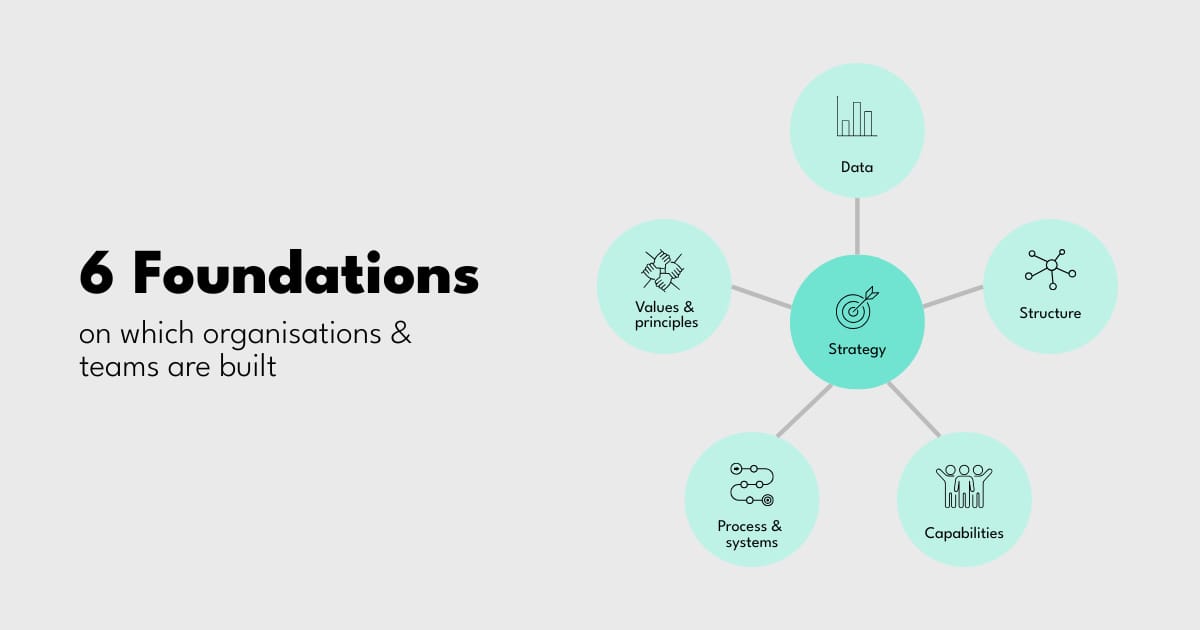
| | | Signal “I am strategic” in your first 90 days | So here’s how you turn Part 1 into operational reality — the first 90 days that signal strategic leadership before you’ve even delivered anything. | We’ll use the 3Cs to achieve this during your onboarding: clarity, confidence and connection. | 🎯CLARITY: Diagnose like a Business Leader, not an HR specialist | If we only ask HR questions, we onboard ourselves as HR. If we start with employees' systems and tools, we onboard ourselves as operational support. | So we start with the business. | I use the 6 Foundations as my onboarding guide — a set of guardrails that keep me focused on what actually drives value. These questions aren’t exhaustive, but they help you probe strategically. | 1️⃣ Strategy: Get to know how your business makes choices | What business model(s) is your new company running? How do they build product, sell product and generate revenue with profit? What strategic choices have they made? (ICP, positioning, how to win customers, how to retain them, etc.) What are the 12–24-month big goals? (Fund raising, market expansion, new product, etc) What organisational rituals keep the company on track (OKRIs, QBRs, strategy days, all-hands, etc.)?
| 💡Your goal here is to understand how value is created and how the company plans to scale it. | 2️⃣ Structure: Map how the business is organised to deliver the strategy | Look at the structure through a value-creation lens: | How does value flow through the org? Does the org design support that flow — or block it? Are roles clear on accountabilities, decision-making, and communication flow? Where does work actually get done (formal and informal structures)?
| 💡Structure tells you whether the business is set up to win or set up to stall. | 3️⃣ Capabilities: Assess gaps at the right level | HR is great at spotting capability gaps, but we often start at the wrong altitude. | So here’s the reminder: start with the business, not the people. | Start with business-level capabilities: What can’t the company do yet that it must be able to do to hit its goals? Then move to department-level capabilities: Consider product velocity, GTM muscle, leadership depth, manager quality, etc. Then, and only then, assess individual / role-level capability gaps.
| 💡This is how you avoid treating symptoms and start solving root causes. | 4️⃣ Process & systems: Identify where value gets stuck | Ask 3 layers of questions: | Strategy to execution | What’s the operating rhythm? Where do plans break down? Where does speed collapse?
| Customer lifecycle | | Employee lifecycle | | 💡 Most “HR fires” start in strategy or customer flow — not HR. You’re looking for systemic friction points, not process checklists. | 5️⃣ Data: Understand how the business measures reality | What metrics are used to give insights & visibility of progress What metrics are used to identify problems What metrics are used to make decisions What metrics are used to forecast and predict outcomes
| 💡 If the company can’t measure it, they can’t manage it — and neither can you. | 6️⃣ Principles & values: Uncover the unwritten rules that drive behaviour | What shared philosophy aligns people to move in the same direction, fast? What behaviours are rewarded? Tolerated? Quietly punished? What’s the founder’s strongest (or quirkiest) belief that’s not written anywhere?
| 💡 You might not like what you find out, but knowing it will save you months of misalignment. | | ⚡ CONFIDENCE: Reset expectations so you don’t inherit the past | To build confidence in yourself and in how others see you, you need a clear baseline. You can’t reset expectations if you don’t know what expectations already exist. | Questions to ask your manager in 1:1s | Who are my key stakeholders? Who is most sceptical of HR? Who is most sceptical of the changes we need to make to achieve our business goals?
| Question to ask your stakeholders, leaders and employees in conversations | “How have you worked with HR in the past?” “What has HR done that was genuinely valuable?” “What did HR to broke your trust?” “What are your expectations of HR here — and of me in this role?”
| These conversations tell you: HR’s starting reputation, where trust is fragile, where you’ll meet resistance and where you need to reset expectations. | Around month 3, formalise the reset: | “Here’s what you can expect from my team and me.” “Here’s what we don’t do and won’t own.” “Here’s how we’ll work together.”
| 💡This is how you proactively set yourself and your team up for success, instead of being hindered by the ghost of HR past. | 🤝 CONNECTION: Build alliances, not dependencies | You don't need everyone to love you. You need people to trust you. | Build early relationships with: | The leaders who drive value creation The operators who keep the engine running The sceptics who will test whether you’re for real The connectors who shape the informal power network
| 💡You can achieve more collectively with shared goals than HR team could ever carry alone. | The first 90 days shape the version of you the business will remember | Not because of what you deliver, but because of how you show up — what you pay attention to, how you listen, where you challenge and how you decide to lead. | Your onboarding is your first strategic act. Use it to signal the leader you’re becoming, not the one you’ve outgrown. | | PS: This isn’t only for HR leaders in new roles — if you’re going into the new year ready to step up as a strategic HR Leader a.k.a. a Business Leader, take this with you 😊 | |
|
| | Step up from HR Leader to Business Leader | Ready to influence strategically, drive business impact and make HR indispensable?
Here are 3 ways I can help: | |
|
| | You can now ‘LISTEN’ to the newsletter | I’ve turned my newsletter into audio, voiced by AI podcasters. It’s in beta, so give it a listen and tell me what you think! | |
| |
|
|
| |
|