Travel Tech Essentialist #189: Built Different
- Mauricio | Travel Tech Essentialist <traveltechessentialist@substack.com>
- Hidden Recipient <hidden@emailshot.io>
This week’s newsletter is about useful opposites, anti-trends, and building things that go against the grain. From broken products that still work to bubbles that actually help, from ditching everyday habits to building brand values with human authenticity, progress often comes from thinking differently and staying true while doing it. Special thanks to the Airobot for sponsoring this edition of the newsletter:
1. Altman on travel bookings: they’ll do it, eventuallyAt the Progress Conference last week, Sam Altman responded to a story from the interviewer, who mentioned that during a recent trip, nearly every hotel and restaurant he picked was discovered through GPT-5. None of those bookings went through OpenAI, and the company earned nothing from it. Altman acknowledged the gap, but didn’t seem bothered. ChatGPT gives recommendations without bias, he said, and that’s what builds trust. If it ever took money to promote a worse hotel over a better one, that trust would evaporate. But if it recommends the best option and takes a flat commission without that influencing the result, that feels to him like a sustainable model. He expects hotel and travel commissions to shrink. Once people ask their AI to find the best hotel, the agent may complete the booking through the service that charges the lowest fee. According to Altman, this dynamic will make “margins go dramatically down on most goods and services, including things hotel bookings” OpenAI still plans to support bookings at some point, but Altman doesn’t see it as a major business priority. It’s not where OpenAI will make most of its money, and it’s not the point of the company. His primary focus is on breakthroughs such as curing diseases, unlocking new scientific discoveries, or building abundant clean energy. In that view, travel is just one of many real-world use cases they’ll likely end up supporting simply because it makes ChatGPT more useful in everyday life. Podcast - Sam Altman on Trust, Persuasion and the Future of AI
2. Useful oppositesThese less common words work as counterweights to the more popular ones, and often make more sense. A way to think more positively about work, stress, success, and other people.
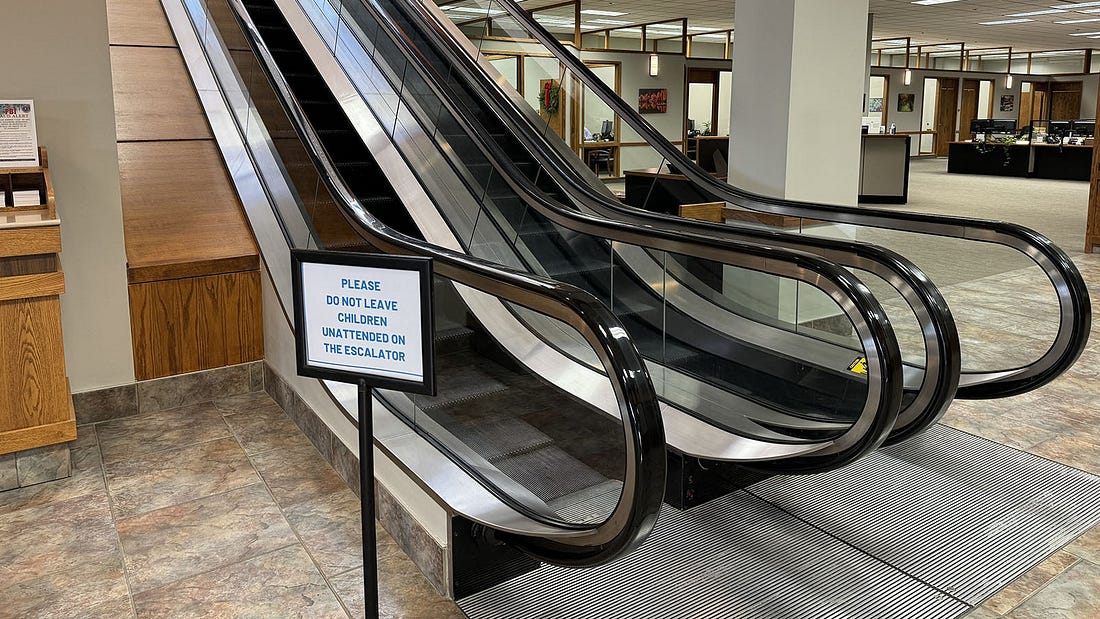
3. Broken, but usefulSome things still work even when they stop working. An escalator that’s out of order still works as stairs. A powered toothbrush is still a toothbrush. An electric bicycle with a dead battery is still a bike. They fail in a way that leaves their core function intact. This is a useful lens in product design: not just “what happens when it works,” but “what happens when it doesn’t.” What parts still work? What do people reach for anyway? What fallback becomes the default? You see it in travel too. A maps app with offline mode still shows your cached route when you lose signal. A hotel key card with the room number printed on it helps when you forget which room is yours. An itinerary in your email still loads offline. It also shows up in customer service. When flights get cancelled, or a partner goes bust, or a traveler is stranded and stressed—those are the moments that matter. At eDreams, some of our most loyal customers came from travel nightmares, simply because we showed up and had their back. Designing for failure earns trust. When your product still works in the worst moments (dead battery, no signal, unfamiliar city, high stress…), people remember. That resilience builds more loyalty than a hundred perfect-condition experiences.
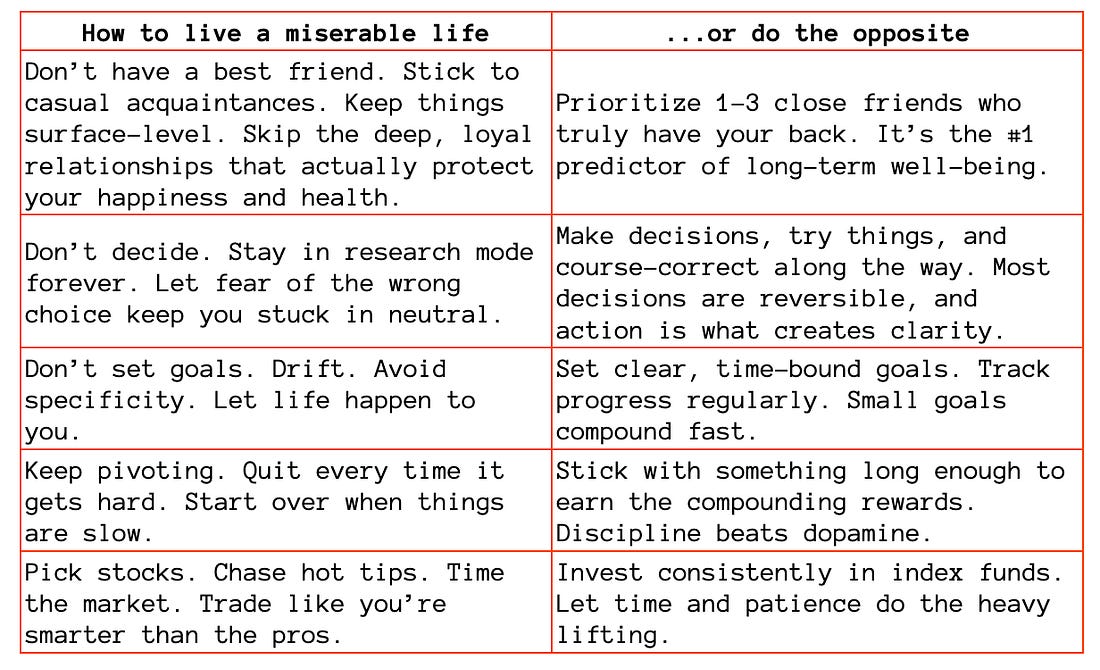
4. The Benefits of bubblesEveryone’s calling it a bubble. And they’re probably right. The hype around AI is overblown in places, money is flowing too fast in others, and a lot of ventures chasing it will fail. Ben Thompson’s The Benefits of Bubbles offers a timely and thoughtful counterpoint to the AI-bubble cynicism that’s in vogue right now. Thompson makes the case that bubbles, when they’re about transformative technologies, can be deeply productive. They overbuild capacity, fuel invention, install the physical and cognitive infrastructure and create the mechanisms that help an entire ecosystem grow. You saw it with railroads, fiber optic cables, and the early internet. Most of those bets didn’t pay off for the investors, but they did for society. And let’s be honest…most of the people yelling “bubble!” aren’t the ones risking their own money. They (we) are the ones who’ll end up reaping the benefits: faster tools, cheaper compute, better infrastructure, and a front-row seat to the fireworks, all without putting a cent on the line. Thompson builds on Carlota Perez’s idea (Technological Revolutions and Financial Capital) of the “installation phase” of a technology, when money-losing investments are necessary to lay the groundwork for a more productive future. He also draws from “Boom” by Byrne Hobart and Tobias Huber, who refer to these as “inflection bubbles”: the kind that spur foundational change across entire industries. This AI cycle may follow a similar arc. Even if some investments fail, they’re helping to build capacity in chips, energy, talent, and ambition. They’re also unlocking hard-to-justify projects that might not happen without the FOMO and froth of a bubble. That includes deep infrastructure like fabs (the places where the chips are made) and power generation, as well as totally new chip architectures and AI-native startups pushing in every direction. As Thompson writes, “Optimism can be a self-fulfilling prophecy.” You don’t get enduring change without some speculative fever along the way. Read + Ben Thompson 5. The anti-trend moatThe bigger the trend, the more leverage in going the other way. Taking the other end of a dominant shift can open up space others have stopped paying attention to, often with less competition and more loyalty. In the constant stream of AI tools, virtual products, and automation hacks, Jonathan Courtney and Greg Isenberg (on the Startup Ideas podcast) talk about how in-person experiences are becoming a real advantage again. They don’t scale easily, and they take more effort. That’s exactly what makes them stand out. People remember them, trust them, and talk about them later. Jonathan shares examples from his own business, such as launching a $ 15,000 in-person certification, renting out an Italian village for a retreat, and running high-ticket summer camps with no recordings, no livestream, and no virtual pass. Just real people in a room. He explains how that constraint became the hook, offering a clear, hard-to-copy offer in a format that people miss. In travel/hospitality, layering real-world presence into the offer, even if the core product is online, could lead to good surprises. 6. The impact of Google AI OverviewsNew data from Seer Interactive shows sharp declines in both organic and paid click-through rates (CTR) on queries that trigger an AI Overview (AIO). Organic CTRs are down 61%, and paid CTRs are down 68% compared to a year ago. Even queries without AI Overviews have CTRs dropping between 25% and 41%. Fewer people are clicking, and there is also a shift in how people search. More are getting answers directly from the AI box or skipping Google altogether for ChatGPT, Reddit, or trusted brands. What’s working now is being cited in the AI Overview itself. Brands that were cited saw 91% higher paid CTRs and 35% higher organic CTRs than those that weren’t. The new moat is being cited, not just ranked. (Methodology: 25 million organic impressions, 1 million paid, across 15 months and 42 companies.) 7. How to live a miserable lifeMost life advice tries to tell you what to do. This flips it. Sam Parr (from My First Million) lays out 5 ways to live a miserable life, and what happens when you do the opposite
Parr’s framing is clever: don’t chase happiness. Just stop doing the things that make you miserable. 8. What airports might feel like by 2040Airports have barely changed in decades; McKinsey’s “Next Normal” report imagines what airports could look like by 2040. Some takeaways:
9. Brand building starts with a human voiceAvi Meir, founder and CEO of Perk (formerly TravelPerk), was one of the most followed (and the most engaging) travel tech voices on LinkedIn, according to my analysis in my previous newsletter. His latest post is a perfect example of why: it sounds unmistakably like a human. Not a press release, not an LLM, no posturing, no performative virtue. Just Avi…clear, direct, and human. That’s what makes him so effective. Personal authenticity also reinforces the values of the company he leads. When a founder/executive shows up as a real person, it strengthens the corporate brand too. People follow people. And they remember how you made them feel.
10. US startups are pulling aheadThis chart from a16z (via Stripe data) shows just how much faster US startups are growing than their European and UK counterparts; nearly 1400% since 2020, compared to ~600% for the EU and ~500% for the UK. Even when you exclude AI startups, US companies still lead by a wide margin. Around 2024, the AI-led growth accelerated. Stripe’s Patrick Collison attributes this gap to faster tech adoption in the US, less regulation, a larger domestic market, and a stronger consumer appetite for new technology. Whatever the mix, it’s delivering results. US startups are building faster, scaling harder, and taking bigger swings. Read + a16z
Travel Tech Essentialist Job Board→ Explore all 1479 open roles on the Travel Tech Essentialist Job Board now.
📩 For monthly updates on the latest roles, subscribe to the Travel Tech Jobs newsletter Raising a round?If you are a startup looking to raise a round (from pre-seed to Series D), I can help (for free). Travel Investor Network is a private platform where I recommend innovative travel startups to investors and innovators. If you’re interested, please start by completing this form. If you like Travel Tech Essentialist, please consider sharing it with your friends or colleagues. If you’re not yet subscribed, join us here: And, as always, thanks for trusting me with your inbox. Mauricio Prieto
|




Similar newsletters
There are other similar shared emails that you might be interested in: