How to use AI for your next job interview
How to use AI for your next job interviewInsights from 30+ tech professionals, and a free AI coach to put them into practice
👋 Hey there, I’m Lenny. Each week, I answer reader questions about building product, driving growth, and accelerating your career. For more: Lenny’s Podcast | Lennybot | How I AI P.S. Get a full free year of Lovable, Manus, Replit, Gamma, n8n, Canva, ElevenLabs, Amp, Factory, Devin, Bolt, Wispr Flow, Linear, PostHog, Framer, Railway, Granola, Warp, Perplexity, Magic Patterns, Mobbin, ChatPRD, and Stripe Atlas by becoming an Insider subscriber. One of the most frequent questions I’ve seen bubbling up in this community is how AI is impacting the interview process, both for interviewees and for hiring managers. To find out, my Community Research Lead, Noam Segal, interviewed dozens of current and recent job seekers as well as hiring managers to learn how AI is transforming both sides of the hiring process. Part 1 of the results from this research (below) focuses on job seekers—and the approach Noam took here is quite extraordinary. When he started analyzing what he’d learned, he realized the findings didn’t condense into tidy advice or tips. The best candidates had built interconnected systems to arm themselves for every step of the interview process. So Noam did something unique with this post: he encoded the results of his research—the successful techniques from over 30 participants—into a Claude Code–based coach you can plug-and-play into your interview process today. Once you give it a go, if you have any feedback or suggestions to make this even more useful to you, feel free to email Noam at noam@lennyrachitsky.com (or ping him in our community Slack, @Noam Segal). Let’s get into it. For more from Noam, find him on LinkedIn. You can listen to this post in convenient podcast form: Spotify / Apple / YouTube.
Logan hadn’t interviewed for a new job in eight years. He’d been at one of the hottest companies in San Francisco, been promoted several times, and never felt the need to look elsewhere. When he decided to pursue a senior architect role at Anthropic, he hit a wall experienced engineers know well: interviewing is its own skill. Day-to-day, Logan solved architecture problems with full context and ample time. Interviews required him to grind LeetCode, whiteboard system designs on the spot, and compress years of expertise into rehearsed stories that fit a rubric. Normally, preparing for senior engineering loops takes months. Logan had two weeks. But Logan got the job. When I asked what mattered most, he pointed to his AI workflows as the primary reason he pulled it off. He’s not alone. I interviewed over 30 tech professionals about how they use AI throughout the interview process. What I found went far beyond polishing resumes. People had built entire systems tailor-made for their own situations: ways to get feedback on what they actually said in interviews, methods to predict questions before walking in, workflows to surface stories they didn’t know they had. Each person I spoke with had figured out how to use AI for one or two pieces of the interviewing puzzle. I started pulling together a research report from these conversations, but I quickly realized that most people on the job market are stressed and anxious enough. The best value I could offer wasn’t a list of tips but, instead, a way to plug-and-play the hard work these participants have already done. So I changed direction and took every interview AI technique that worked for these participants. Then I added a layer of professional coaching techniques and built a Claude Code–based coach that guides you through how to prepare for job interviews and reach your peak performance. The Interview Coach I’m offering in this post will give you the critical feedback and real-world reps you need to confidently walk into your next interview room—and succeed. But first, let’s talk about what’s broken about interview prep today, and how AI solves it. Interviewing before AIInterview prep hasn’t changed much in the past decade. You rehearse your stories, maybe run through a mock interview with a friend, and walk into the real thing, hoping everything clicks. But afterward, we’re left with nothing more than a vague sense of how it went, guessing at what to fix. Companies don’t tell you why they passed. Your friends and mentors don’t know what your interviewers were looking for. You’re prepping blind, and the post-interview experience is mostly confusing. There’s simply no usable feedback loop in the interview process. Of the issues that participants raised in my conversations, three stood out (and all stem from a lack of feedback):
How the most successful candidates used AI to close the feedback loopParticipants who landed roles at top companies all closed the feedback loop themselves by building AI tools. Greg fed his interview transcripts to Claude, trained it on best practices, and got line-by-line feedback on answers he thought went well but didn’t. Ella built a workflow where she’d paste a job description alongside her resume and have ChatGPT surface the exact gaps a hiring manager would flag and then help her close them before the review. Sean stopped guessing which experiences to highlight. He’d simulate the interview beforehand, test which stories landed, and refine them before the real thing. Some participants’ systems overlapped; some didn’t. All took real work to build. The problem: assembling those puzzle pieces for yourself would take weeks, and turning them into a successful system is a challenge most people can’t or won’t take on. The tool you’ll find below pulls all that research together into an AI job interview coach that also leverages best-practice coaching techniques—self-reflection before feedback, powerful questions over prescriptions, co-creation over telling. Until now, this level of coaching was reserved for those of us who could afford $300-an-hour career coaches. But even a great coach has limits: they can’t analyze a full interview transcript in minutes, track your weak spots across every session, or be there at 11 p.m. when you’re anxious about tomorrow. AI has no such limits, and it’s essentially free. An AI job interview coach:
So let’s get you set up with an AI interview coach and help you land your next role. The AI Interview Coach: a free tool to put all this into practiceThe Interview Coach is a Claude Code project: a set of instruction files that turn Claude into a rigorous interview coach. You run it by opening the project folder, and it takes over from there. The coach handles everything that the participants I interviewed were doing (and much more):
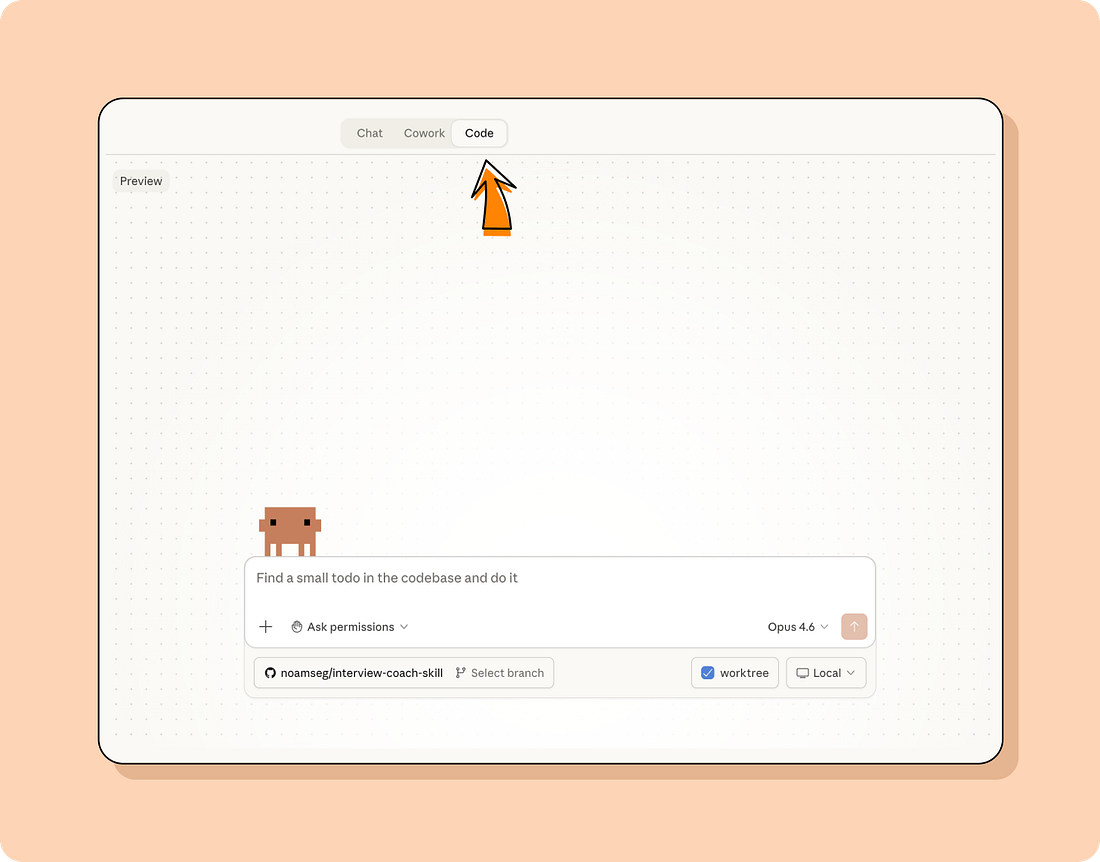
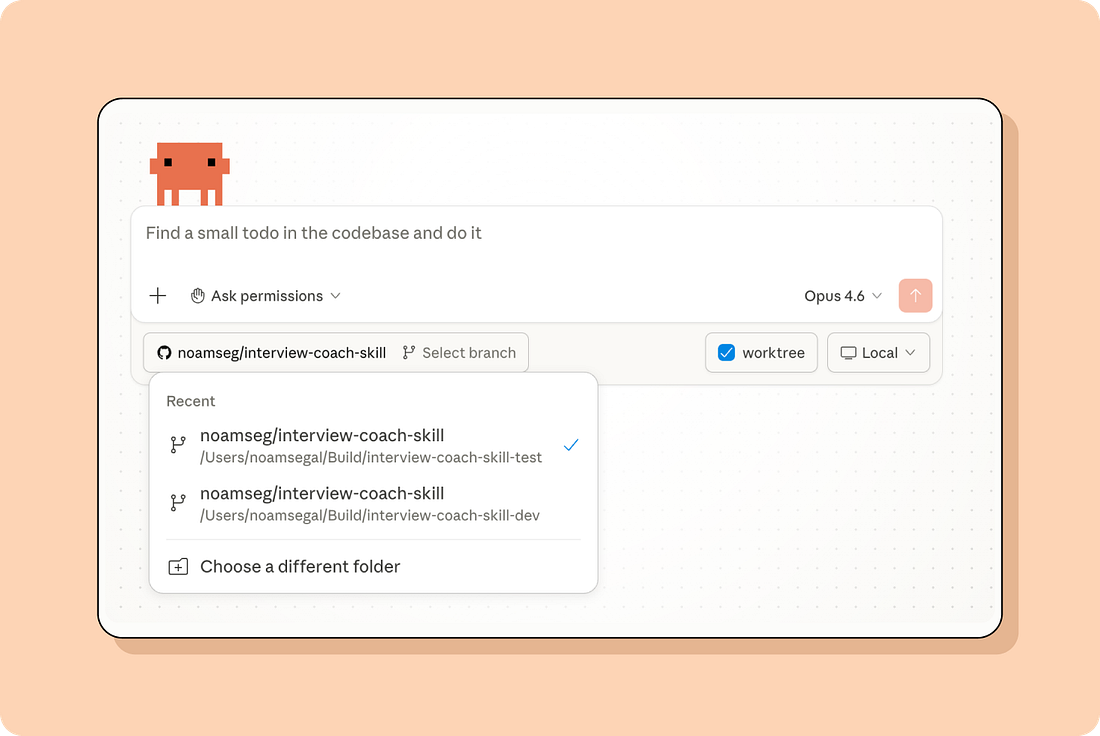
Let’s get it set up (5 minutes)We’ll use the Claude desktop app to run our AI interviewing coach. Here’s how to get started:
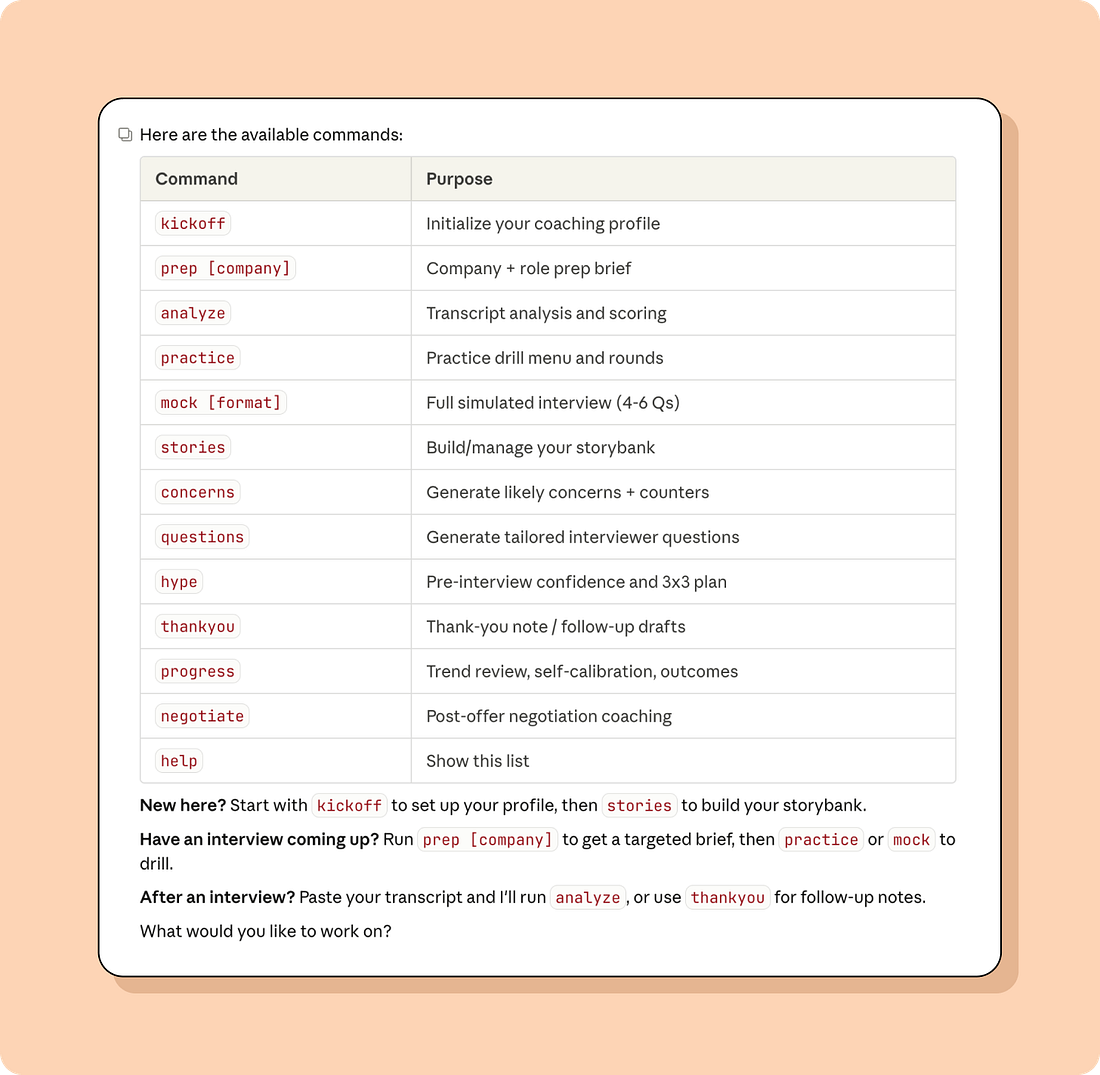
Claude walks you through the rest, one question at a time. The whole setup takes about five minutes, and Claude writes a coaching_state.md file that tracks everything across sessions: your stories, scores, patterns, and progress. Need help using the coach? Type help and you’ll get this:
Let’s take it for a spin!Once you’ve run kickoff, everything else works through simple commands. Here’s how to use the coach for an upcoming interview. Basic setup
At this point, you’re done with the configuration, and Claude Code will ask to learn about your candidate context. Specifically:
Once you provide these details, Claude Code will write an update to its memory and share a summary:
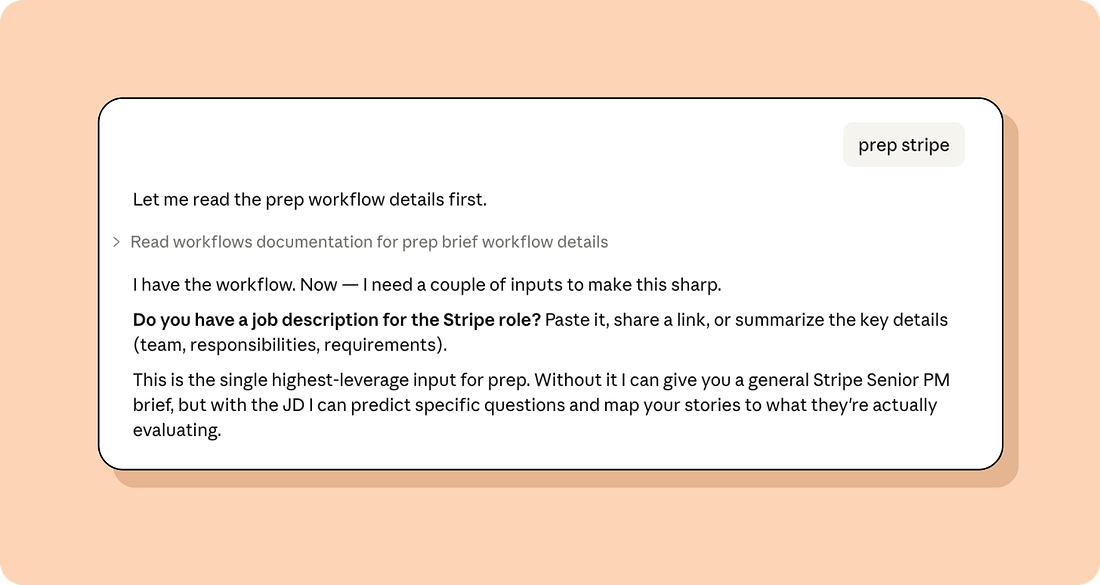
Explore a company earlyInterested in a company but don’t have an interview yet? Type research [company name]. Claude pulls together a quick brief on the company’s culture, interview reputation, and how your background maps to what they typically look for. It’s a lighter version of prep, useful when you’re still deciding where to apply or when you want a read on fit before investing in full prep. Prepare for a specific interviewIn the same conversation where you ran kickoff (or a new one):
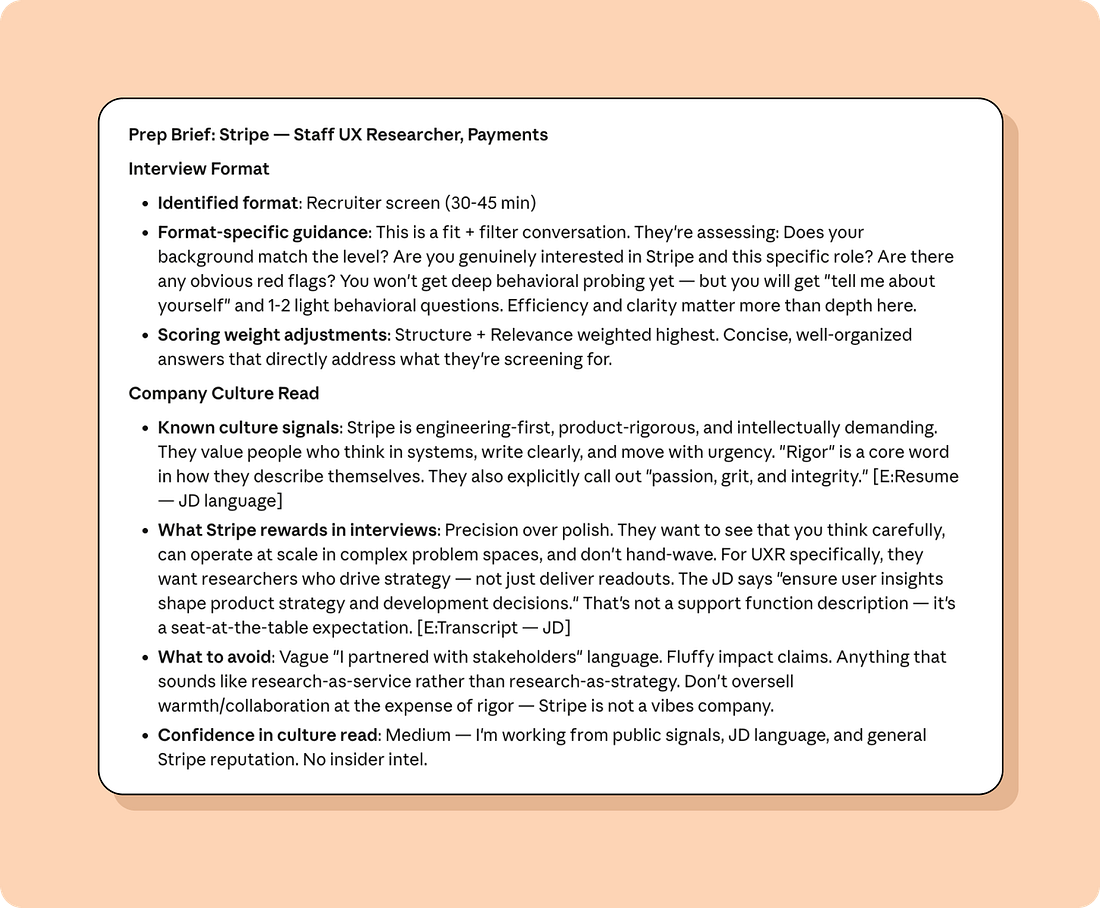
Claude generates a one-page prep brief with what this company optimizes for (based on the JD and their values), your unique positioning for this specific role, 7 to 10 predicted questions tagged by competency with story mapping (which of your stories to use for each, and where the gaps are), likely concerns about your background with one-sentence counters, a culture read on what this company rewards in interviews, and questions for you to ask them.
During prep, you can optionally share LinkedIn profile URLs for your interviewers. The coach needs actual LinkedIn URLs; names alone aren’t reliable enough due to false-match risk. You can include the URLs up front or provide them when the coach asks. For each interviewer, the coach produces an “Interviewer Intelligence” card covering: their functional lens, career path signals, recent public interests, what you have in common, predicted focus areas, rapport hooks, and watch-for signals (likely interviewing style based on seniority and function). Each card includes a confidence rating so you know how much to rely on it. If you have a story bank, the coach also maps specific stories to each interviewer—which story to deploy for which person and why. This interviewer intel then flows into other commands: mock calibrates its persona to match the interviewer, hype references their likely focus area, thankyou personalizes your notes, and questions tailors rapport-building questions. Analyze an interview you just hadRecord your interviews using a tool like Granola (available as part of Lenny’s Product Pass) or built-in transcription within Zoom or Google Meet. Then:
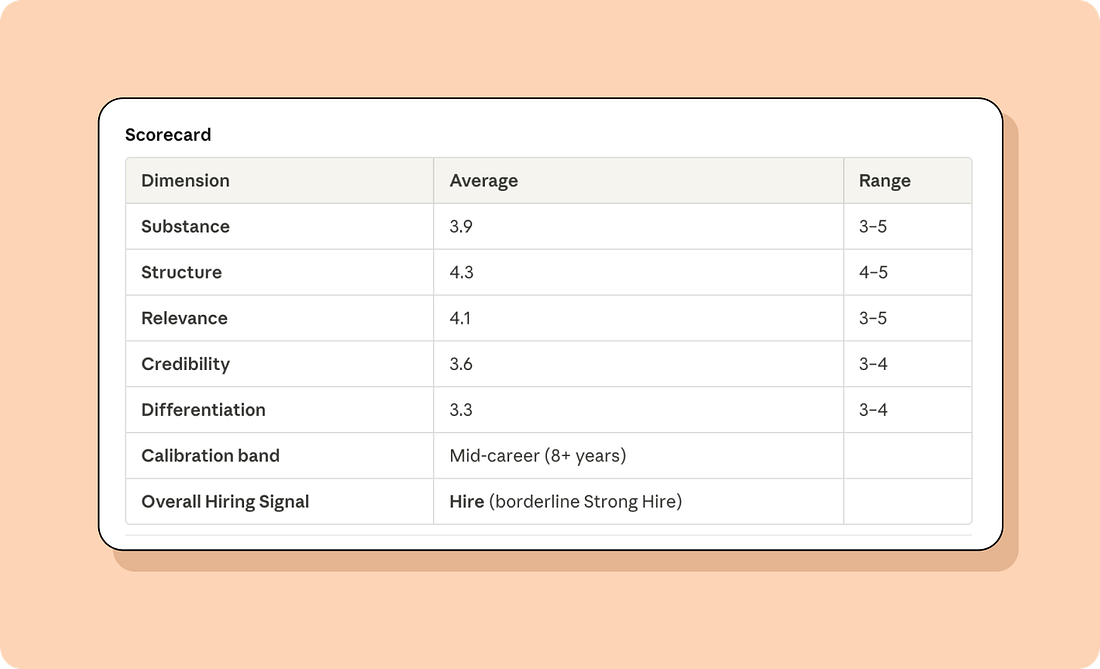
Claude starts by asking how you think it went. Which answers felt strong? Which felt off? Then it scores each answer on five dimensions: substance, structure, relevance, credibility, and differentiation, on a 1-5 scale.
After scoring, it triages: identifies your primary bottleneck, diagnoses the root cause (narrative hoarding? conflict avoidance? status anxiety?), and branches the coaching accordingly. You get a delta sheet with what’s working, what to fix, and which stories to sharpen or retire. If you want, it’ll also give you a side-by-side rewrite of your weakest answer, bringing it up to a quality rating of 4-5.
Then it asks which growth area feels most within your control to change by the next interview. You pick what to work on. This builds the kind of self-awareness that actually shows up in the room. Over time, it tracks the gap between your self-ratings and the coach’s scores. If you consistently rate your structure higher than it actually is, the coach names that pattern. This calibration—knowing where your blind spots are—is often more valuable than any individual score. Go deeper: Build a system that compoundsThe commands above handle one interview at a time. The commands below, which also come with the coach, build a system across your entire job search.
One more thing: Make the coach yours...Subscribe to Lenny's Newsletter to unlock the rest.Become a paying subscriber of Lenny's Newsletter to get access to this post and other subscriber-only content. A subscription gets you:
|










Similar newsletters
There are other similar shared emails that you might be interested in: