In Her Orbit

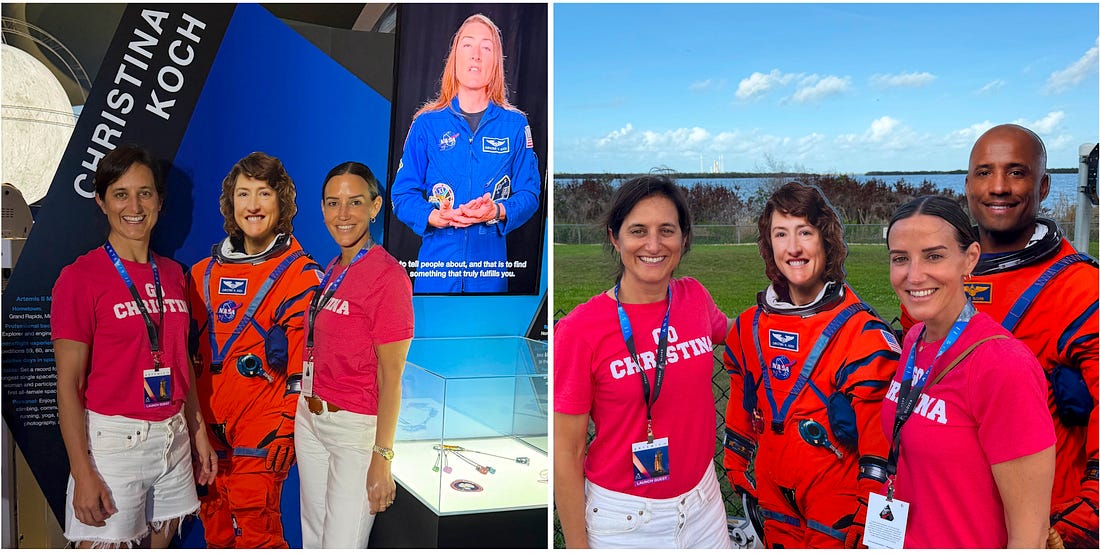
On April 1st, I watched Artemis II launch with Christina Koch’s family and friends. I know Christina and have spent time with her, her husband Bob, and friends in various places around the world. It’s not every day you meet an astronaut. When I first met Christina, I was full of cliché questions like: What do you do when you’re in space? What do you miss most about Earth? Do you really eat astronaut ice cream? At that point, Christina had already spent 328 days on the International Space Station — the longest any woman had ever been in space — and had completed the first all-female spacewalk. But even with those achievements, she still wasn’t widely known. Our mutual friend Lisa brought us together in 2020, and we spent time hiking, SUPing, sailing, sharing meals, and goofing around. Christina was up for any adventure and always calm, patient, and steady. Once when scuba diving, I was hyperventilating at the sight of a massive tiger shark overhead while Christina just chilled, unfazed, next to me. What I didn’t fully appreciate then was how hard she had already worked to get there. Christina didn’t follow the traditional military path to becoming an astronaut. Instead, she carved her own path. She earned multiple engineering degrees and worked at both NASA and the State Department. She then deliberately left to do research stints in American Samoa and Antarctica — testing herself in the most extreme environments on Earth. Every move, I’d later realize, was calculating her trajectory back into space. When Christina was selected for Artemis, I knew it was a big deal. I just had no idea how big. Four years later, Artemis II’s launch was imminent. I was shocked by the lack of media coverage leading up to the event. Artemis ll felt like the uplifting story the whole world needed. I am now aware there is always uncertainty around the exact timing of a space launch. Conditions have to be favorable and there were only a handful of days each month when the moon was in the right position for Artemis to launch. A few days out, we got word the launch was very likely to happen on April 1st. I hesitated — I already had travel plans, along with work deadlines, kids’ baseball games, soccer practices, and school field trips. But 24 hours before launch, I bought a flight to Orlando and stopped at Michael’s to grab iron-on letters for Lisa and me to make “Go Christina” t-shirts. It turns out wearing red “Go Christina” t-shirts is an excellent way to find your people. We met Christina’s siblings and friends from her time in American Samoa, Antarctica, and Galveston. Everyone was so proud of her. At Kennedy Space Center, Lisa and I explored space simulations, climbed through an ISS replica, and toured rockets from previous missions. It was also so clear how far women in space had come and still had to go. In 1983, Sally Ride became the first American woman to go to space. But leading up to the launch, she was asked if 100 tampons would be enough for an 8 day mission and NASA engineers created a makeup kit. NASA had admitted its first female astronauts only eight years earlier. Since then, NASA has only sent fifty American women astronauts into space. Everywhere we went, there were enormous photos and cardboard cutouts of Christina and the Artemis ll crew. While Lisa and I took tons of dorky photos with all the Christina cutouts, so many people stopped to say how proud of and excited they were for her. The buildup throughout the day was truly exhilarating!
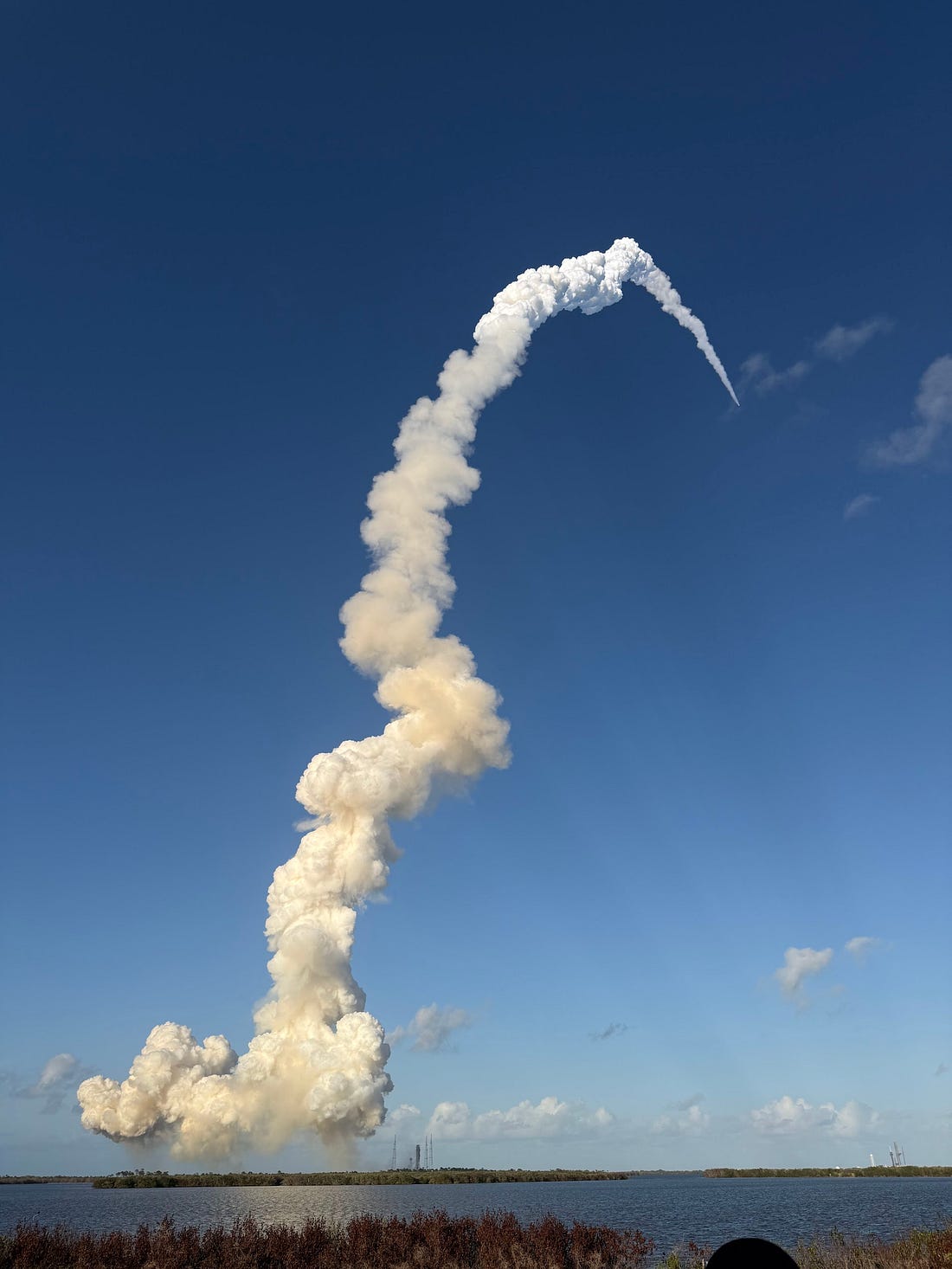
But the launch itself was more subdued than I anticipated. Sitting in the bleachers with Christina’s friends and family, the stakes felt enormous. As the countdown crossed ten minutes, the stands went quiet. I was seven years old for the Challenger explosion. That moment was forever imprinted in my mind: The launch. The explosion. The moment of silence in our classroom for the fallen crew and teacher on board. Decades later, watching a lunar mission launch in person, with a friend on board, surrounded by people who loved her, I was petrified. The countdown hit 00:00. I grabbed Lisa’s arm. Smoke billowed. The rocket lifted. We could hear the burn as Artemis climbed higher. People around us stood and cheered. But I still couldn’t breathe. Up went Christina, Reid, Victor, and Jeremy. Until they were a speck, and then disappeared. 73 seconds later, I finally exhaled.
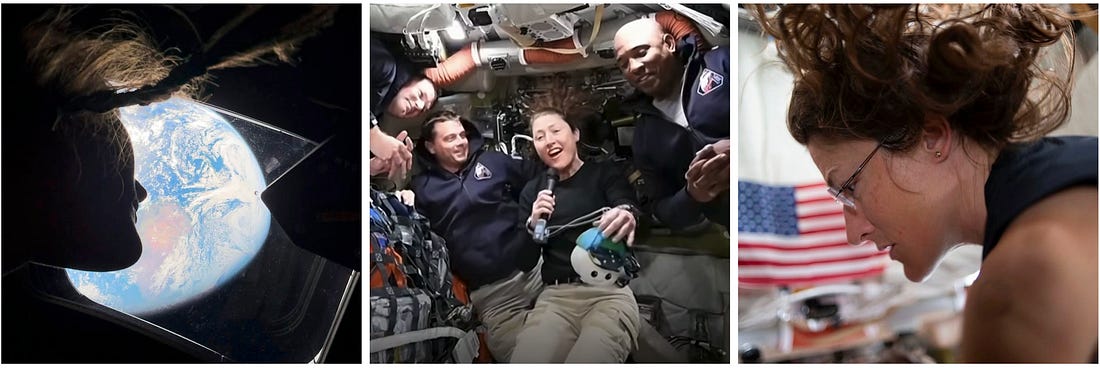
People had never been to the moon in my lifetime. And the significance of this launch — especially with a woman and a Black man going farther into space than any humans before — started to sink in. During the mission, my social feeds filled with the most incredible images that also mesmerized the world: Christina’s braids floating in zero gravity, her fixing the toilet, her and the crew working and exercising in shifts.
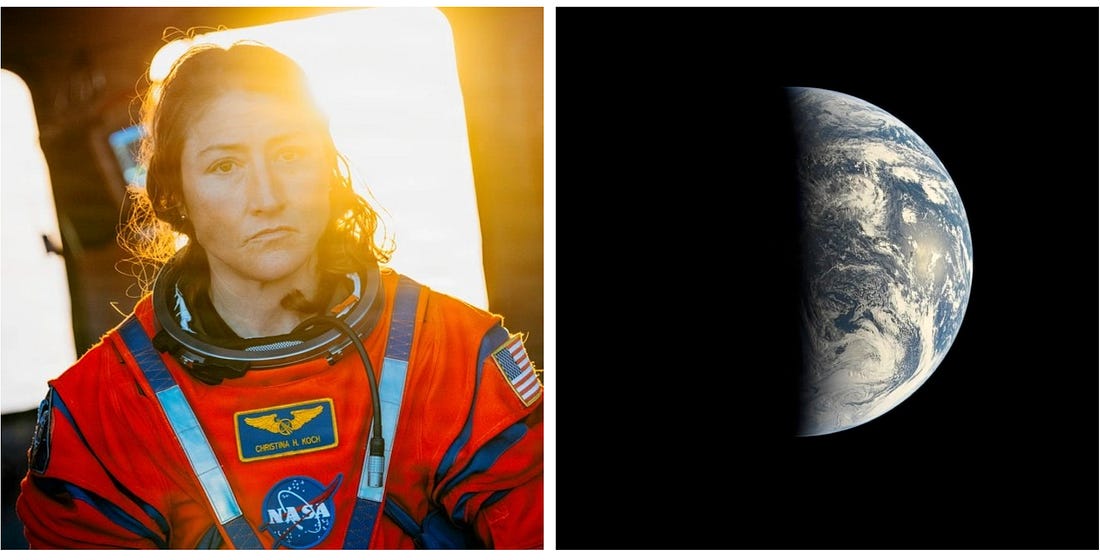
I kept thinking about the person I knew. The one who stayed calm next to a tiger shark, who laughed as she sprinted across tied-together SUP boards, who patiently built Magnatile castles with my youngest son. That same person was now looking back at Earth from farther away than any human had ever been. And the world was celebrating her. The first woman to travel to and past the moon, was being applauded for her intellect, commitment, hard work, drive, and for being herself. Nobody was commenting on her appearance or whispering DEI. With that much awe in the air, there was no space for smallness. Instead, Christina brought the whole world along for the ride. She inspired us to see ourselves as team humanity. I couldn’t be a prouder friend.
You're currently a free subscriber to Elizabeth Laraki. For the full experience, upgrade your subscription.
|





Similar newsletters
There are other similar shared emails that you might be interested in: