Nuitée: The Invisible Infrastructure Behind the Next Era of Travel
- Mauricio | Travel Tech Essentialist <traveltechessentialist@substack.com>
- Hidden Recipient <hidden@emailshot.io>

Nuitée: The Invisible Infrastructure Behind the Next Era of TravelHow a bootstrapped, profitable API company is becoming the backbone for AI-driven travel distribution
Welcome to the 6th sponsored deep dive on Travel Tech Essentialist. I publish no more than 3 of these per year, each one zooming in on a standout company that's shaping the future of travel. They're free for all subscribers and meant to go deeper than the usual headlines, with practical insight into strategy, execution, and what’s actually working. If you’re curious how I pick these companies, here’s the thinking behind it. Today, we’re exploring Nuitée, a travel infrastructure company that spent seven years building quietly and profitably before most of the industry noticed. Founded in 2017, Nuitée set out to give travel the equivalent of what Stripe gave payments and Twilio gave communications: a single, programmable API that makes complex infrastructure simple to build on. No venture capital, no press cycle, just years of unglamorous work connecting hotel supply to a growing list of partners who needed it. That patience paid off. Nuitée now processes over 2 billion daily searches, counts more than 20,000 partners on its platform, and has powered travel bookings inside companies as varied as Revolut, Grab, and Attijariwafa Bank, none of which started out as travel companies. Having grown 10x since 2022 while remaining profitable throughout, Nuitée closed a $48 million Series A led by Accel in late 2024, backed by an investor roster that includes the Chairman of Booking Holdings, the former CEO of Priceline, and the founder of HotelTonight. The thesis behind the round is simple: AI is collapsing the traditional travel funnel, and Nuitée wants to be the infrastructure layer that powers whatever replaces it. Let's dive in. The funnel is collapsingPicture this. You want to book a family hotel in Athens for the summer. A few years ago, you would open Google, compare OTAs across several tabs, click through to Booking.com or Expedia, scroll through pages of results, read reviews, cross-reference prices, and eventually check out. The whole process might take forty minutes and touch a dozen different interfaces. Now picture the same search in three years. You open your AI assistant and say: “Book me a family-friendly hotel in Athens near the beach, under 300 euros a night, with parking. I’m a Hilton Honors member and a Revolut Ultra customer.” The assistant already knows your loyalty status, your payment credentials, your travel history, and your preferences. It searches, compares, applies your benefits, and completes the booking in a single seamless flow. You never opened a browser. You never compared tabs. This is what CEO Med Benmansour describes as the funnel collapse. The traditional search-click-book journey, the model that Expedia pioneered in 1996 and that has barely changed since, is being dismantled by AI. And the companies that will win in this new world are not necessarily the ones with the biggest marketing budgets or the most recognizable brand names. They are the ones that own the infrastructure layer underneath. Nuitée wants to be that layer. Why travel never got its Stripe momentTo understand what Nuitée is building, you first have to understand what travel infrastructure looked like before they arrived. Every major industry in the last two decades has had its infrastructure moment. Payments got Stripe. Communications got Twilio. Banking data got Plaid. These companies built simple, elegant API solutions that abstracted away enormous complexity and made it easy for developers to add powerful capabilities to their products. Before Stripe, accepting online payments required months of banking relationships, custom integrations, and compliance nightmares. After Stripe, a developer could be up and running in a weekend. Travel never had that moment. When Med Benmansour founded Nuitée in 2017, travel infrastructure still operated like enterprise software from the early 2000s. Accessing hotel inventory required months of negotiation, legacy relationships, and fragile custom integrations. Every new connection was bespoke, slow, and expensive to maintain. The complexity was not a secret; it was just accepted as the cost of doing business in a $9.9 trillion industry built on decades of closed commercial ecosystems.
The insight was straightforward but the execution was anything but. Travel was closed precisely because incumbents had spent decades building moats out of their supplier relationships. The question was not whether developers would build better travel products if the infrastructure was accessible. Of course they would. The question was whether you could actually get access to the supply, and then make it clean and reliable enough that someone would want to build on top of it. Nuitée bet that you could. And they bet their first seven years on it. Seven years of quiet buildingYear one did not look like a typical startup story. There was no seed round, no press release, no launch on Product Hunt. It was Med and his team building integrations during the day and selling at night. The first customers came through direct outreach and relationships in the travel ecosystem, specifically smaller OTAs and travel businesses that were underserved by existing providers and willing to try something new. The business model was transaction-based from day one, which turned out to be the right call both commercially and philosophically. Revenue would scale with customer success, not just headcount. This forced the team to be deeply invested in whether their customers actually grew.
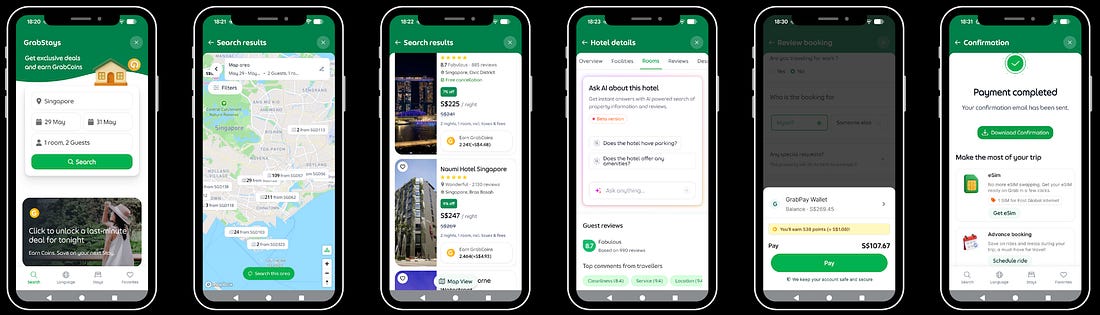
That obsession showed up in the numbers. By the time Nuitée raised its Series A in late 2024, the company had grown 10x since 2022, processed over $1 billion in booking volume, and remained profitable throughout. Those are not the numbers of a company burning cash to buy growth. They are the numbers of a company that found genuine product-market fit and scaled it carefully. Ben Fletcher, Partner at Accel who led the round and joined the Nuitée board, drew an explicit comparison to Atlassian and Qualtrics: companies that built quietly and profitably outside Silicon Valley for years before becoming globally recognized infrastructure businesses. “Med and his team have built a very impressive business,” Fletcher said. “Bootstrapping first to build a quiet, profitable powerhouse and now, ready to go big globally.” The bootstrapped years were also about building something that actually worked under pressure. Travel infrastructure is unforgiving. Hotels have different cancellation policies, tax rules, booking lifecycle rules, and payment flows in every market. Users expect booking to feel instant and frictionless even though thousands of moving parts are happening in the background. Getting that right required years of unglamorous work that no venture timeline would have allowed. What Nuitée builtAt its core, Nuitée is an API infrastructure platform for travel. But that description flattens something that took seven years to construct. The platform is organized around two products that serve opposite sides of the same market. Connect is the demand-side infrastructure, giving any company that wants to offer travel bookings access to 2.9 million properties across 300+ supply partners, direct hotel connections, and 36 connectivity providers through a single API. For a developer or a business wanting to embed hotel bookings into their product, Connect is the difference between months of integration work and days. Cloud is the supply-side platform, built for hotels and lodging providers who want to distribute their inventory directly into the channels where their guests already spend their time, whether that is a banking app, a super app, a loyalty ecosystem, or an AI assistant. Both products sit on top of the same underlying infrastructure: a programmable orchestration layer that handles the complex logic of pricing, benefits eligibility, loyalty, promotions, and personalization in real time. Today Nuitée processes over 2 billion daily searches across 150 source markets and counts more than 20,000 partners on its platform. That scale matters because it creates a data advantage that compounds over time. The more bookings flow through the platform, the better the pricing intelligence, the richer the content, and the more useful the AI tools become. Early on, Nuitée made a mistake that turned out to be instructive. “Initially we thought APIs alone were enough,” says Med. “Over time we realized customers also needed orchestration layers, analytics, UI components, white-label capabilities, and increasingly AI-native tooling. We evolved from being purely a connectivity provider into a broader programmable travel platform.” That evolution is important. What Nuitée is today is significantly more than what they set out to build in 2017. The market taught them that infrastructure, to be truly useful, has to do more than transmit data. It has to make the data intelligent. The new distribution mapIf you want to understand why Nuitée matters right now, you have to understand what is happening to travel distribution. For 25 years, the travel distribution map was relatively stable. Hotels listed their rooms. OTAs aggregated them. Travelers went to OTA websites. Google disrupted the top of the funnel by capturing travel search intent, but the downstream booking flow remained largely the same. The channels were known and the relationships were fixed. That map is now being redrawn from scratch. The most significant shift is not AI, though AI is accelerating everything. The most significant shift is that the platforms where people spend their time have grown powerful enough to want to own the transaction too. Super apps, fintech platforms, loyalty ecosystems, and social commerce platforms have all realized that travel is a high-value category that their users want and that they are perfectly positioned to distribute. They already have identity, payments, trust, and daily engagement. Adding travel is a natural extension. Nuitée is building the infrastructure that makes this possible. The Grab example is a clear illustration. Grab is Southeast Asia’s leading super app, and they wanted to introduce accommodation booking directly inside their ecosystem without redirecting users to external sites or forcing them to create new accounts. Through Connect, they launched GrabStays, enabling users to discover and book hotels seamlessly using existing identity, payment methods, and loyalty points. Travel went from being external to the ecosystem to being a native feature of it.
Revolut did something similar. As the European fintech super app expanded its travel offering, Nuitée connected over 1.5 million additional properties into Revolut Stays, turning hotel booking from an affiliate redirect into a native product embedded alongside banking, payments, and lifestyle services. Attijariwafa Bank in Morocco used Nuitée’s infrastructure to embed hotel booking directly inside its mobile banking app. On the surface, that sounds like a bank adding a feature. But think about what it actually took to make that happen: no legacy travel relationships, no months of supplier negotiations, no custom technology build. A bank with an engaged mobile user base became a hotel distribution channel in the time it takes to complete a standard API integration. That is the point. The barrier to entering travel distribution has dropped to the point where any company with an engaged user base can seriously consider it.
This is Nuitée’s thesis in action. Travel is becoming embedded infrastructure, distributed wherever the customer already is. Many channels, all directMost of the conversation about travel distribution focuses on what new channels mean for travelers and the platforms that want to serve them. What gets less attention is what this shift means for hotels. For decades, the hotel industry operated under an implicit assumption: direct meant one channel, usually the hotel’s own website or reservation line, and everything else was distribution. Third parties handled the reach, in exchange for margin, brand visibility, and often the guest relationship itself. Hotels accepted this arrangement because the alternative, building their own distribution at scale, was simply not feasible. The frustration was not really about paying commission. Intermediaries cost money and hotels understood that. The frustration was about what they gave up alongside the commission: control over how their brand was presented, access to guest data, the ability to set different terms for different channels, and the guest relationship itself. Inside an OTA listing, a Four Seasons room and a budget property three blocks away are presented under the same interface logic. The OTA owns the display rules, the pricing presentation, and the data generated by every booking. The hotel gets a transaction. Nuitée’s Cloud product is built on a different premise. Hotels and lodging providers connect directly to each distribution channel through Nuitée’s infrastructure, which means they retain control over the things that OTA relationships typically require them to surrender. Their brand appears natively inside partner experiences rather than being flattened into a commodity listing. They set their own rates and commercial terms for each channel. They retain access to booking and loyalty data. And critically, they avoid the dynamic that has frustrated hoteliers for two decades: spending marketing money to acquire guests that an OTA then intercepts. To be clear, this is not a commission-free model. Demand partners like Revolut and Grab take a margin, and Nuitée earns from transactions flowing through the infrastructure. The “direct” in many channels, all direct is not about eliminating fees. It is about the nature of the relationship. A useful parallel is Shopify. Merchants selling through Shopify still pay platform and processing fees, but nobody would say they are not selling direct. The directness is about brand control, commercial terms, and who owns the customer relationship, not the absence of an intermediary.
Nuitée is already working with several hotel groups that are restructuring their distribution strategies around this model. It is early, but the direction is clear. The same infrastructure shift that is opening new channels for super apps and fintechs is also giving hotels a way to participate in those channels on their own terms for the first time. The AI momentIf the fintech and super app shift validated Nuitée’s original thesis, the rise of AI is now amplifying it in ways that even Med did not fully anticipate when they started. The old travel funnel was built around human navigation. Users searched, compared, and clicked their way to a booking. AI breaks that model completely. As Med describes it: “AI compresses that entire flow into a conversational decision layer. In the next few years, the assistant itself becomes the transaction layer.” Nuitée launched an MCP server, which means AI agents, from ChatGPT to Gemini to any third-party AI product, can now connect directly to Nuitée’s travel inventory and booking infrastructure. A developer building an AI travel assistant can plug into 2.9 million properties, real-time pricing, loyalty-aware benefits, and full transaction capability, all through a single integration. Early AI-driven bookings are already flowing through the platform. The flow typically starts with conversational intent, moves through semantic search and dynamic filtering, applies pricing optimization and loyalty rules, and completes with transaction execution through the API, all without the user ever navigating a booking site. Nuitée has also built AI-enhanced search capabilities that go well beyond keyword matching. A user can search for “a hotel room in Paris with an Eiffel Tower view and no carpet” and receive contextually relevant results. That kind of intent-based, human-language search would have been impossible with traditional travel inventory systems. It works because Nuitée has structured its data specifically for consumption by AI systems. The developer community building on Connect, which now numbers over 50,000, is already creating AI-native travel products that Nuitée’s founders did not design for. Apps for marathon runners booking accommodation near race venues. Amalfi Coast boat rental companies bundling integrated hotel experiences. Vertical AI-powered travel management companies built for niche professional audiences. Social media creators building direct hotel booking experiences for their communities.
Sam Shank, founder of HotelTonight and one of the investors who joined Nuitée’s Series A, put it directly: “Nuitée is well-positioned to help travel companies navigate the impact of AI and the forthcoming seismic changes to travel distribution and customer experiences.”
Why take the moneySeven years of bootstrapping, profitable throughout, growing fast. So why raise $48 million? The honest answer from Med is about market timing, not financial necessity. “We reached a point where the market timing became too important to move slowly. AI is fundamentally reshaping how travel distribution works, and we saw an opportunity to become the infrastructure layer powering that transition globally. Accel understood both the scale of the opportunity and the long-term infrastructure vision.” The capital is being deployed into three areas: accelerating product development, particularly on the AI and MCP infrastructure side; expanding globally, with teams now across Ireland, Spain, London, Morocco, and the US; and scaling enterprise partnerships faster than organic growth would allow. The investor roster alongside Accel reads like a who’s who of travel and fintech. Robert J. Mylod Jr., Chairman of Booking Holdings. Jeff Boyd, former CEO of Priceline. Sam Shank, founder of HotelTonight. Jeanne DeWitt, Chief Business Officer of Stripe. Bobby Morrison, Chief Revenue Officer of Shopify. The founders of Airwallex, Bird, and Webflow. These are operators who built the infrastructure and distribution platforms of the last two decades, and they are betting that Nuitée is building the infrastructure of the next one. Accel’s comparison to Atlassian and Qualtrics is interesting. Both companies were profitable, bootstrapped, and operating outside Silicon Valley for years before going big globally. Both were building tools that developers and operators genuinely needed rather than products that required massive marketing to explain. Both compounded quietly for a long time before becoming impossible to ignore. Nuitée is on a similar trajectory, at least structurally. The question is whether the AI inflection point accelerates the timeline. ChallengesNo deep dive worth reading should skip the uncomfortable questions. The first challenge is the one Med named himself. “The travel industry is entering one of its largest platform shifts in decades because of AI and embedded commerce. If we fail, it would likely be because we didn’t move aggressively enough to capture that transition globally while the window is open.” Platform shifts do not wait. The companies that become default infrastructure during a major transition tend to stay default infrastructure. The ones that hesitate find the window has closed. The second challenge is the incumbent question. Booking.com and Expedia have enormous resources. When I put this to Med, his answer was structural rather than competitive. Nuitée’s role is to enable distribution, not to compete for end consumers. Their interest is in making inventory programmable and accessible across thousands of new channels, not in owning the customer relationship themselves. Incumbents optimized around owning consumer traffic are not naturally positioned to become neutral infrastructure providers. The business models point in opposite directions. The third challenge is the complexity underneath travel that users never see. “Every supplier, market, payment flow, cancellation policy, tax rule, and booking lifecycle behaves differently,” says Med. “Users expect booking a hotel to feel instant and simple, but behind the scenes there are thousands of moving parts.” Maintaining global reliability at the scale Nuitée is targeting is genuinely hard, and the margin for error in travel infrastructure is low. There is also a product challenge that Nuitée has already navigated once and will need to navigate again. They learned early that APIs alone were not enough and evolved into a broader platform. As AI rewrites what customers expect, they will need to keep evolving without losing the technical discipline that made the original infrastructure trustworthy. The road aheadThe travel industry has been reshaped twice since Expedia launched in 1996. The first wave digitized traditional supply and gave travelers direct access to inventory. The second wave, led by Airbnb, created entirely new supply by turning individuals into hosts. We are now at the beginning of a third wave, where travel becomes embedded infrastructure distributed through AI assistants, fintech platforms, super apps, and connected ecosystems that did not exist a decade ago. Nuitée’s bet is that this third wave requires an entirely new infrastructure layer, one that is programmable, AI-native, open by design, and capable of distributing travel inventory through channels that have not been built yet. Hotels participating as direct partners rather than reluctant suppliers. Flights and experiences joining hotels inside the same unified infrastructure layer, making the full travel journey programmable from a single integration point. Their vision, as Med describes it, is to become “the default programmable travel layer powering travel transactions across AI platforms, fintech ecosystems, super apps, loyalty networks, and enterprise commerce globally.” That is an ambitious vision. But the evidence is already there in the partnerships: a Moroccan bank offering hotel bookings within its mobile app, a Southeast Asian super app launching a native stays product, a European fintech embedding 1.5 million properties into its ecosystem, and a developer community of 50,000 building travel experiences that no traditional OTA would ever design. Go back to that Athens hotel scenario from the beginning of this piece. A traveler tells their AI assistant what they need, and a booking is completed in seconds. The traveler will never know the name Nuitée. They will not see the API calls, the loyalty logic, the real-time pricing, or the direct hotel connection. They will just get their hotel. That invisibility is the point. The best infrastructure is always the kind you do not notice. It just works. Nuitée is building to be invisible in a $9.9 trillion industry. That is a very interesting place to be.
This is the 6th sponsored deep dive on Travel Tech Essentialist. I write these pieces to highlight innovative companies shaping the future of travel, with full editorial independence. To ensure quality and exclusivity, I limit these deep dives to no more than three per year. If you're a travel company interested in being featured in a future sponsored deep dive, please visit my deep dive philosophy page to understand my selection criteria and reach out through the contact link there. Thanks for reading Travel Tech Essentialist! Subscribe for free to receive new posts and support my work.
|




Similar newsletters
There are other similar shared emails that you might be interested in: