Why China got rich and India didn't

Here is a question that I think about a lot. In the year 1950, much as today, the two largest countries in the world by population were China and India. China was a good deal larger at the time, holding 22 percent of the world’s population to India’s 15 percent; but really the two were in a very similar position. Both of them were giant countries that had assumed their current state—India as the independent Republic of India, China as the People’s Republic of China—in the preceding three years. Both of them were among the very poorest places on earth. And both of them were about to spend decades trying, by very different means, to make themselves rich. For China, that experience was one long nightmare. China had already been wrecked by a prolonged civil war and by a brutal Japanese invasion in the decades prior, the whole experience killing tens of millions of people. The civil war ended in 1949, with a Communist victory; but what came next was no less catastrophic. The Communists’ leader, Mao Zedong, immediately embarked on campaigns of vengeance against enemies of all stripes, murdering well over a million people in the process; he then launched on an ill-fated agricultural modernization campaign, the Great Leap Forward, that produced the largest famine in history, killing somewhere between 30 and 45 million people; and then a frenzied period of ideological radicalization, the Cultural Revolution, that suspended national life for a decade and killed another 1.6 million. By the time that Mao died in 1976, China was internationally isolated, economically stagnant, and still desperately poor. For India, the experience was a much gentler one. India had been a colony of the British, and it was able to achieve independence without taking up arms. British institutions like the Indian Civil Service—the colonial bureaucracy, rechristened as the Indian Administrative Service—carried over into the new Indian state. There was a bout of extreme violence in the late 1940s, as the country was partitioned into Hindu-majority India and Muslim-majority Pakistan: but even that was incomparable to what China experienced. And after that episode, India enjoyed long decades of peace, stability, and democratic rule. It was led by a broad-minded secularist named Jawaharlal Nehru, who had been educated at the finest British institutions and governed in the name of science, reason, and social progress; and throughout its entire post-independence period India maintained open elections, an independent judiciary, and a free press. It never experienced anything like the Great Leap Forward or the Cultural Revolution. I suspect that if I’d been around in the year 1950, it would have been obvious to me that India would succeed and China would not. I would have made the same bet in 1960, when China was starving tens of millions of its own people while exporting grain abroad; and I would have done it again in 1970, during the insanity of the Cultural Revolution. Nor would I have been alone. As late as 1985, prominent economists were writing articles in the New York Times suggesting that “far more than China today, India is an economic miracle waiting to happen.” But they were wrong. In the five decades since the death of Mao Zedong, China has grown much faster than its fellow Asian giant. China has become a manufacturing superpower and the single fastest-growing economy of the last 50 years; its per capita GDP, on par with India’s in 1976, is now about 2.5 times higher. And so Chinese people have become much better-off than their Indian counterparts. In 1987, median purchasing-power adjusted income in China was $1.88 per day, compared to $2.94 per day in India. Chinese median wages surpassed Indian ones in the early 2000s; and by 2022, China recorded a median income of $13.36, against $5.54 in India. In the 35 years between 1987 and 2022, Chinese median income rose 611 percent, while Indian median income rose only 88 percent. So what happened? Why did China get rich, and India didn’t? What explains the Sino-Indian divergence? Last year, I visited India and got the chance to pose these questions to a few prominent Indians, including several members of the Indian parliament. The most common answer that I heard from them was simply that India reformed later. Both India and China operated under strict state control of the economy for much of the post-1950 period; but while China began liberalizing its economy in 1978, India waited until 1991. And so China simply has a 13-year head start: no wonder it’s grown more than India has. But that doesn’t explain why China has continued to grow faster than India. Between 2000 and 2022, long after both economies had liberalized—and with China already being considerably wealthier—Chinese growth still significantly outpaced Indian growth. So even decades after liberalization, India still underperformed China. The timing of liberalization can’t explain the divergence. The same is true of policy more broadly. There are all sorts of ways in which Indian economic policy remains inefficient and distortionary in ways that inhibit growth; but the same is true for China and indeed for practically all countries. I don’t think that policy differences explain why India has so reliably underperformed China even at much lower levels of income. The same is true, I should add, of explanations that cite “Chinese culture” and “Indian culture.” It’s obvious that China and India have different cultures, and that those cultures lead people to behave in different ways. But that doesn’t explain why China started to outgrow India when it did. In the early twentieth century, long before Mao or Indian independence, India was richer than China, and Indian and Chinese cotton mill workers displayed broadly similar levels of productivity. Whatever cultural advantage that China might enjoy over India, it wasn’t operative a hundred years ago. So I want to propose my own explanation for why China got rich and India didn’t. The moment of divergence, I think, came not in 1978, or in 1991, but around 1950. Rapid industrial development requires human capital: workers who are literate enough to be trained, healthy enough to show up, disciplined enough to come in on time, and sufficiently unencumbered by traditional life that they can sell their labor to whoever offers the most for it. Traditional agrarian societies produce almost none of these people: the peasants who made up the bulk of both India and China in 1950 tended to be illiterate, sickly, and restricted in all sorts of ways. For people to be productive workers in modern economies, all of that must be cut away. The more advanced European states spent much of the last millennium doing exactly that. And between 1950 and 1980, China succeeded—frequently through brutal means—in replicating that process: over the course of a few decades, the Chinese state modernized its society at the barrel of a gun. By 1980, as its economy opened to the world, China was a socially modern country that just happened to be extraordinarily poor. It had the human capital for rapid industrialization. But India never underwent that transformation. Its traditional social order survived independence more or less intact; and the Indian state never managed to develop its people’s human capital as China had. When India finally opened its economy to the world in 1991, its people were simply not prepared for industrial modernity in the way that China’s were. China invested in its people; India did not. So how did China do it? And why wasn’t India able to do the same?
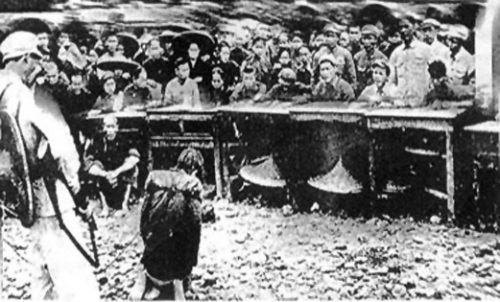
The Communist road to capitalismIn 1949, after decades of war—either against the invading Japanese or against their Nationalist foes—the Communist Party of China triumphed over all its enemies and achieved complete power over mainland China. The remaining Nationalist forces fled to Taiwan; and Mao Zedong, paramount leader of the Communist Party, announced the formation of the new People’s Republic of China. Mao had three overriding objectives for the governance of China. The first was the absolute consolidation of Communist power over the country; the second was the reconstruction of social life along Communist lines; and the third was the economic transformation of China, from an impoverished and agrarian society into a wealthy and industrial one. On the last goal—making China prosperous and powerful—Mao failed entirely. China remained bitterly poor throughout his time in power, and all his interventions in economic policymaking proved to be disastrous. But on the first two goals, eliminating opposition to Communist rule and reshaping Chinese society according to his whims, Mao was remarkably successful: between 1949 and 1976, the Communist Party totally transformed Chinese life. It’s hard for us today to grasp just how brutal that transformation was. From 1950 onward, every force in Chinese life that might contest the hegemony of the Communist Party was ruthlessly suppressed and destroyed. The landlords and “rich peasants” who had comprised the traditional leadership class of the villages, for example, saw their lands expropriated by the Chinese state in the 1950s; they were forced to sit through public sessions in which the peasants would “speak bitterness” to them, typically culminating in their being beaten to death. Several hundreds of thousands of people were killed in this way. During the same time period, another several hundreds of thousands were killed as “counterrevolutionaries” opposed to Communist power. But it wasn’t just landlords, rich peasants, and “counterrevolutionaries.” Practically every representative of traditional power in Chinese life was crushed. The hundreds of secret societies and sects that had dotted Chinese life, counting about 13 million members in 1949, were destroyed in the “Withdraw from the Sects” campaign; Confucianism and other pillars of the old order were attacked and suppressed; the hundreds of thousands of small shrines that had structured Chinese folk religion were declared “superstitious” and obliterated; major faiths were brought under state supervision, and at the peak of Communist enthusiasm in the 1960s religion was banned entirely and countless ancient temples destroyed. The famous Jing’an Temple in Shanghai, built in the third century, was turned into a plastics factory.
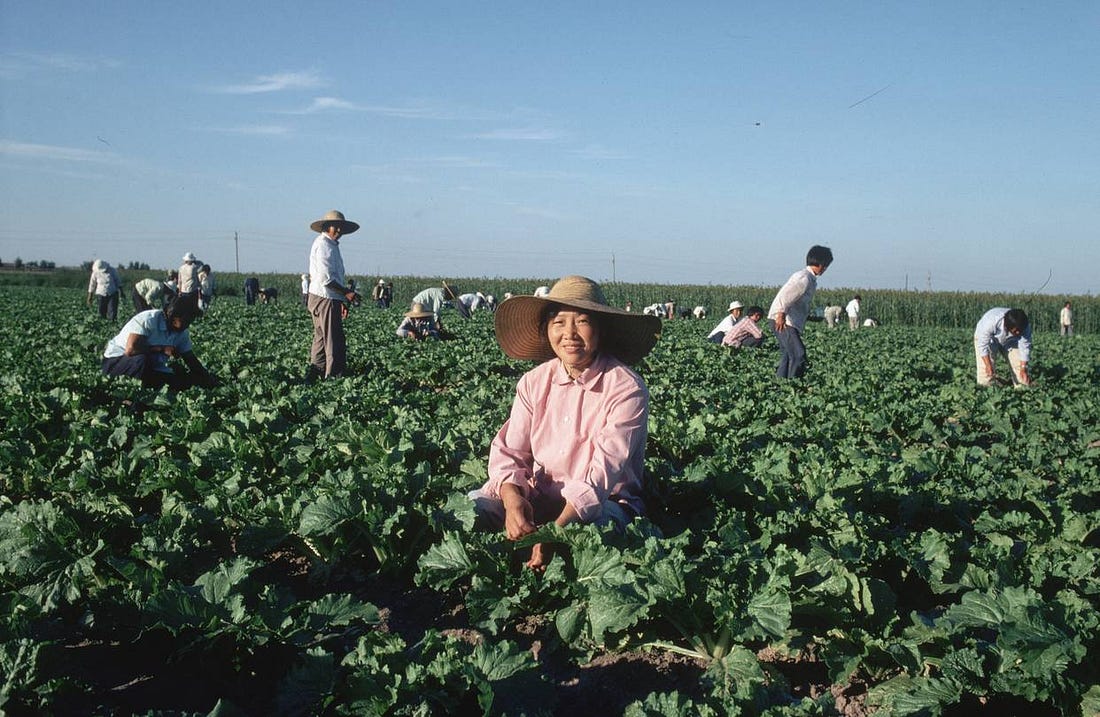
Even family patriarchs lost much of their authority. Decisions that had once been vested in families and elders—about, say, marriage or the allocation of land—were stripped and transferred either to individuals (in the case of marriage) or the state (in the case of land). In 1950, the Chinese government passed the New Marriage Law, which banned arranged marriage, concubinage, and child betrothal, gave women the right to own property and divorce freely, and allowed women to keep their own names upon marriage. This was a radical departure from the patriarchal order that had governed Chinese marriage for all known history: and while it led to a tremendous amount of conflict, the Chinese state simply crushed opposition—branding elders as “landlords” and encouraging women to “speak bitterness” about their in-laws and grandparents. The mass mobilization of women into the workforce, under the slogan that “women hold up half the sky,” was similarly transformative: tens of millions of women were pulled out of domestic seclusion and into economic life, and thus freed from the control of their families. And so the traditional Chinese kinship unit—not merely a “family” but an autonomous institution governing the lives of its members—was destroyed. All this meant that between 1949 and 1976, the Chinese state effectively destroyed traditional Chinese society: the social landscape of the old China, with all its complexity and custom, was simplified and smoothed away. And in its place, the Chinese state forged a new nation along its preferred ideological lines. Economic development always eluded Mao; but human development—mass education and mass health—proved more attainable. Literacy campaigns and mass education helped raise the literacy rate from roughly 20 percent in 1949 to almost 70 percent by 1982. These gains were concentrated among women: Chinese women went from “virtual complete illiteracy” to a literacy rate of about 50 percent during the same period. The progress in health was similarly rapid: child mortality fell by 80 percent between the early 1950s and the late 1970s. Even with all the horrors of Maoist rule—including, it should be remembered, the largest famine in history—between 1949 and 1976 China recorded one of the largest sustained increases in life expectancy of any country in history, rising from about 41 years in 1949 to 61 by 1976. And for the first time in history, Chinese women were meaningfully included in public life: by the late 1970s, China had a female labor force participation rate exceeding that of many rich countries. And so by the time that Mao died in 1976, Chinese society had been utterly transformed. It was still a deeply poor and largely agrarian country; but it had education and health outcomes far exceeding what you’d expect from a country at its level of income. And it had crushed the traditional social structures that had previously governed every aspect of Chinese life. It was a socially modern country that just happened to be extremely poor: in 1980, China had the same life expectancy as Mexico despite having a per capita GDP 80 percent lower than Mexico’s. And this meant that by the late 1970s, even before the “reform and opening up” process started, China was perfectly prepared for industrial capitalism. The old constraints—kinship, tenancy, female seclusion—had been swept away; the Chinese workforce was mobile, trainable, and cheap. That mismatch, between China’s level of human development and its level of wealth, was bound to be resolved by rapid economic growth. When analysts from the World Bank visited China in the early 1980s, they reported that its low-income groups were “far better off in terms of basic needs than their counterparts in most other poor countries”; if China’s “immense wealth of human talent, effort and discipline can be combined with policies that increase the efficiency of resource use,” their report said, “China will be able, within a generation or so, to achieve a substantial increase in the living standards of its people.” And that’s exactly what happened.
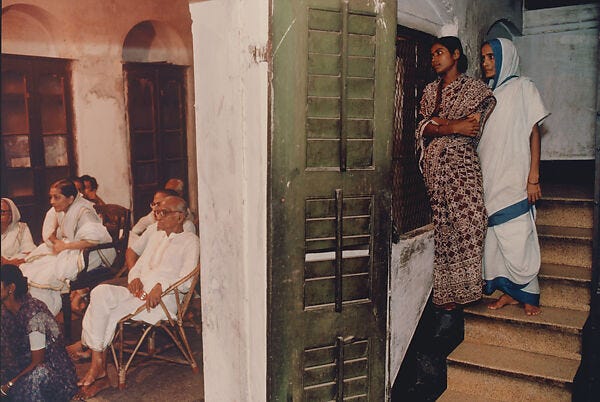
India’s failed social modernizationOn the surface, India’s trajectory was a much happier one. India didn’t need to fight a war of independence to gain independence: power passed from British hands to Indian ones more or less by negotiation. The partition of India was horrific, killing between half a million and two million people; but it still paled in comparison to the scale of the Chinese Civil War, the Sino-Japanese War, or the Great Leap Forward. And in the decades after independence, India enjoyed stability and democratic governance. It never saw the barbarities that China experienced under Mao. But India also never underwent the social transformation that China did. The great power in India in the decades after independence was the Indian National Congress, which had been the central vehicle for winning independence. Between 1947 and 1989, Congress found itself out of power for only three years; its hold on power wasn’t absolute, but it was certainly dominant. But Congress wasn’t really an ideological movement. It had started in the late nineteenth century as a forum for educated Indians seeking moderate reform, and then transformed into a mass movement for independence. It was a big-tent party whose membership amounted to the entire cross-section of Indian life: left-leaning secularists, Hindu traditionalists, upper-caste chauvinists, lower-caste activists, landlords, socialists, and many members who were simply non-ideological and attracted to the charisma of the party’s leaders or the power that membership offered. And so even though Congress dominated Indian politics for decades, it never offered a coherent program for remaking Indian society. If the Chinese Communists sought out endless antagonisms, Congress avoided them; if the Communists imposed radical change from above, crushing all who stood in their way, Congress was happy to defer to existing interests and hope for social cohesion and gradual progress. This doesn’t mean that the leaders of the Congress Party didn’t have their own ambitions for transforming India: Nehru, who served as prime minister from independence until his death in 1964, had a strong dislike for the “superstition and deadening custom and tradition” of traditional Indian life, and wanted to solve the “insanitation and illiteracy” and “hunger and poverty” that marked the country. But Congress wasn’t united behind him: Nehru simply didn’t have the power to achieve this in a real way. In 1950, for example, Nehru and his law minister—the famed lower-caste activist B. R. Ambedkar—introduced the Hindu Code Bill, a sweeping reform of Hindu personal law. (Under the Indian constitution, different religious communities were governed by different systems of personal law.) The bill would have outlawed polygamy, granted women the right to divorce and inherit property, and permitted inter-caste marriage. It was similar in structure to the New Marriage Law that the Chinese government passed the same year, though it stopped short of banning arranged marriages like the New Marriage Law had. But the Chinese government had imposed the New Marriage Law by fiat and steamrolled those who stood in its way. Nehru and Ambedkar, by contrast, found themselves frustrated by a wave of opposition from Hindu traditionalists: even India’s president attacked the bill, suggesting that introducing concepts “foreign to Hindu law” would “cause disruption in every family.” And so the Hindu Code Bill died in parliament. Ambedkar resigned in disgust; and while Nehru ultimately succeeded in reforming Hindu law, he was forced to agree to enormous concessions. The law that regulated Hindu inheritance, for example, exempted agricultural land from its purview entirely, and so didn’t touch the vast majority of useful property; the law that regulated marriage included a right to divorce, but also a provision for the “restitution of conjugal rights” that gave husbands a court-enforceable right to compel their wives to return home. But it didn’t really matter what the laws said: enforcement was weak to nonexistent. Divorce and intercaste marriage, whatever their legal status, remained vanishingly rare, because the village and the family enforced the old rules regardless of what the law said; customs that compelled women to renounce their inheritance claims, like the Rajasthani custom of haq tyag (“sacrifice of right”) or the Haryanvi custom of karewa (forced remarriage of widows to control their land rights), remained common. Even the officials charged with enforcing the laws subverted them: the administrators who registered inheritance claims, for example, would routinely pressure daughters to sign away their rights in favor of their brothers. And that was the general pattern of attempts at social modernization in India in the twentieth century: highly publicized reforms, followed by little change on the ground. In 1961, the Indian government made dowries—payments made by a bride’s family to the groom’s family at marriage—illegal, since the practice entrenched the subordination of women and encouraged domestic abuse. But the law went entirely unenforced; dowries remained as popular as ever, and all the abuses linked to dowries still flourished. (Between 1999 and 2016, dowry-related murders accounted for 40 to 50 percent of all female homicides recorded in India.) The same was true of attempts at land reform. Several Indian states attempted land reform in the 1940s, ‘50s, and ‘60s; but enforcement was lax. Landlords managed to simply evade the rules through legal means, like transferring holdings to relatives, or registering land under fictitious names; or they simply bribed or intimidated government officials. And so very little really happened. All of this meant that the Indian state was never able to achieve the social modernization that the Chinese state accomplished. The dense web of kinship obligations and customary authority that governed social life remained intact. Caste panchayats still adjudicated disputes; joint families still pooled and redistributed income; and women remained bound by all the strictures of traditional life. Nor was the Indian state able to accomplish the dramatic improvements in human capital that occurred in China. Just as it was unable to reform social life, it was unable to provide effective services; health outcomes remained dismal. Within a single generation, India’s health outcomes went from comparable to Chinese ones to dramatically worse. The gap between Indian and Chinese life expectancy widened from three years in 1950 to 11 years in 1980. Child mortality told the same story. In 1950, 27 percent of Indian children died before the age of five, compared to 32 percent of Chinese children; by 1980 it was 17 percent in India, against 6.3 percent in China.
And the same with education. Nehru and his successors were keenly interested in technology and the peaks of scientific achievement; but they could never muster similar enthusiasm for mass education. So India established a network of world-class technical institutions, like the Indian Institutes of Technology and the Indian Institutes of Management, while neglecting everything else: even today, India’s elite technical universities receive the majority of government funding for higher education, while educating only 2.6 percent of the university population. Indian mass education, meanwhile, remained abysmal. In 1990, only 55 percent of Indian children had completed primary school three to five years after the expected completion age, against 87 percent of Chinese children; and even those who did go to school often got little out of it. In 2009, when India participated in PISA—the Programme for International Student Assessment, which ranks students across countries based on test scores in math, science, and reading—it ranked 72nd out of 73 countries. (China ranked at the top.) The Indian government responded to this embarrassing result by never participating in PISA again. This lack of investment in education is visible in Indian literacy rates, which only exceeded China’s 1990 level in the early 2020s. This lack of progress was particularly brutal for Indian women. There was no great liberation of Indian women as there had been of Chinese women: all the abuses of traditional life, from dowry murders to forced marriages, remained common. Literacy rates for women remained extremely low; in 1981, only 26 percent of Indian women knew how to read. And with women’s lives still determined by the whims of their families, the vast majority of women remained in the home: by the late 2010s, India recorded a female labor force participation rate of about 27 percent, one of the lowest rates in the world—closer to Afghanistan, at 18 percent, than to China, at 61 percent. (India’s low rate of female labor force participation, in fact, means that India’s labor force remains significantly smaller than China’s, despite India having a larger population: in 2019, in fact, China’s labor force was 45 percent larger than India’s.) All of this meant that by the time that India liberalized its economy in the early 1990s, it simply didn’t have the pool of high-quality, low-wage labor that China could command. Thanks to its elite technical universities, India did have a relatively small number of highly-educated engineers, who became the backbone for India’s IT services economy; but it didn’t have the workforce for manufacturing-led growth. Its workers were less literate, less healthy, and less productive than what China could offer; they were bound by caste and kinship obligations that made them reluctant to migrate for work or sell their labor freely; and because so few women participated in the labor force, India had a higher dependency ratio than China, with each working Indian supporting far more people who weren’t working. India did grow after liberalization, of course; and by historical standards its growth was generally quite fast. But it never saw the manufacturing boom and explosive growth that China exhibited. It hadn’t accomplished the prerequisites.
People are what really matterI think that people make economic development more complicated than it needs to be. It’s true, of course, that certain policies are better than other policies, and that all sorts of things go into successful economic management: disastrous decisions can ruin everything, though (as Mao’s many disastrous decisions might suggest) not permanently. But when you come down to it, countries are large groups of people. And the most important thing for the success of those groups is simply who’s in them: this is as true for countries as it is for companies, music bands, and sports teams. People are what really matter. Whether the people can read; whether they’re stunted due to undernourishment; whether their families let them work outside the home. One of the nice things about countries, though, is that you can change who the people are. You can teach them to read and make sure they have enough to eat; you can make sure they have the freedom to make their own decisions. This isn’t easy, and it takes a long time for it to have an effect—not least because childhood undernutrition and poor schooling have consequences that can’t really be reversed. But you really can change who the people are. What made China a “miracle waiting to happen” in 1980 was that it had spent decades doing exactly that. By the time it opened its economy to the world, China had hundreds of millions of capable, disciplined, healthy, and literate workers; it had freed them from the constraints of traditional culture, such that market logic could triumph unimpeded by the old order; and because it had failed almost totally in economic development up to that point, it could offer those workers at unbelievably low wages. It’s not hard to see why it grew so rapidly once it opened its economy to the world. The Indian government never made the catastrophic decisions that the Chinese government did in the 1950s and ‘60s. But it also never made the basic investments that the Chinese government made, and it never managed to challenge the traditional social order with a fraction of the ferocity that China did. And so in all sorts of metrics—life expectancy, child mortality, literacy, female labor force participation, childhood wasting, childhood stunting, anemic pregnancies, maternal mortality—an enormous gap opened up between China and India well before they liberalized their economies. I think the true moment of divergence was not in 1978, when China began to reform its economic system, but in 1950—when China passed the New Marriage Law, while India failed to pass the Hindu Code Bill. It was then that the direction of future things was written. India, in other words, never really did the basics. Health and education outcomes in India have improved significantly over the last few decades; and while India hasn’t exhibited the world-historical growth of the Chinese juggernaut, it has still brought an extraordinary number of people out of poverty since the start of the 21st century. At current levels of growth, India will be about as wealthy as China on a per capita basis sometime in the 2040s. It’s impressive, in fact, that India has managed to grow so much without having accomplished the social transformation that China did. Given how brutal that social transformation was, perhaps that’s a good thing. But it was also a tragedy for the people of India. They remain significantly poorer and worse-off than their Chinese counterparts. The situation for Indian women in particular remains horrific. So I hope that this history of the Sino-Indian divergence conveys a simple lesson: if you want your country to go from poor to rich, the most important thing is investing in your people. When I was in India last year, one of the main things I noticed about Indian policymakers was their firm belief that with a few adjustments—industrial policy here, market liberalization there—India could start to match China’s growth record. And I don’t condemn them for thinking along those lines: good policies certainly do help a country grow. But China’s explosive growth wasn’t simply a matter of “freeing the markets,” reducing the role of the state, and announcing that it was now glorious to get rich; nor was it simply a matter of government intervention to support the manufacturing sector and subsidies for favored companies. China succeeded because it spent decades on the basics of human development and social modernization. India did not. The rest is just commentary. You're currently a free subscriber to David Oks. For the full experience, upgrade your subscription.
|





Similar newsletters
There are other similar shared emails that you might be interested in: