AI Transformation Journey: 3 Myths and Learnings
- Gregor Ojstersek from Engineering Leadership <gregorojstersek@substack.com>
- Hidden Recipient <hidden@emailshot.io>

Hey, Gregor here 👋 This is a free edition of the Engineering Leadership newsletter. Every week, I share 2 articles → Wednesday’s paid edition and Sunday’s free edition, with a goal to make you a great engineering leader! Here are some of the recent popular paid articles you might have missed: AI Transformation Journey: 3 Myths and LearningsFull recording and insights from the talk from Vinay Perneti, VP of Engineering, Augment Code, at the Engineering Leadership LIVE event in San Francisco.
This week’s newsletter is sponsored by Unblocked. [Webinar] 8 levels of context maturity in AI-native engineering
AI shows up in 60% of engineering work. But only about a fifth of it can be handed off without someone babysitting the output. That’s because agents are missing context. This 8-stage context maturity model gives a real answer on why you haven’t seen meaningful productivity gains for all the tokens burned. Join live June 24 (FREE) to learn:
Thanks to Unblocked for sponsoring this newsletter, let’s get back to this week’s thought! IntroLast month, together with my friends from Augment Code, we hosted an event called: Engineering Leadership LIVE in San Francisco. It was a blast, and there were so many insightful discussions we had! As part of the event, we also had 4 talks. - Gregor Ojstersek, CTO & Author, Engineering Leadership newsletter Full overview of my talk in this article:
- Vinay Perneti, VP of Engineering, Augment Code - Andrew Churchill, CTO, Weave Full overview of Andrew’s talk in this article:
- Anwar Haneef, GM & Head of Ecosystem, Canva Today, I am sharing the overview and the recording of Vinay Perneti’s talk at the event. Recording of the talk at the eventYou can watch/listen to the talk below, or you can keep reading for the insights. 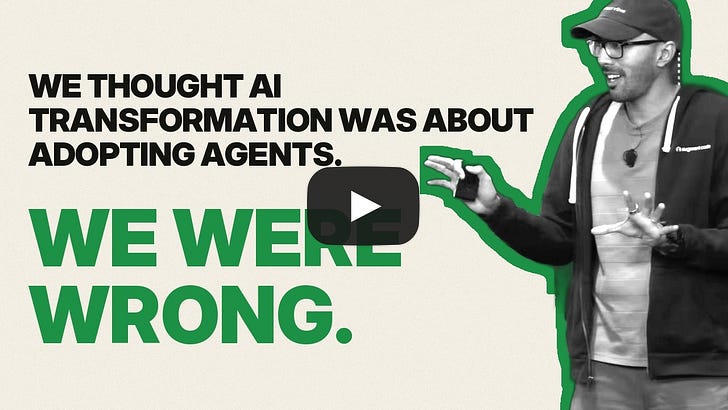 Let’s start! The November 2025 moment
You might remember the release of Claude Opus 4.5 and the big shift it had on the industry. This is what Vinay mentioned in his talk:
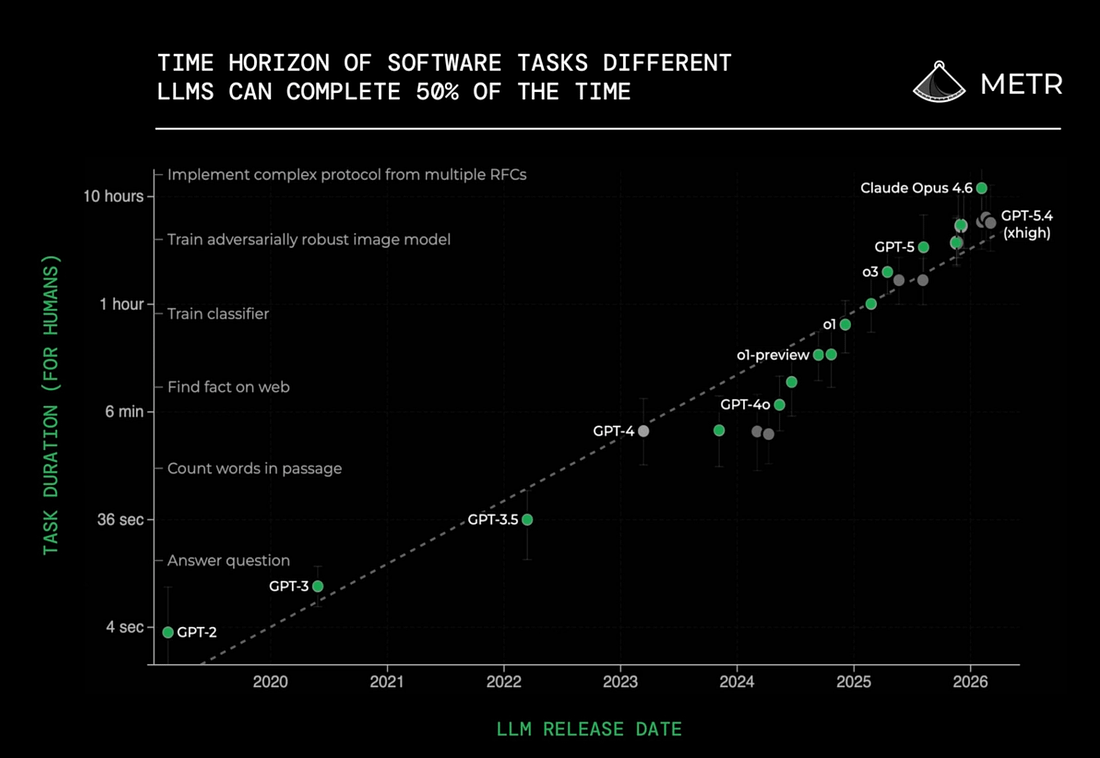
AI agents got a lot more reliable. The team mentioned that AI agents had become much better at following instructions reliably. So, they started trusting them much more. Hallucinations had also dropped significantly, so they could confidently let agents work on tasks for much longer without constant supervision. Now, let’s go through a very important message next. The exponential trend of LLMs becoming betterThe chart below shows the difference between models, based on the longest real-world software task it can reliably complete 50% of the time.
Even though the chart looks linear, there’s actually exponential progress, as you can see how big a difference it is between GPT-3.5, which can reliably do a 36-second task, versus Claude Opus 4.6, which can reliably do a 10h+ task. Some people even call this super-exponential progress. So what does that mean in practice?
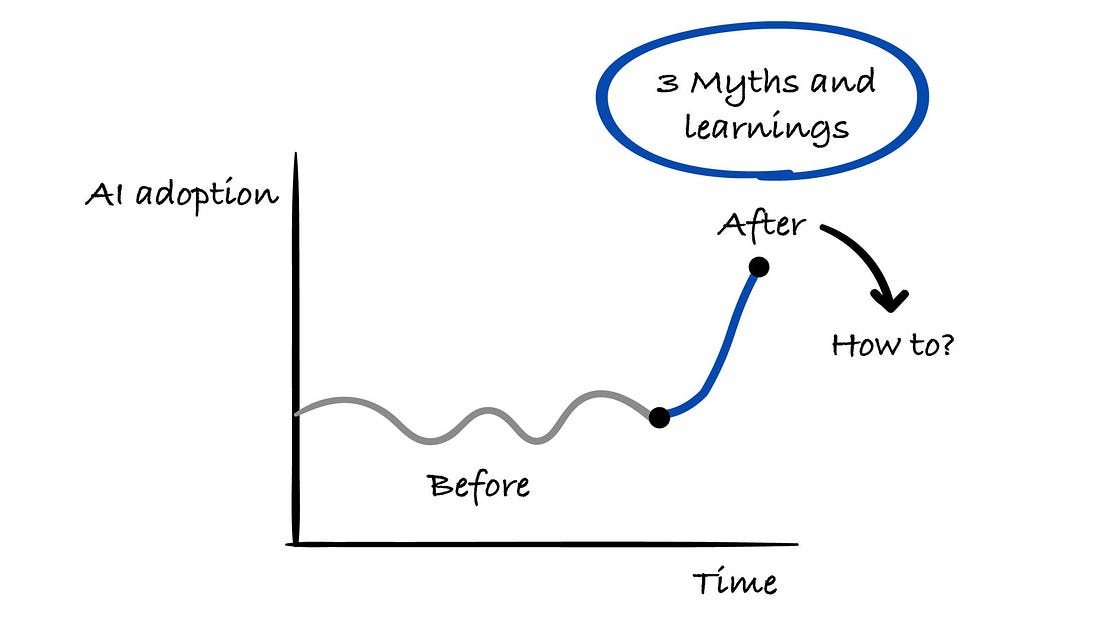
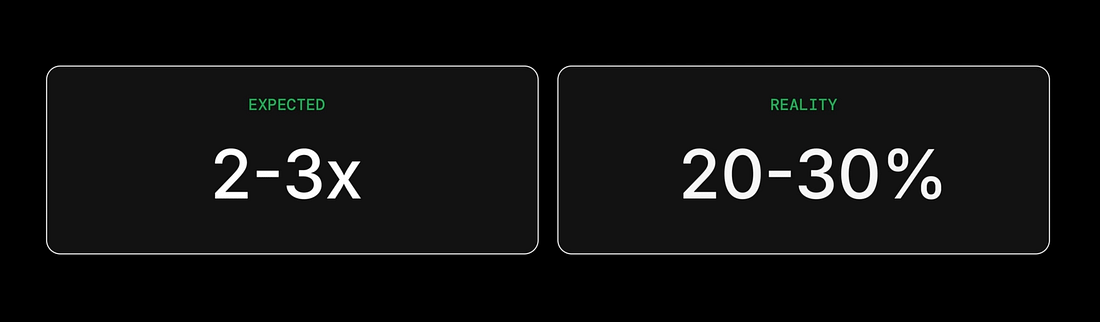
Based on the data, that’s the trajectory we’re on. Now, let’s go more into the AI transformation journey. Engineering productivity after adopting AI agentsIn December 2025, when engineers started to regularly mention that it doesn’t make so much sense to manually write code anymore, the expectation for many of the engineering leaders around the industry (Augment included) was to get a 2-3x productivity increase.
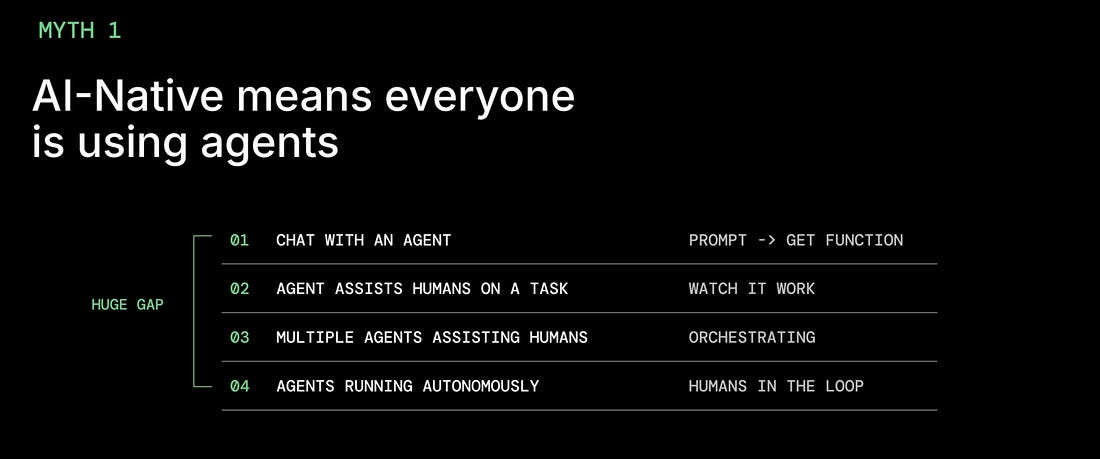
AI transformation doesn’t happen with just individuals transforming, you need a whole team to develop the same mindset. You need the whole system to change and go after the bottlenecks. It was a wake-up call for Augment, and they experimented with a lot of different things in order to become more productive over time. Let’s go through the 3 myths and 3 learnings from their AI transformation journey. Myth 1: “Al-Native means everyone is using agents”Most of the companies these days would say that they are “AI-native”, but in reality, there is a big difference between using ChatGPT to get answers and orchestrating different AI agents to do a certain work in parallel. At Augment, they had some engineers chatting with an AI agent, and some people orchestrating multiple AI agents. Here are also the 4 levels of being AI-native:
It’s a totally different way of working if you are on a level 1 than if you are on a level 3 or 4. You need totally different systems in place between these levels. The message from Vinay is very important here:
Myth 2: “You can drive the AI transformation top down”
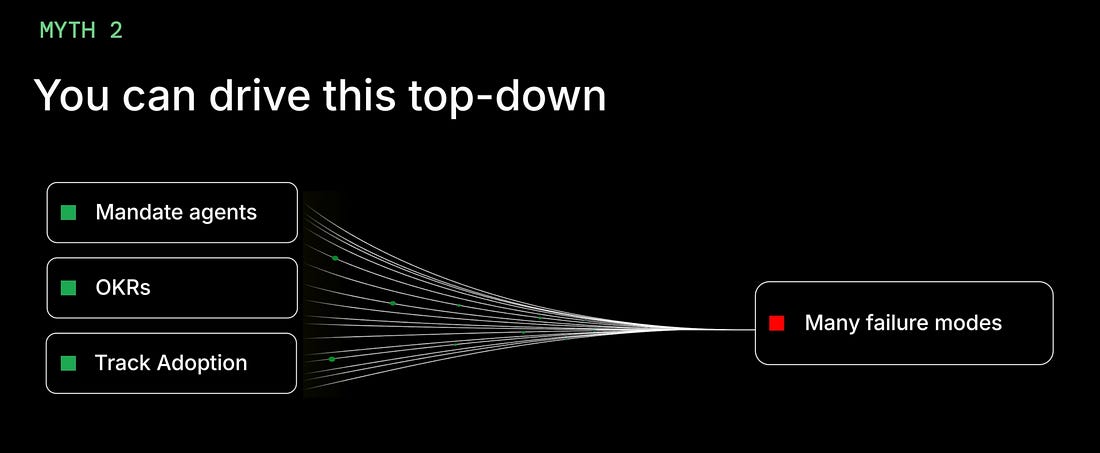
We saw companies trying to do a top-down AI transformation in 2025 everywhere. The most prominent example was the memo from Shopify’s CEO. I’ve also extensively written about this back in 2025: “Everyone is adopting agents”. “This is our OKR”. “We are going to track adoption”. “I am going to make this a part of the performance evaluation”. These have been some of the common sentences from companies back in 2025. And what was the outcome?
The AI transformation journey is not just changing 1 behavior, it’s about changing the whole system. And at the same time, it’s human nature to resist change, it’s an even higher urge to resist if something is forced upon you. If you’re forced upon something, the first time you’re going to run into a problem, you’re going to go to your manager, and say: “I told you this wouldn’t work”.
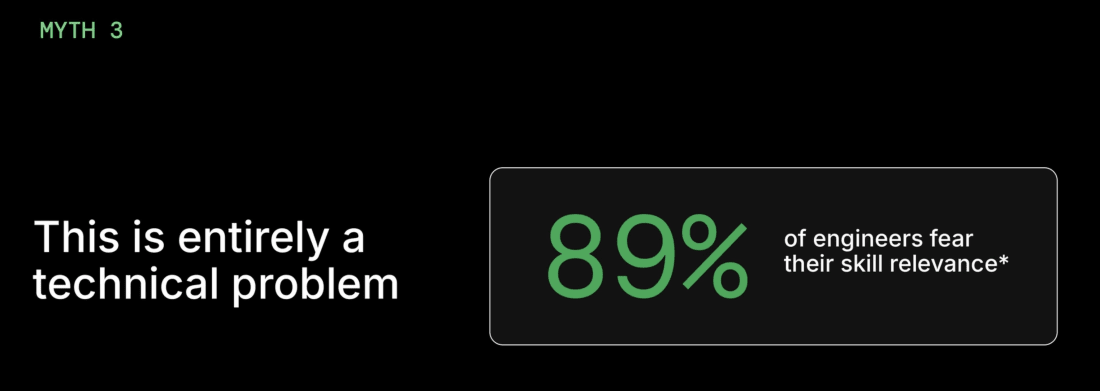
And the reason is that when a certain issue comes, or a new bottleneck emerges, people don’t wait for top-down direction. Instead, people look to resolve such things themselves, collaboratively. This principle is important everywhere, but even more important in the AI transformation journey, because the bottleneck keeps changing over time. Myth 3: “This is entirely technical problem”The biggest mistake an engineering leader can make is thinking that AI transformation is entirely a technical problem. “Let’s bring the new best tool”. While a tool is important, it’s not enough. A tool will just help you with the journey, but it won’t make it successful. You need to get the buy-in from the people. As part of the recent report done by Augment Code, they asked 219 engineers and engineering leaders the question: “What are you fearing the most right now?”.
Basically, the majority of the people (9/10) are feeling this, and they probably haven’t voiced it enough. And if someone is in that mental state and it’s not acknowledged, their willingness to embrace something new is going to be very low.
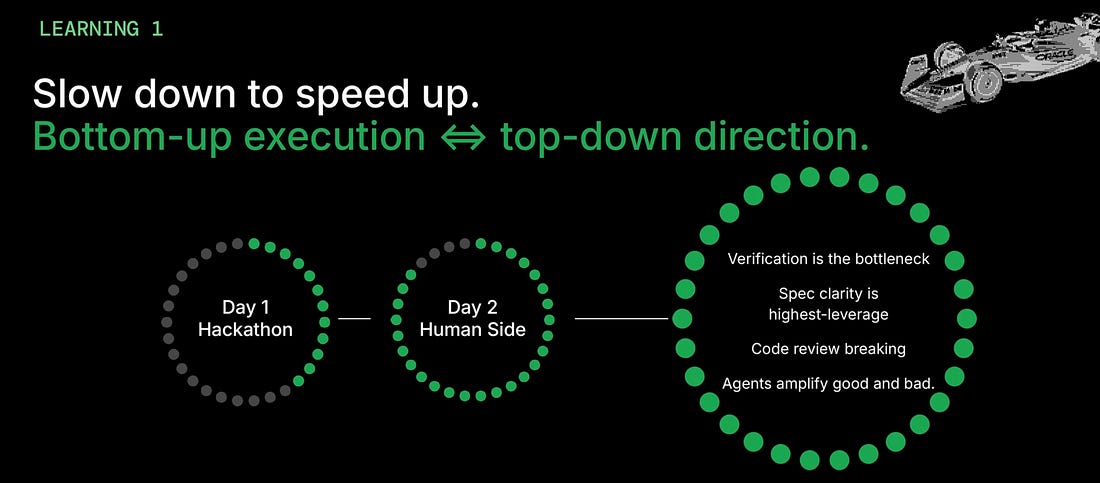
Now that we have gone through the 3 myths, we’ll go through the 3 learnings from Augment’s AI transformation journey. Learning 1: Slow down to speed upThis is a great analogy that Vinay mentioned:
And that is true for all the organizations. If you don’t slow down, you might be going full speed in the wrong direction. This can be very problematic (even more so these days, as the speed of building has increased).
At Augment, they slowed down and took 2 days offsite for the whole engineering team, and did the following:
The theme of the hackathon was: 10x your agent, 10x your team, and 10x yourself. With one additional constraint which was: Whatever you’re building, build it entirely with AI agents. That’s how the team was able to experiment, share their ideas, and implement them as well.
Vinay mentioned that day 2 was a LOT more important, and that day 1 was actually preparation for day 2. They opened day 2 with Mentimeter: Live question being asked and put on the screen: “What feelings are you going through now after yesterday’s hackathon?”. And then asked everyone to answer it (anonymously), and the answers showed up on the screen. The 2 biggest themes of the answers were:
And an interesting thing happened after this:
Secondly, Vinay asked the team another 2 questions:
They created 30-minute breakout groups to think about these 2 questions, and everyone came up with very interesting conclusions like:
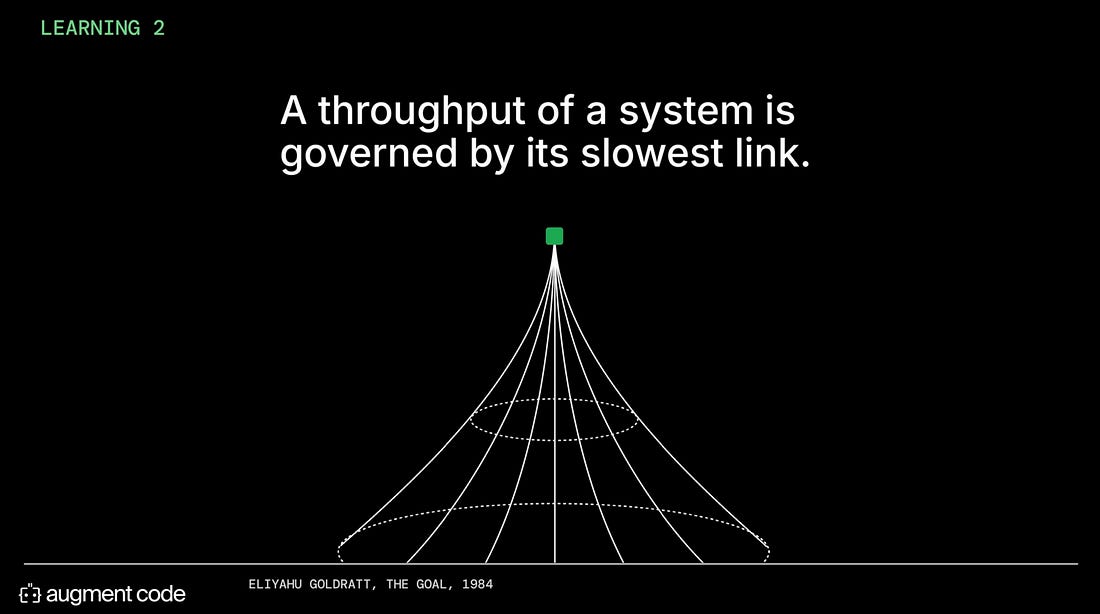
Learning 2: The throughput of a system is governed by its slowest linkThere’s a book called The Goal, by Eliyahu Goldratt, which talks about the importance of always finding the slowest link and working to improve it.
If we look at software engineering throughout history, coding has been a bottleneck, until now. And as agents get better and better at coding, the bottleneck shifts to something else. You need to actively be thinking about that. This is what they found out at Augment regarding the bottleneck shifting over 2025 and today:
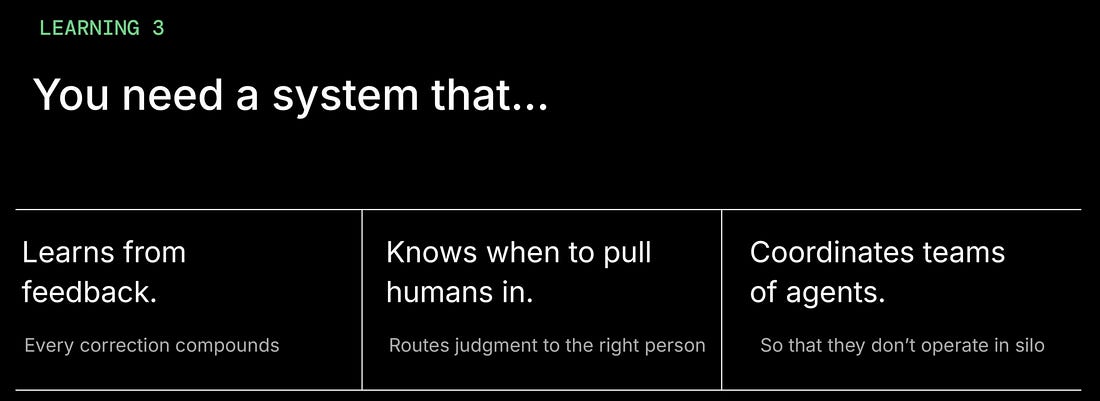
Learning 3: You need a system
As we know, smaller AI-native teams are the preferred way of working these days. And these teams usually work with a large number of AI agents. And in order to have that way of working possible, your system needs to evolve as well. You can’t expect to just create smaller teams and put 1-3 engineers together working on different projects and expect that things will remarkably change for the better. In order that the change becomes successful, your system needs to evolve as well. 3 main takeaways
Al-Native transformation journey is so much more than adopting AI agents. You can’t just give the team a new tool and expect that things will magically work out for the better. At this time, it’s really important that you show up as a leader: be supportive, provide space for the team to experiment, and give them the psychological safety, so they can make mistakes and learn from them.
If coding is not a bottleneck anymore, think about where the bottleneck is going. Figure that out and focus on resolving it.
Everybody in software at this time is going through an identity crisis, so you need a way to acknowledge that and be supportive on this journey. That is very important to keep in mind. 2 questions for reflection2 very important questions for you to reflect on. Make sure to block some time!
Last wordsLet’s end this article with the following:
Special thanks to Vinay for sharing his insights in his talk at the Engineering Leadership LIVE event in San Francisco. Liked this article? Make sure to 💙 click the like button. Feedback or addition? Make sure to 💬 comment. Know someone that would find this helpful? Make sure to 🔁 share this post. Whenever you are ready, here is how I can help you further
Get in touchYou can find me on LinkedIn, X, YouTube, Bluesky, Instagram or Threads. If you wish to make a request on particular topic you would like to read, you can send me an email to info@gregorojstersek.com. This newsletter is funded by paid subscriptions from readers like yourself. If you aren’t already, consider becoming a paid subscriber to receive the full experience! You are more than welcome to find whatever interests you here and try it out in your particular case. Let me know how it went! Topics are normally about all things engineering related, leadership, management, developing scalable products, building teams etc. You're currently a free subscriber to Engineering Leadership. For the full experience, upgrade your subscription.
|









Similar newsletters
There are other similar shared emails that you might be interested in: