Joy and Pancakes

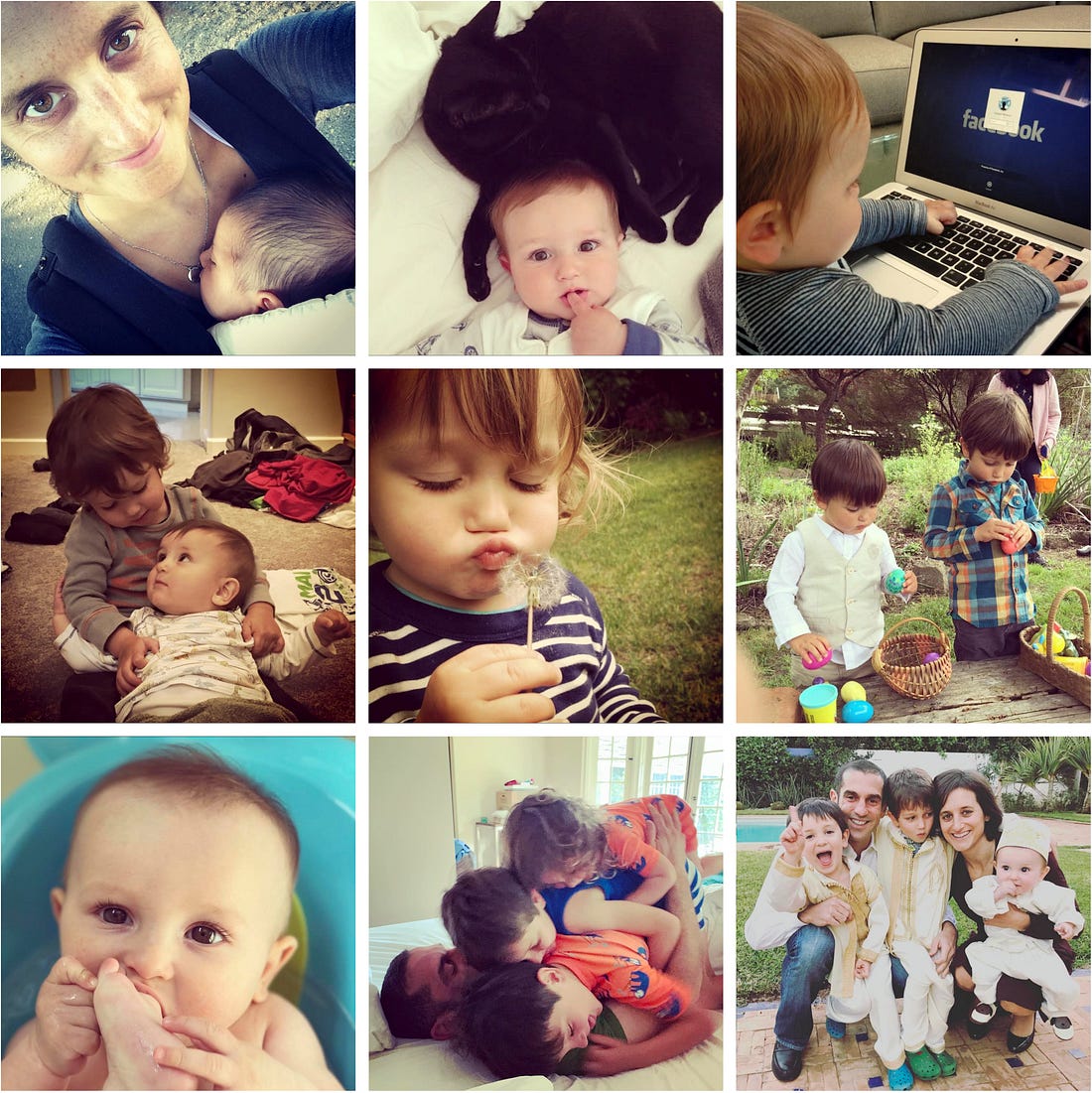
I just finished the novel, Yesteryear by Caro Claire Burke. If you’re unfamiliar with the story, it’s a dark satire about a social media celebrity who sells a fantasy homesteading, pioneer lifestyle to millions of Instagram followers. I loathed the main character, Natalie, so much I initially had trouble getting through the book. She was self-centered, manipulative, callous, and cruel — all in contrast to her cheerful, effortless online persona. But when Natalie started to spiral, I couldn’t put the book down. My repulsion started to feel strangely personal. Why did I despise this woman so much? What was it that stung? What did all of this say about me while I tried to navigate my career and kids in the age of social media? The jobI started working at Facebook when I was (unknowingly) weeks pregnant with my first child. Sharing my life online was part of the corporate culture. I was “Facebook friends” with all of my co-workers and we all shared photos from our lives inside and outside of work. I ran the design team for Facebook’s “Identity” features. By day, I decided how people should be able to portray themselves on the platform. By night, I posted photos of my kids — curating my own family life online.
The editBut one day, a co-worker who had just returned from maternity leave stopped me in the hallway and asked: How do you do it? How do you make it all seem so easy? I was dumbfounded. Huh? Nothing about parenting or “balancing” work and motherhood was easy. Sure, I only shared the adorable, happy moments. But when a baby was blowing out a diaper or a toddler was mid-meltdown, I wasn’t reaching for my phone to capture the moment, let alone share it with my friends and co-workers. I didn’t mean to paint a false picture of motherhood. While Natalie deliberately staged a performance, I just selectively chose which photos to share. But to my co-worker in the hallway, that distinction didn’t really matter. The story she saw was that I had somehow figured it all out. The splitNatalie championed traditional gender roles. She romanticized “tradwife” life while mocking “career women” like her roommate Reena, who would all end up working harder for less. I thought of myself as living the modern feminist ideal with a career I was passionate about and a family I loved. But the reality was a lot more complex. Running a three-child household with two parents working demanding jobs was hard (even with a nanny and housekeeper). And somehow, without ever choosing it, I became the default parent. I was the one getting up at night, booking doctor’s appointments, packing lunches, and keeping tabs on everything. At work, it was acceptable to be a parent and co-workers would often mention something about a photo of my kids I’d shared on Facebook. But I absolutely never talked about the demands or challenges of motherhood. I never mentioned the sleepless nights or the sick kids or the logistical puzzling I did to keep our family running. I didn’t want anyone questioning whether my children compromised my ability to do great work. Back then, the majority of people I worked with at Facebook, including most of the execs, didn’t have kids. While the company had policies in place to support parents, like generous parental leave, there was a massive gap in understanding what parenting actually entailed. I once overheard a male exec ask a colleague how her “vacation” (aka maternity leave) was. I remember my manager, a young single man, suggesting ways I could better organize my mornings so I could fit in a workout and get to the office earlier. I listened politely without telling him that before arriving at 8:45am, I had already driven my baby around the block forty-five times at 4am until he fell back asleep, gotten up again at six, fed and dressed the kids, packed lunches, changed diapers, managed meltdowns, tied shoes, and dropped my oldest at preschool. Another time, a co-worker pulled me aside after a meeting, kindly noted that I didn't seem like myself, and asked if I was OK. I broke down in tears and admitted I hadn't slept in three nights while I sat upright cradling my son, who had a high fever and sores covering the inside of his mouth. I had come to work and told no one. Every day, I showed up with bags under my eyes and a smile on my face, giving it everything I had and posting joyful photos of the boys — trying to will happiness into existence. No biggie! Reena would complain about none of it, not the disappearing husband or the flailing career or the crushing loneliness, not a word of it to anyone, because she would technically be one of the lucky ones — a flush retirement account and four months’ maternity leave, in Jesus’s name, amen — and in the world that Reena would soon inhabit, you don’t get to complain about those kinds of problems. You don’t get to complain about privilege. The exitSeven years and three babies later, I left Facebook. Outside the culture of constant sharing, I gradually lost interest in posting. I had thrived on the dopamine hits from friends’ likes and comments. It felt great to hear from my online cheering squad: You go girl! OMG, boys are exhausting. How do you do it all?!! But I started questioning why I was posting these “joy and pancakes” moments at all. They were real, but I knew by then how incomplete the picture was. The habitWhile I pretty much stopped posting, I didn’t stop taking pictures. I now have 400GB of photos and videos. But I don’t do anything with them. I don’t print them. I rarely even scroll back and browse through them. So why do I feel this pathological need to record? Photography once had built-in friction with film rolls and developing prints. But my iPhone put a camera permanently in my pocket and cloud storage eliminated the need to choose what to keep. So of course I took more pictures. But the cost shifted to my attention. “I think of all the charcoal sketches of my life. All the things I meant to do and didn’t. I meant to learn Junebug’s personality. I meant to walk through these woods. Meant to go fishing in our river with the boys; to pocket salmon by the handful and then lie out on the sun-warmed rocks and listen to the rushing water. I meant to turn off my phone.” I treasure the photos I’ve taken. But I’ve also begun to see that every time I reach for my phone, I step slightly outside the experience I’m trying to preserve. Still a documentarian, even if not for an explicit audience. — By the end of the book, my contempt for Natalie shifted. Yes, her character was filled with tragic flaws and her online performance was extreme and deliberate. But I recognized the underlying desire to portray one’s life as an idealized version of that life — whether for vanity or survival. I’ve taken hundreds of thousands of photographs and videos of my family. Of these, I’ve shared thousands on Instagram and Facebook. But I’ve hung none on the walls of our house. You're currently a free subscriber to Elizabeth Laraki. For the full experience, upgrade your subscription.
|




Similar newsletters
There are other similar shared emails that you might be interested in: