Waymos don't drive like locals
Waymos don't drive like localsWhy Waymos feel out of place in suburbia and how they could enter new areas more gracefully
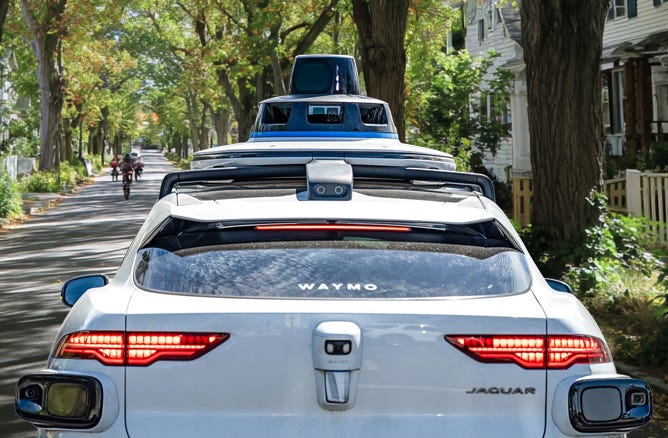
I love Waymos in San Francisco, but not so much in my suburban neighborhood. In San Francisco, Waymos feel like the most cautious and courteous vehicles — almost annoyingly so. But in the suburbs, they feel brazen, aggressive, and out of place. City driving isn’t suburban driving. For months, I had seen Waymos learning the streets with safety drivers at the helm. But as they went driverless, they seemingly brought “city driving” to the suburbs. I’ve seen Waymo’s aggressively cut across four lanes of traffic to turn into a shopping center, careen around blind corners, and cut in front of kids on bikes. None of this is against the written rules of the road, but it does violate the unspoken cultural road rules of our sleepy suburban town.
Localization is critical when launching products to new markets. A great example is the challenges we faced when bringing Google Maps to India. Now, obviously the expansion from San Francisco to the suburbs isn’t an international one, but the local rules of the road are quite different between these communities. In our town, drivers yield to kids on bikes, give pedestrians wide berth, and generally proceed with caution around blind corners. While the official rules of the road are relatively consistent across the US, cultural driving behaviors differ significantly. I grew up in Michigan, where the posted speed limit signs for freeways were 45-65mph, but everyone drove 75-80mph and used onramps to accelerate and merge with the traffic. When I went to graduate school in Pittsburgh, I was flabbergasted that cars came to a full stop on onramps and waited for a break in traffic. Technically, the driving rules were the same (use the on ramp to merge onto the freeway). But the actual behaviors were very different. As humans, we are wired to notice these differences and adapt our driving styles. But there is no manual for these stylistic adjustments to use as training data for autonomous vehicles. So how do Waymos learn these unspoken rules of the road for different communities? Could Waymo:
I don’t know what Waymo is currently doing to hyper-localize driving styles, but this is incredibly important because it impacts everyone on the road and influences how Waymos are accepted into new communities. I truly am thrilled to welcome Waymos to our town and the convenience, predictability, and rider safety are hard to beat. But I look forward to the day when Waymos drive less like someone who just showed up from the city, and instead travel the roads like part of our community.
You're currently a free subscriber to Elizabeth Laraki. For the full experience, upgrade your subscription.
|





Similar newsletters
There are other similar shared emails that you might be interested in: