#211: Packaged
- Mauricio | Travel Tech Essentialist <traveltechessentialist@substack.com>
- Hidden Recipient <hidden@emailshot.io>

The same product can fail or succeed depending on how you package it. Special thanks to Propellic for sponsoring this edition of the newsletter:
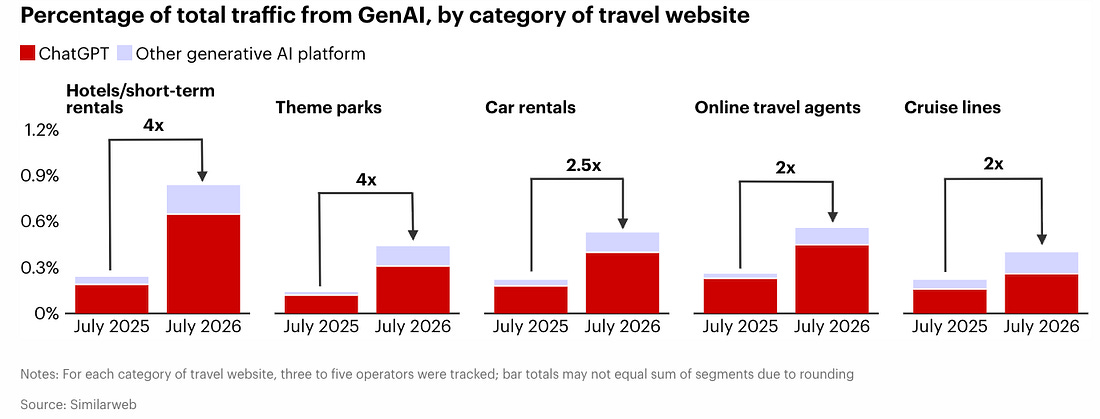
1. Still under 1%A new Bain & Company report shows that AI referrals are surging, but from a near-zero base. Traffic to hotel and short-term rental sites from AI platforms quadrupled in a year, but it still accounts for under 1% of traffic in every travel category. The stickiness is the real signal, though. In the US, 49% of consumers who have used AI to research or book travel now rely on it most or all of the time; the average across the UK, France, and Germany is 41%. Bain points to a useful precedent. Online bookings climbed from 43% in 2011 to an estimated 70% in 2025, but direct bookings stayed constant at around 45% over the same period, with intermediaries taking the rest. The lesson from the first shift to online booking is that a new way to find and book travel doesn't necessarily change who gets the booking. AI may reshape discovery long before it reshapes distribution.
2. Selling a maybeSomething new: from time to time, we’ll invite someone in the industry to share a lesson from their own work. First up is José Luis Vilar, co-founder of Caravelo, which builds subscription programs for airlines.
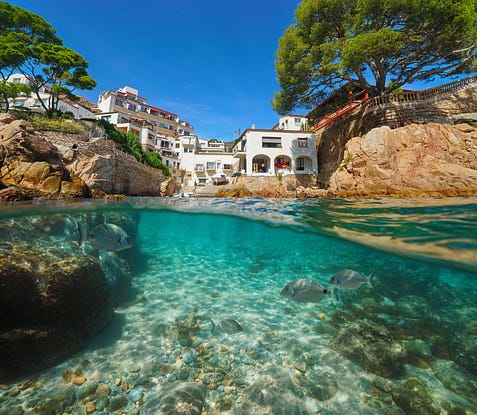
3. I'm building a hotel guide for open water swimmersMy wife Susan and I have spent years choosing hotels partly based on whether we could swim from them. And we’ve repeatedly discovered that “waterfront” doesn’t mean what a swimmer thinks it means. So we built Blue Water Hotels. Its one job is to find hotels where you can walk out the door and have a memorable open-water swim. There are 70 hotels in 16 countries so far. Hotels can’t pay to be included, and we don’t rank them. Every hotel has to clear four rules: direct access to open water or under five minutes on foot, a real unobstructed swim route, water worth swimming in, and a hotel worth staying at even if you never got wet. The photographs matter a lot. Hotel photography usually sells you the room, not the swim. We want to show what swimmers care about; where you get in, what the coastline looks like, and the water you’ll swim in. This month we also launched the Blue Water Hotels newsletter, one short email a month. The first issue is out. If you know a hotel where you’ve had a great open-water swim, send it to me, especially if you have photographs of the water and the way in. I’m much more interested in places you’ve swum than places that look good on Google Maps. Just reply to this email or leave a comment.
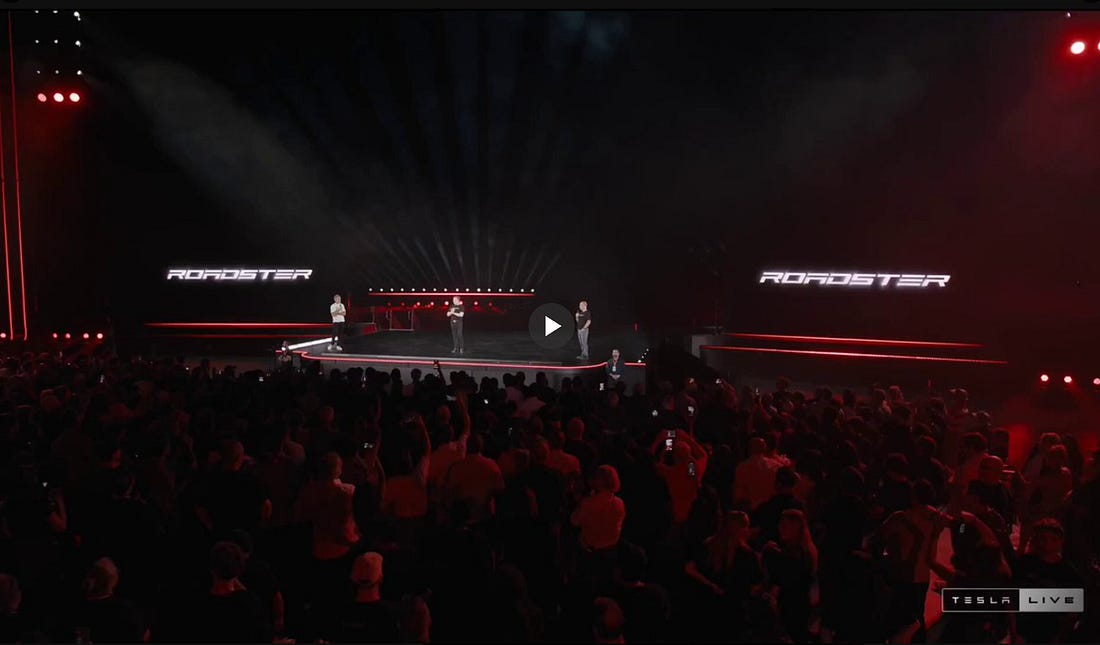
4. Picking a cofounderJulia Austin, who teaches entrepreneurship at HBS, has a good HBR piece on choosing a cofounder. She surveyed more than 100 founding teams and found that the ones that made it (three-plus years in business and funded through Series B) tended to take their time. 60% had worked together for over a year before starting, and more than 75% had done real work together first. Her advice is to treat it like dating. Write a job description, meet about half a dozen candidates, and have the uncomfortable conversations about money, roles, equity, and exit goals before signing anything. She also argues AI tools have made a technical cofounder less essential when the team has deep domain experience, and cites MIT research showing founders with three-plus years in their industry are 85% more likely to launch a highly successful startup. Read + HBR (sorry…paywalled) 5. SecondhandMcKinsey asked three AI assistants and the AI tools on a couple of OTAs the same thing: top three kid-friendly Chicago hotels with river views for Labor Day. Not one hotel made every list, and most appeared only once. The ones mentioned more often usually described something specific, like a suite built for families. The ones that just said “family friendly” showed up less often. Spain has a similar problem. If you ask an AI where to see castles in Europe, Spain, home to more castles than most countries, often doesn’t come up. The models mostly pull from what OTAs and tour operators have already packaged. German castles get turned into products, but Spain’s usually don’t. Turespaña, Spain’s tourism agency, realized that having the information on its own website wasn’t enough. It’s now working with tour operators to turn more of Spain’s attractions into products that AI can find. And the importance of external voices isn’t limited to AI. Turespaña brought a Chinese influencer to a trail-running race in the Val d’Aran (a remote valley in the Pyrenees) with no Chinese runners, and the next year, 200 Chinese runners signed up. Read McKinsey report. Whether it’s a hotel, a castle, or a mountain race, being worth visiting isn’t enough. How you package the experience, and who puts it in front of travelers, increasingly determines whether it gets discovered. 6. One envelopeKurt Vonnegut liked to tell a story about buying a single envelope. His wife asked why he didn’t order a hundred and keep them in the closet. He pretended not to hear her and walked to the store anyway. The envelope was only his excuse to get out of the house, wave at a fire engine, and ask a stranger about her dog. He ended the story the same way each time: “we are here on Earth to fart around.” Vonnegut’s walk is what travelers do with free time in a new city. AI trip planners have shown me corners of cities I would never have found on my own, and they’re now good enough to fill that time hour by hour. But it pays to leave some of it for serendipity and to go buy an envelope. 7. Goodbye, Travel Tech Essentialist AI CopilotSome sad news. OpenAI is retiring custom GPTs, the format the Travel Tech Essentialist AI Copilot was built on, and replacing them with plugins. The problem is that plugins can’t currently be shared publicly, so this migration means you will no longer be able to use it. I built the Copilot on six years of this newsletter plus the Lenny’s Podcast archive, hoping it would help founders think through growth and strategy problems. Many of you wrote to tell me it did, which is what makes this hard. If you’d like to use it again, leave your name and email here. Your responses will help me decide whether to rebuild it in another form. If I find a way to bring it back that I believe will genuinely help founders, you’ll be the first to know. 8. Flying carsPeter Thiel once said that the future promised us flying cars, but instead we got 140 characters. Not anymore. Here are the best moments of the Tesla Roadster’s unveiling.
9. Travel light
Airlines collect more than $40 billion a year in bag fees, and they’re counting on you to ignore him. 10. Travel Trends SummitA reminder that Travel Trends runs its virtual summit on October 28–29. Tickets usually cost $149, but registration is free. Each half day has its own track: technology and distribution on Wednesday, marketing and leadership on Thursday. The speaker lineup is excellent. I was going to highlight three but couldn’t choose. See details and register here. If you’ve found value in Travel Tech Essentialist, the best way to say so is to share it with someone who’d appreciate it: If you’re not yet subscribed, join us here: Thanks for trusting me with your inbox. Mauricio Prieto PS. More from Travel Tech EssentialistRaising a round? If you’re a startup raising from pre-seed to Series D, I can help, for free. Travel Investor Network is a private platform where I recommend innovative travel startups to investors. To apply, complete this form. Looking for your next role? Explore all 1346 open roles on the Travel Tech Essentialist Job Board, or subscribe to the Travel Tech Jobs newsletter for monthly updates.
|






Similar newsletters
There are other similar shared emails that you might be interested in: