| TL;DR | 😯 The career advice you probably didn’t get — especially for women | 🎭 HR’s disproportionate impact on employees’ careers — for better or for worse | 🎧 Listen to the newsletter here | This newsletter edition is brought to you by Zelt 💛 | |
|
| | | What’s this? A mission worth joining. A prize you don’t want to miss. | |
|
| | | Question: I’ve been with the start-up since they were 25 people. Now that they’ve grown and received funding to scale, instead of being promoted, I’m being replaced by a VP People who’s “more experienced.” I know I’m not the only one — why does this keep happening? | | | | Head of People |
|
| The career advice you probably didn’t get — especially for women | Sadly, this happens a lot. HR leaders in start-ups get replaced halfway through their progression. And no, it’s not always fair. But it is almost predictable in a scaling journey. | When it happens, the advice HR leaders receive is familiar: “Be more assertive. Be more visible. Build your confidence.” | Not wrong…just incomplete. | It reminded me of a TED Talk I heard years ago by Susan Colantuono: we’re missing 33% of the advice required to reach the executive level — especially for women. | The unspoken assumption that derails careers | In her talk, Susan shared what executives list when asked what they look for in high-potential future executives: | resilience, hard work, trustworthiness (personal greatness = 33%) stakeholder skills, empowerment, communication (people greatness = 33%)
| And then they stopped ⛔. | When Susan asked why they didn’t mention business acumen, the reply was: | | A given!?! 😑 A baseline so obvious they didn’t even think to say it out loud. | But when Susan asked 150 women in the room whether they had ever been told explicitly that business acumen is the door-opener to senior leadership, only 3 (⁉️) raised their hands. | HR leaders know personal greatness (33%). We excel at people greatness (33%). But what is systematically underdeveloped (for women and for HR) is: Business acumen. | | ❝ | | | The other 33% that’s missing. |
|
| The part no one tells us is required because they assume we should already know 🤷🏻. | We need to prepare for the inflection point in our careers | As HR leaders, we’re often the ones helping the business redefine roles as it scales. But we rarely pause to check how our own role is evolving…or whether we've kept pace with the shift. | When a start-up raises funding to scale, the business strategy changes🎯. | Investors now expect repeatability, predictability and a clear pathway to profitability. So the HR role expands from “supporting the team” to designing the operating system that shapes every hire, every manager, every organisational decision — all to enable business growth. | This is where many early-stage HR leaders hit a ceiling. Not because they lack capability, but because the role has changed beneath their feet. And suddenly we’re told we need to “be more strategic”. | The most unhelpful sentence in career development | Your founder probably can’t articulate what “be more strategic” means either. | From my experience, here’s what they actually need from their HR exec: | Someone who understands the business model Someone who connects people decisions to financial outcomes Someone who scales systems, not just sentiment
| Ask yourself: | Can you explain how your company makes revenue? Do you understand how headcount impacts runway? Are your HR priorities tied to revenue, margin and market share?
| If the answer is no, you will struggle to own your seat at the table — even if you’re invited to it. | Now that you can name it, you can close the 33% gap | HR leaders get replaced when the organisation outgrows the version of the role they originally stepped into. | | ❝ | | | And if we only develop two-thirds of the executive leadership equation, we're already falling short of what’s needed. |
|
| Once we understand this, the question shifts from: “Why is this happening to me?” to “What would change if I build the very capability no one told me I needed?” | Closing that 33% gap is how we protect our own trajectory, shape the organisation’s future and unlock the potential of every future leader watching how we lead. | | Sponsored: Every executive needs a system they can rely on. What's yours? | The SLT needs more than "HR support", they need a strategic partner in HR. Yet as admin piles up, HR’s impact fades.
Thriving teams at Calo, Shakespeare’s Globe, and Club L London solve this using Zelt. By integrating all People processes within one system of record, they eliminate administrative friction and give leadership total visibility.
📺 Watch the demo to see how →
|
| |  |
|
|
|
| | | HR’s disproportionate impact on employees’ careers - for better or for worse | For this section, let’s apply something businesses do constantly: scenario modelling. | But instead of forecasting revenue or market conditions, let’s model a scenario based on Susan Colantuono’s research: that we may be missing the 33% of leadership capability required at the executive level, especially for women. | Hypothetical scenario: | “If HR leaders themselves have a blind spot about what executive leadership actually requires…what happens to the HR strategy we design?” |
|
| It’s not a comfortable thought — but stay with me. | We build for the 66%, not the 100% | If we, as HR leaders, were never explicitly taught the missing 33% (business acumen), then the talent development strategy we build naturally emphasises the capabilities we do understand deeply: | 1️⃣ Personal greatness (33%)
2️⃣ People greatness (33%) | And that leads to a predictable pattern in our HR work: | We design development programmes that improve communication, collaboration, and confidence ➡️ but not commercial fluency. We build performance frameworks that reward behaviours and values ➡️ but say little about business impact. We promote early-career talent who excel in two-thirds of leadership ➡️ but not the full three.
| But when the last missing 33% (business acumen) isn’t understood, it won’t be: ❌ assessed, ❌ taught, ❌ rewarded, ❌ measured or ❌ embedded. | And then, as leaders move toward executive roles, they hit a ceiling — not because they lack ability, but because our HR strategy never equipped them for executive responsibilities. | When HR leaders have a blind spot, our HR strategy inherits it | If HR isn’t commercially fluent, the organisation won’t produce commercially fluent leaders. Our blind spot becomes the organisation’s blind spot, we unintentionally scale the very gap we hope to close. | And when start-ups began scaling: | Strategy execution becomes complex Cross-functional misalignment increases Financial discipline matters more than ever The cost of unclear leadership becomes a real P&L risk
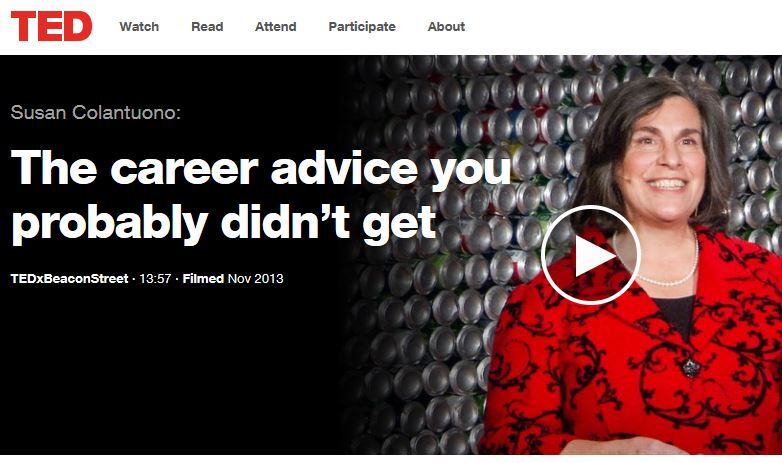
| This is the moment founders start saying: “We need to hire new execs.” | Because…the leadership bench we’ve built isn’t ready. | The implications are uncomfortable, but ultimately significant AND positive | If this scenario is true, then my message is not “HR has failed”. The message is: we now know what to fix. | 1️⃣ Personally for HR leaders: Strengthening our business acumen increases our readiness for executive leadership. It deepens our influence, sharpen our impact and enables us to own the seat we’ve earned. | 2️⃣ Organisationally for talent development: It elevate the impact impact we can have. We stop developing people in 66% of the equation and hoping the rest appears by luck. We build HR strategy that prepare people (especially women) for the executive roles the business requires. | And that, to me, is genuinely good news for how this scenario plays out. | | TED Talk by Susan Calantuono | Susan’s talk stayed with me. This newsletter draws on her insights, along with patterns I’ve seen (and felt) in my own experience developing executive leaders.
Click here for her TED talk 👉 |
| |  |
|
|
|
| | Step up from HR Leader to Business Leader | Ready to influence strategically, drive business impact and make HR indispensable?
Here are 3 ways I can help: | |
|
| | You can now ‘LISTEN’ to the newsletter | I’ve turned my newsletter into audio, voiced by AI podcasters. It’s in beta, so give it a listen and tell me what you think! | |
| |
|
|
| |
|