AI-Native Engineering Leadership
- Gregor Ojstersek from Engineering Leadership <gregorojstersek@substack.com>
- Hidden Recipient <hidden@emailshot.io>

Hey, Gregor here 👋 This is a paid edition of the Engineering Leadership newsletter. Every week, I share 2 articles → Wednesday’s paid edition and Sunday’s free edition, with a goal to make you a great engineering leader! Here are some of the recent popular paid articles you might have missed: AI-Native Engineering LeadershipImportant trends and how to become a great engineering leader in 2026 and beyond.
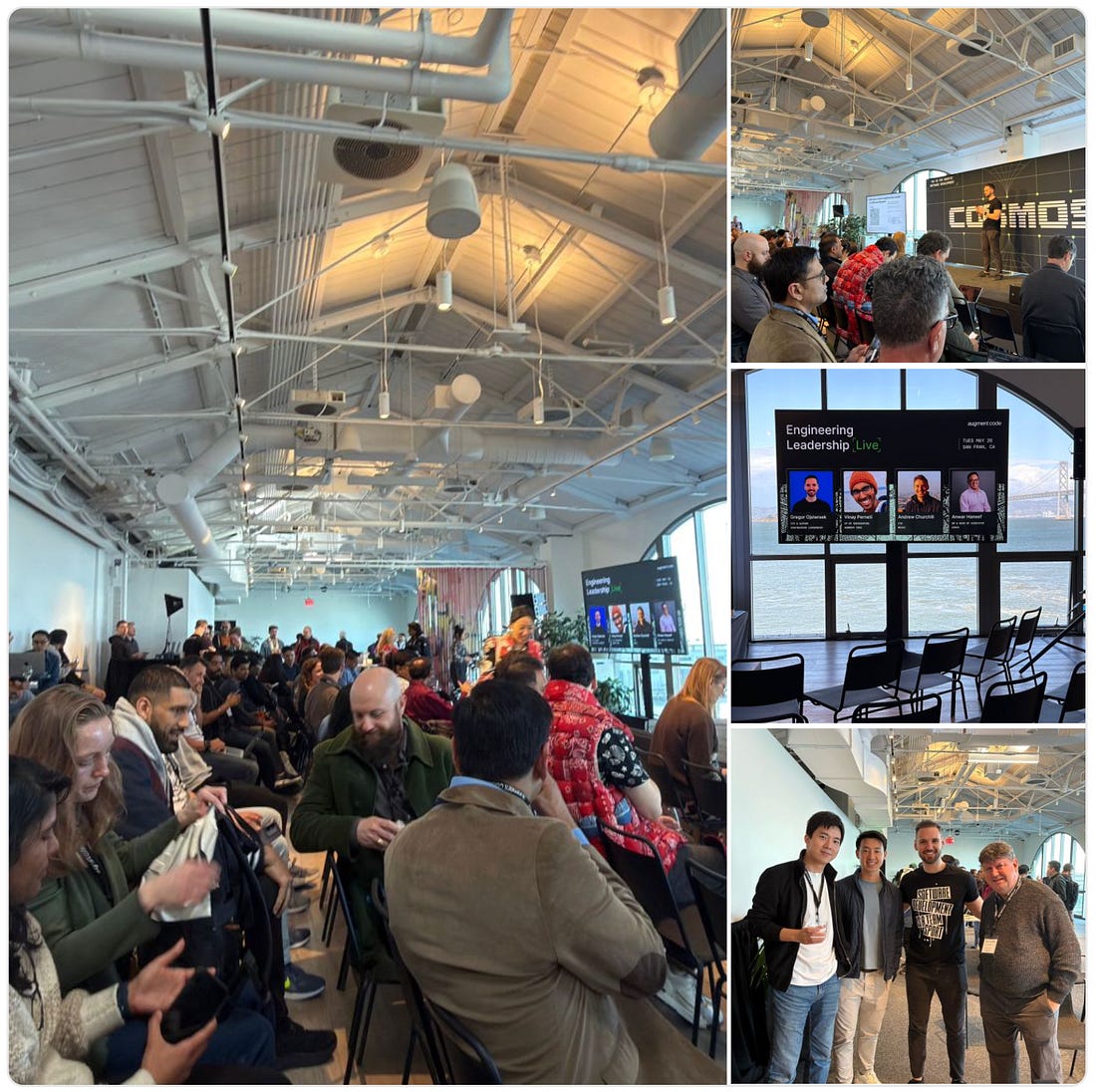
IntroYesterday, together with my friends from Augment Code, we hosted an event called Engineering Leadership LIVE in San Francisco. We had a full house, with an amazing view of the Bay Bridge, and it was a blast, full of insightful conversations about engineering/engineering leadership.
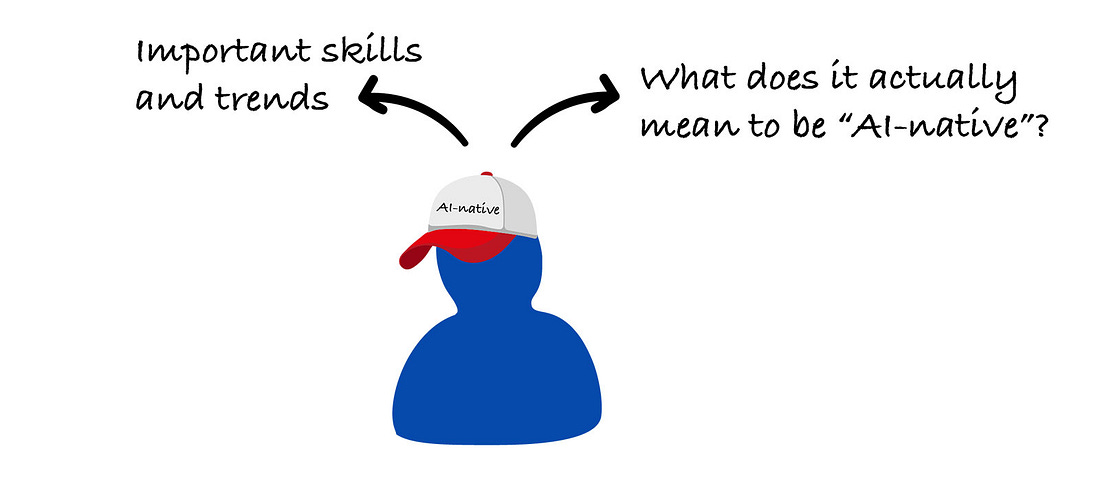
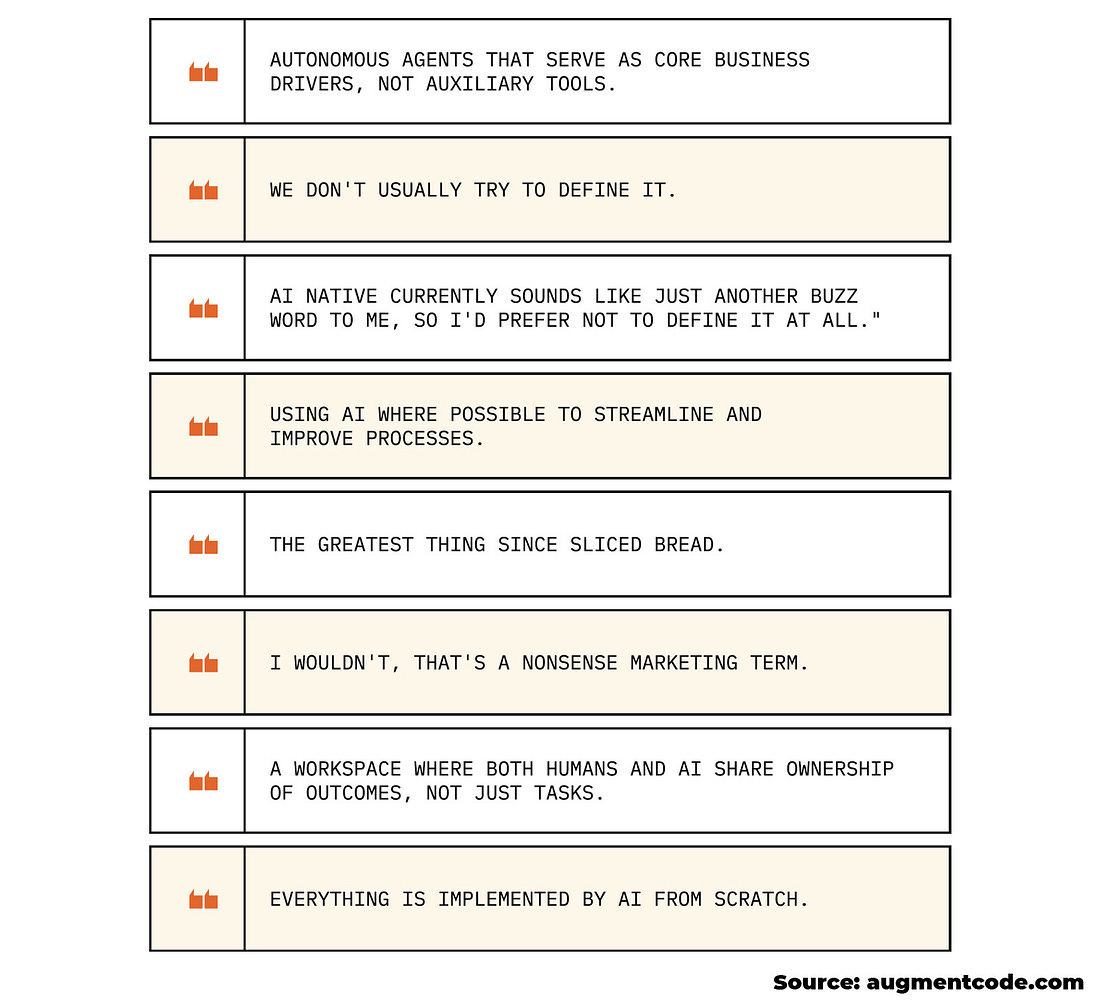
I’ll also share the recordings, once we have them, and the overview of all the talks as future newsletter articles. In today’s article, I am sharing an overview of my talk, titled: AI-Native Engineering Leadership. This is an article for paid subscribers, and here is the full index: - What does “AI-native” actually mean? Let’s start! What does “AI-native” actually mean?Based on the recent report, The State of AI-Native Engineering in 2026 done by Augment Code, there seems to be no clear definition of what “AI-native” actually means, and for every engineer/engineering leader, it means something different. Here are some (funny) answers from the report to define the word “AI-native”:
My personal favorites are:
I think it’s really important that we at least try to define what “AI-native” actually means, because the term keeps appearing in many places, and I am seeing it more and more. The definition that resonates with me the most is the one that I have already defined in the article, done in collaboration with Thibault Sottiaux, Head of Codex, OpenAI:
Now that we know what “AI-native” means, it’s important to take a step further and define what actually changed in engineering leadership today in comparison to 1-2 years ago. What has changed in engineering leadership from 1-2 years ago?My answer might surprise you, and might be a bit controversial at first, but I promise it’ll make sense. The main goal of engineering leadership has stayed the same as 1-2 years ago! Let me explain.
This hasn’t changed. Every engineering leader’s goal is exactly the same. But what has changed is a lot of things around the role, the tools, the focus of the organizations, and there are also a lot more engineering leaders than there were 1-2 years ago. Explaining why next. A lot of the engineering is actually becoming engineering leadership
We all know that AI-assisted engineering is the standard way of doing engineering these days. And a lot of the skills that you need in order to do AI-assisted engineering well are connected with engineering leadership skills:
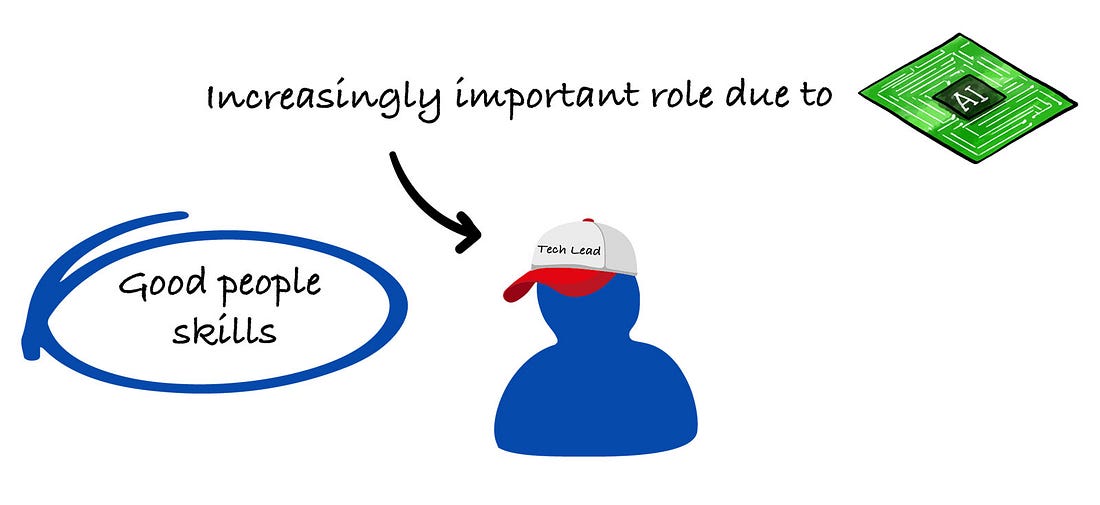
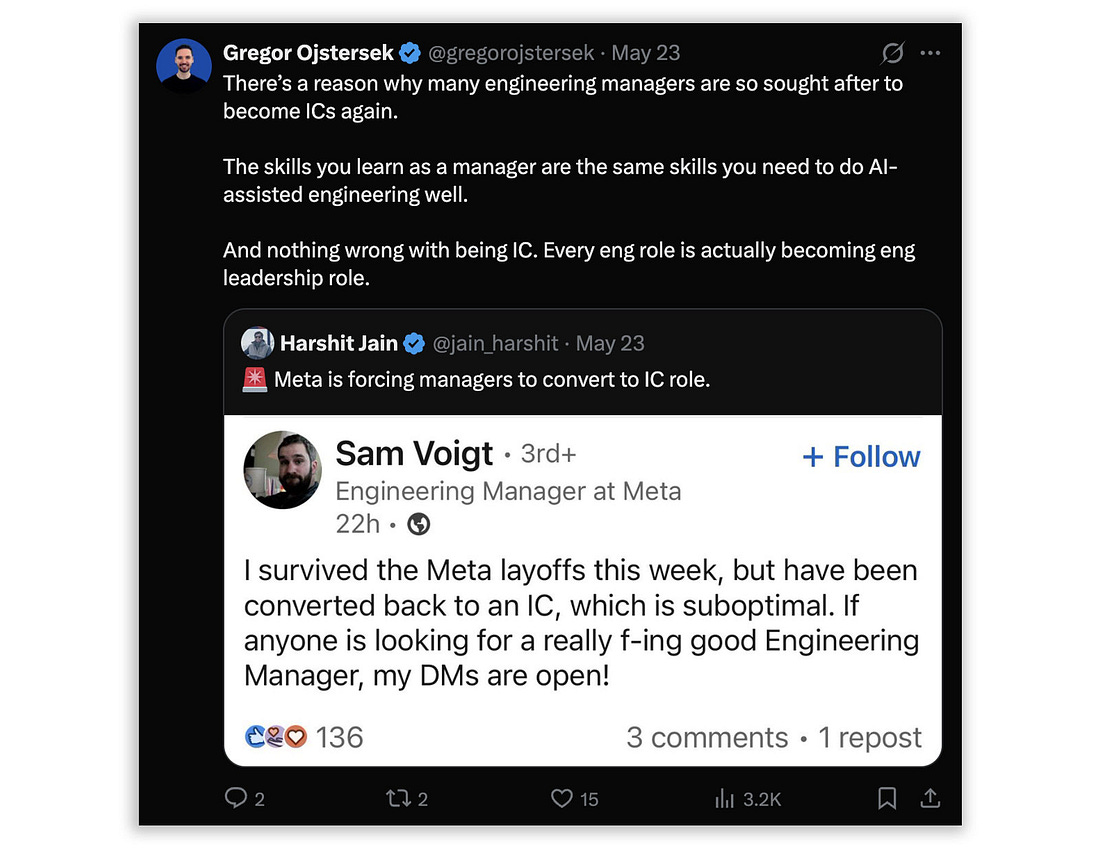
All crucial skills. You need to be good at all these skills (and many more), working both with AI agents and humans. I wrote this article last year in October: And today, I’d say that most of the engineering roles are actually becoming the “tech lead” roles. There’s a lot more end-to-end ownership on projects by individual engineers, especially in smaller companies and startups. And as mentioned above, you need to know how to manage AI agents effectively in order to be able to do great work, at the same time, human-related skills are more important than ever. What does this mean for engineering managers? A lot of engineering managers are sought after to become ICs againAs we have seen in many different companies at this time (starting with Amazon), there is a trend of increasing the ratio of IC <> Manager roles. At the same time, engineering managers are more desired than ever, as ICs.
The main reason is the following:
In order to do AI-assisted engineering well, you need to:
This is systems thinking, and managers have been doing that for years. These are the skills that a lot of engineers lack, because many haven’t spent the time improving in these areas. They may be really good in technical details, but then lack the people skills and systems thinking + overall patience to use AI to help them.
The problem with such a mindset is that you can quickly become a bottleneck, and managers understand really well how important it is to avoid that at all costs. So, managers are more likely to go for tools, people, or anything else to help them, whereas engineers with no managerial experience are more likely to rely on their own skills and abilities to get things done. Important note for all the engineering managersAs mentioned at the beginning of the article:
That’s also my advice for all the engineering managers in case your company decides to increase the ratio of managers to ICs. Don’t look at it as a demotion, always look at it from the perspective of what’s going to be best for the team and everyone involved. And at the same time, it’s not a demotion! Those are two different paths. Besides, you are actually an engineering leader as an IC, just not having direct (human) reports. Similarly, like we all adapted going from building sites with HTML and CSS, to using JavaScript frameworks, or going from web developer roles to frontend and backend separation, similarly, we’ll have a lot more IC engineering leaders than before, and fewer managers. How are engineering leadership roles changing?...Subscribe to Engineering Leadership to unlock the rest.Become a paying subscriber of Engineering Leadership to get access to this post and other subscriber-only content. A subscription gets you:
|







Similar newsletters
There are other similar shared emails that you might be interested in: