How to Manage Up
- Gregor Ojstersek from Engineering Leadership <gregorojstersek@substack.com>
- Hidden Recipient <hidden@emailshot.io>

Hey, Gregor here 👋 This is a paid edition of the Engineering Leadership newsletter. Every week, I share 2 articles → One paid edition and one free edition, with a goal to make you a great engineering leader! Here are some of the recent popular paid articles you might have missed:
This newsletter is sponsored by Verity. Verity: a pair programmer for your coding agents
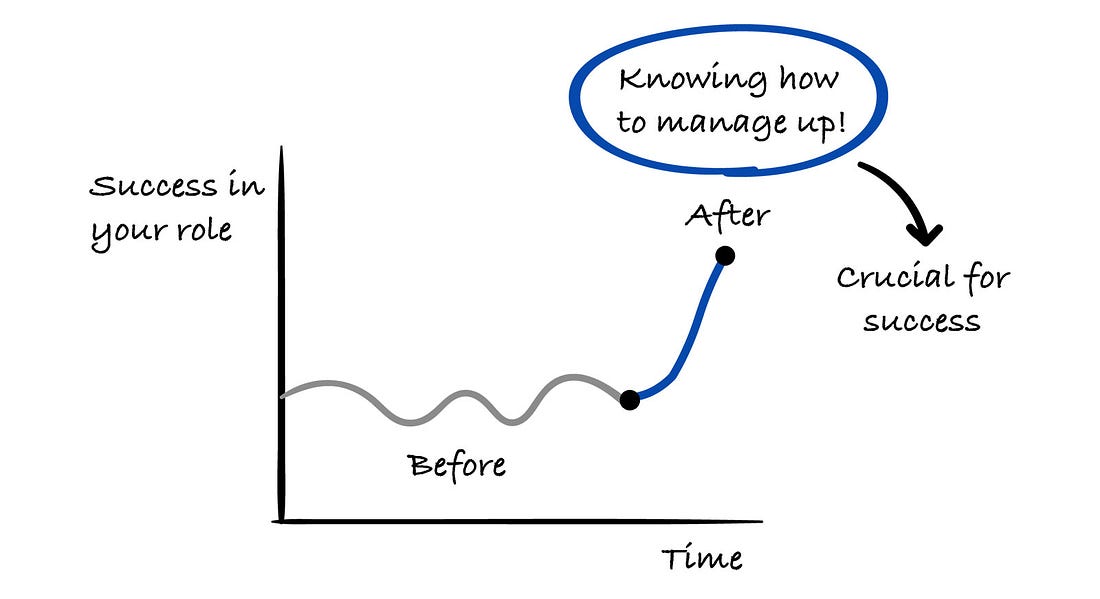
Thanks to Verity for sponsoring this newsletter. Let’s get back to today’s thought! IntroBeing able to successfully manage up may not seem too important at first glance, but it can make your day-to-day work more productive and easier for you and your whole team or department. Managing up isn’t about pleasing your manager or agreeing with everything they say. It’s about building trust, communicating effectively, and creating a working relationship where both you and your manager can succeed. I’ve learned the importance of managing up through my own experiences, both as a freelancer and in full-time roles, and I’ve made a lot of mistakes along the way. In this article, I’ll share three mistakes I’ve made that you should avoid and walk you through my five-step framework for successfully managing up. This is an article for paid subscribers, and here is the full index: - Know what managing up is and what isn’t Let’s start! “The Multiplier Mindset” published by O’Reilly is now available!This article is an adapted version of one of the chapters of my book called “The Multiplier Mindset”. The e-book (Kindle) is available for purchase. The print version is available for pre-order!
What managing up is and what isn’tThe idea of “managing up” has been discussed in management literature for decades. It was popularized for a broad audience by Rosanne Badowski in Managing Up: How to Forge an Effective Relationship with Those Above You, which draws on Badowski’s experience as executive assistant to the infamous CEO Jack Welch at General Electric. Managing up is often misinterpreted, so I’ll clarify what it is and isn’t.
Managing up is:
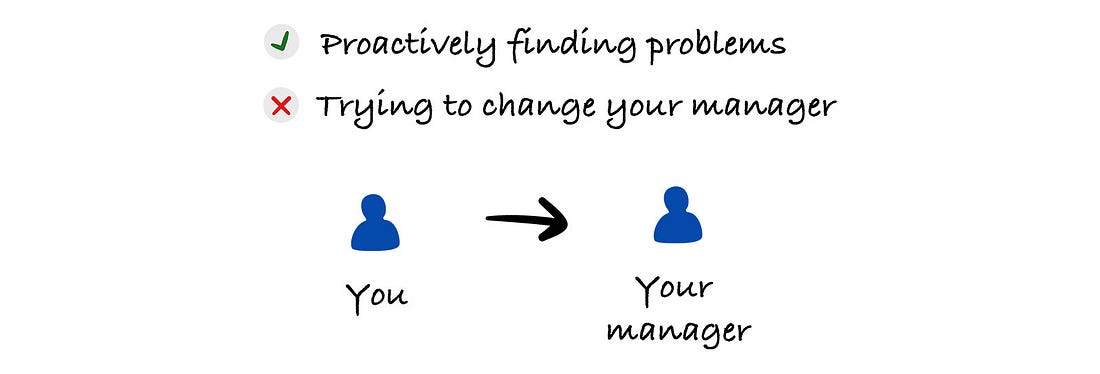
Managing up isn’t:
When you manage up correctly, you’ll improve your work experience and your growth in general. Don’t make the three mistakes I’ve madeBefore I show you my five-step framework for managing up, let me share some mistakes I’ve made in this area. It can be uncomfortable sharing mistakes, but I hope that by sharing mine, I will help you avoid making them yourself. My own mistakes fall into the three previously mentioned categories of what managing up isn’t. Mistake 1: Going over my manager’s headAs a new manager, I was passionate about making changes for the better, even when those changes weren’t under my control. I talked with my manager a couple of times about changes I wanted to make, but nothing happened and I felt unheard. I thought the best action would be to involve other people whose jobs would be affected by these changes. So I emailed them all, explaining the issues and outlining potential solutions, and I copied my manager’s manager. My manager wasn’t too happy that I’d gone over his head. Looking back, while my manager could have done more to make sure I was heard, I shouldn’t have gone above his head to try to achieve my goals. Doing that negatively affected our working relationship, which was crucial to everything else. Lesson learned: you can control what you can control, and not all changes can happen instantly. Patience is the key here. Mistake 2: Trying to change my managerWhen my manager decided to move on, I got a new manager: a recent hire whose working style was very different. My previous manager had always included me in decisions, but the new manager didn’t. After onboarding, he made some decisions I didn’t know about. I wasn’t used to that. I thought I could adjust his style to more like what I was used to, but it didn’t work out so well. Lesson learned: it’s on both you and your manager to find a good way to collaborate, but don’t try to change your manager’s style. Be helpful, find out about their problems, and try to resolve them by focusing on what you can control. Mistake 3: Keeping my problems to myselfAs an engineer, I tried to solve everything myself; sharing my problems with my manager felt like the last thing I should do. I used my one-on-one meetings not to learn and grow my career but to give my manager status updates. I was missing out on so many learning opportunities: I could have been talking about my career goals, working through promotion plans, or getting coaching and feedback on specific situations. Lesson learned: keeping all your problems to yourself just causes stress and slows down your progress. Keep your manager in the loop and keep your one-on-one meetings career-oriented. My five-step framework for managing up...Subscribe to Engineering Leadership to unlock the rest.Become a paying subscriber of Engineering Leadership to get access to this post and other subscriber-only content. A subscription gets you:
|








Similar newsletters
There are other similar shared emails that you might be interested in: