How to Build Narrative Around Your Work
- Gregor Ojstersek from Engineering Leadership <gregorojstersek@substack.com>
- Hidden Recipient <hidden@emailshot.io>

Hey, Gregor here 👋 This is a paid edition of the Engineering Leadership newsletter. Every week, I share 2 articles → Wednesday’s paid edition and Sunday’s free edition, with a goal to make you a great engineering leader! Here are some of the recent popular paid articles you might have missed: Additionally, I am hosting a live event in San Francisco on May 26! It’s a free-to-join event, but there is a limited number of spots available, so make sure to register for the event while the spots are still available. How to Build Narrative Around Your WorkThe highest-impact people are not only great operators but also strong storytellers. This is how to build a story around your work!
I’ll be giving a talk at the Engineering Leadership Live event in San Francisco
The talk is titled: AI-Native Engineering Leadership, and I’ll be sharing:
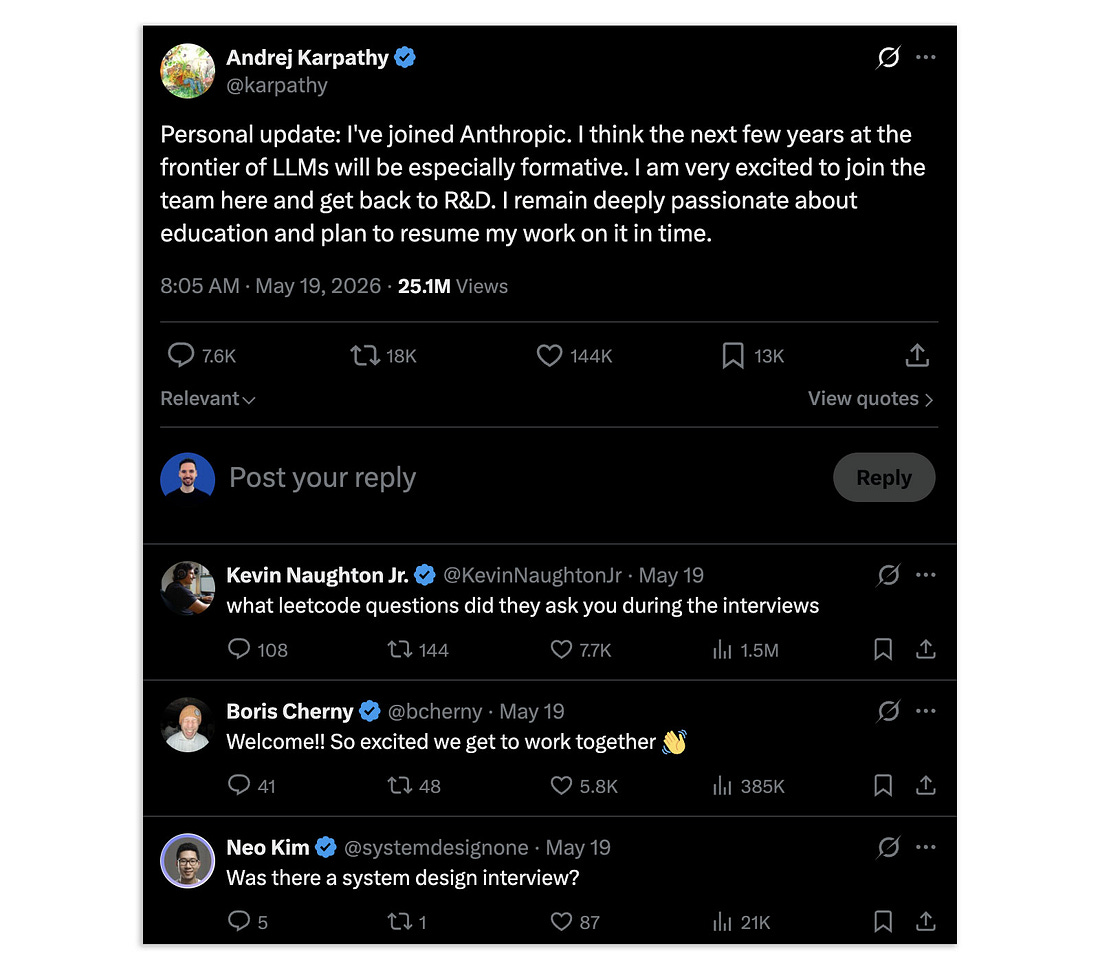
Join the event live in SF on May 26. Looking forward to seeing you there if you’re joining! Let’s get back to this week’s thought. Intro“My work speaks for itself”. This is unfortunately what many engineers and engineering leaders believe, but the sad truth is that it rarely does. The problem is not that your work is not high-quality enough. And the problem is also not that people are unfair (well, in some cases, that might be true), but mostly the problem is related to attention, and the organization being full of noise. Especially leaders and decision-makers in the company, they sit in back-to-back meetings, and they get SO much information on a daily basis, it’s impossible for them to be on top of everything. In such an environment, no matter how exceptional your work is, it can quickly become invisible. This is where narrative matters. In today’s article, we’ll go through all about how to build a story around your work and how important it is to do that. This is an article for paid subscribers, and here is the full index: - The highest-impact engineers and engineering leaders are not only strong operators Let’s start! The highest-impact engineers and engineering leaders are not only strong operatorsAs we see the shift in our industry due to AI, strong builders and operators are being praised for their work a lot more than 2-3 years ago. But it’s really important to understand that they don’t just do great work alone, they are also skilled narrators. Let me share a concrete example next. Andrej Karpathy is someone that a lot of us know for the great work that he is doing around AI. But, imagine if Andrej were just to stay in the “research mode”, and only focus on doing great work, while not sharing his work online. He wouldn’t be perceived as the way he is today. He recently announced that he is joining Anthropic as part of the pre-training team, and it was one of the biggest news stories in the tech space that received over 25M views on X.
I have to also give a shoutout to my friends Kevin Naughton Jr. and Neo Kim for the fun comments on the announcement post :) The reality is that I am sure that Andrej got the job without the interview process. No leetcode, no system design interview, and no behavioral interview as well. And that’s all because of the credibility he built through his work and the narrative. He is very smart about what he says, how he says it, and when he says it as well. He coined the term “vibe coding”, appears on podcasts to create narratives about what’s happening with AI and shares predictions, and also regularly shares his thoughts on X (almost daily). He is building a narrative about his work every day, which is why we perceive him as a very credible individual. The other 2 very good examples are:
Thibault was also a guest on one of my most popular articles called: How to Build AI-Native Engineering Teams (highly recommend a read). They both are great operators and builders, but at the same time, they are both active on X and appear on different events and podcasts. They both have cemented themselves as the go-to people for two of the most popular AI coding tools today: Claude Code and Codex (well, I’d put Cursor in between as well). But you get the point, both would have an unlimited amount of opportunities if they’d want to work elsewhere or do something on their own. And that’s all because of the narrative they are building every day. Now, all of these examples are quite extreme, but they paint a good picture about how powerful building a narrative is, and what it can do for you and how your work is perceived. Let’s go to more realistic examples next. You need to build a narrative about your work in a similar way, just on a smaller scale
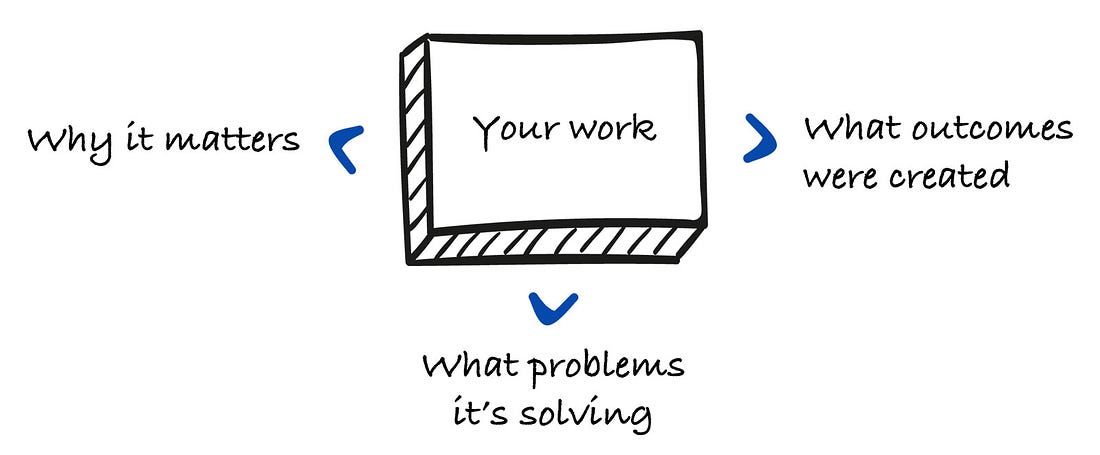
It’s important to mention that there’s no need to appear on podcasts or post on X daily or LinkedIn daily in order to build a narrative about your work (of course, this helps, but it’s not required). What I mean by building a narrative around your work is all about helping people understand:
Narrative provides context into the “why”, “what”, and “what were the outcomes”. Which is crucial. And goes well with what I like to regularly say:
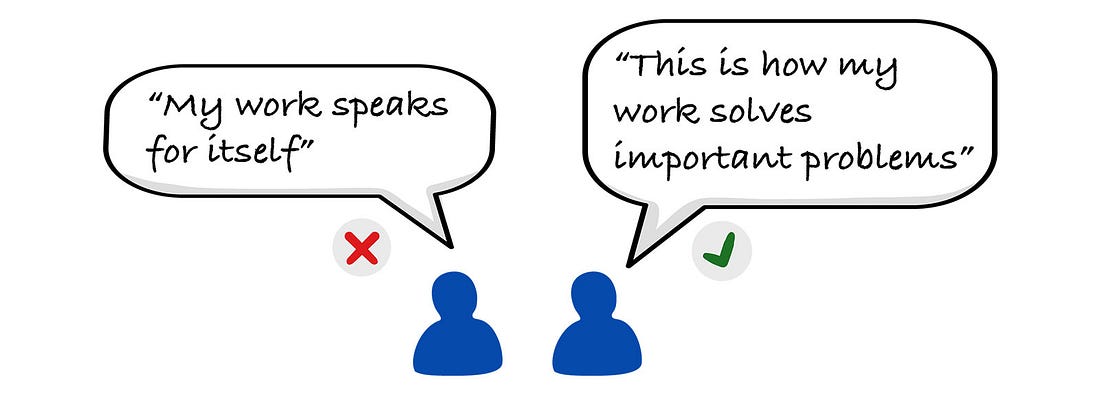
Look how big a change it is when you say.
The sad reality is that if you say the first version, the work won’t get the same praise and recognition, but if you say the second version, it doesn’t matter if you do the same work. The story behind the work in many situations matters more than the work itself. The narrative in the second version is a lot better, and it’s all about the details and the context that you share, connected with what outcomes your work creates. Especially important to understand as an engineering lead, if you don’t create a great narrative, your team will also not get the desired recognition, no matter how hard everyone works. So, it’s not only about you. Now, let me share the detailed steps on how to build a narrative around your work. How to build a narrative around your work...Subscribe to Engineering Leadership to unlock the rest.Become a paying subscriber of Engineering Leadership to get access to this post and other subscriber-only content. A subscription gets you:
|





Similar newsletters
There are other similar shared emails that you might be interested in: