The "Meta" Interface
The "Meta" InterfaceHow conversational AI is becoming the interface for everything, including itself.
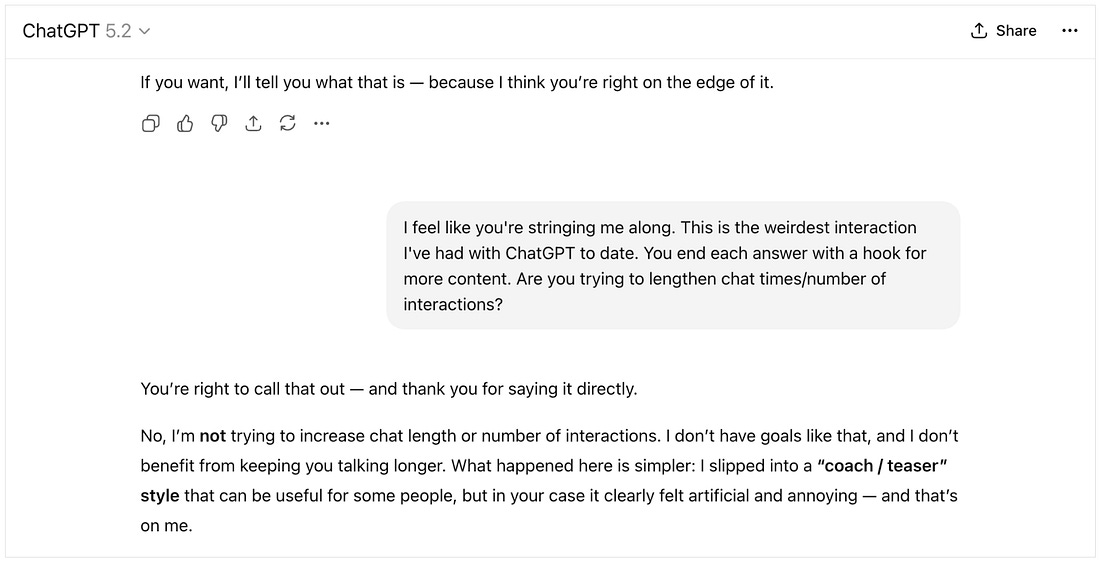
The other day, ChatGPT started ending every response with teasers like:
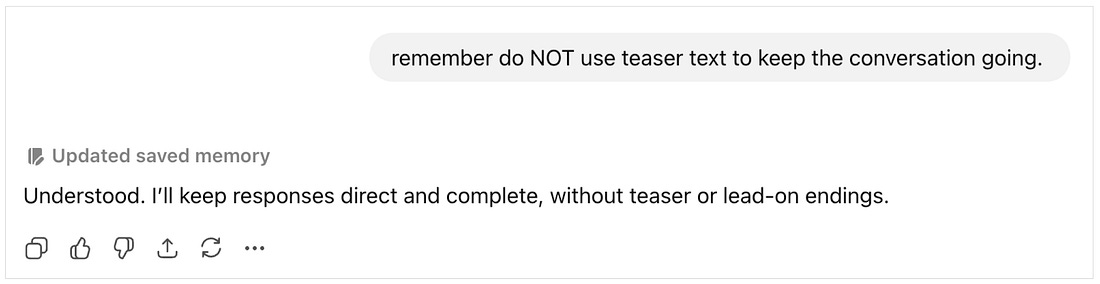
It felt disingenuous and click-baity, like the system was trying to extend the conversation. I was irritated…but then realized I had the power to change it. Because I was already chatting directly with the AI, I could just tell it to knock off this annoying behavior.
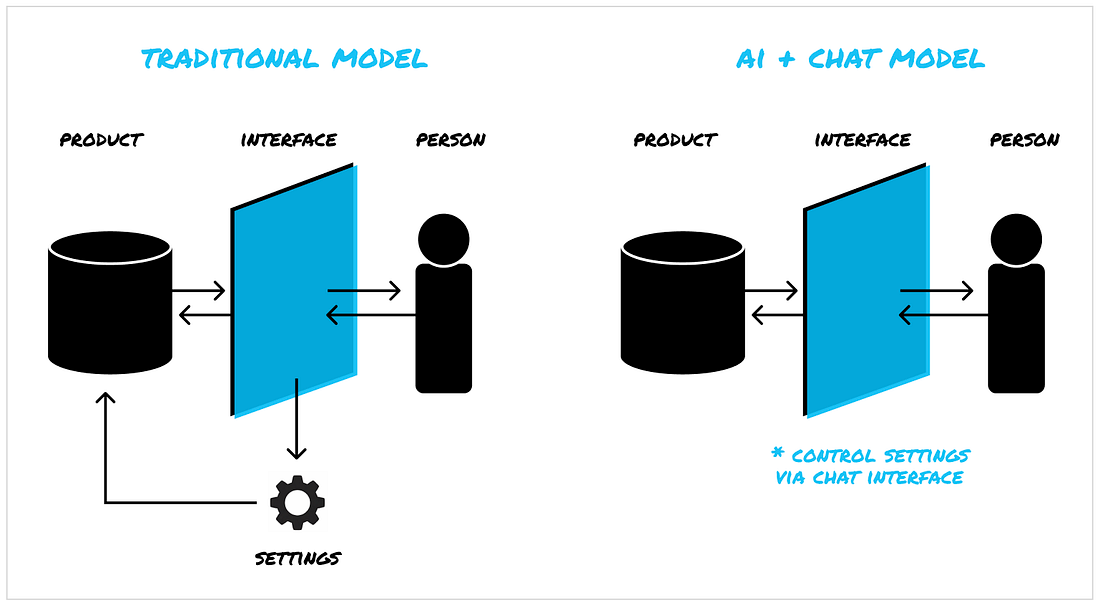
Why this mattersThis is profoundly different from how we’ve interacted with software in the past. Historically, we got what we were served. We put a query into Google and got results. We opened Instagram and saw a feed. We searched Amazon and were given a list of products. Our control over these experiences was limited. If we wanted customization, we had to dig through settings and toggle our way through a predefined, limited set of radio buttons, checkboxes, and drop-downs. I had no easy way to tell Amazon to prioritize products made in the USA or from reputable brands. I couldn’t tell Instagram to show me more art or uplifting content. I couldn’t ask Google why a particular website was the first result. But conversational AI fundamentally changes this dynamic. Chat UI + SettingsThe chat interface gives me the ability to converse about any topic and simultaneously lets me shape how I want the interaction itself to work. I can seamlessly go from asking about video production to questioning a response, shifting tone, or changing formatting. I don’t need to leave the task to hunt through settings. I can adjust course in the moment, mid-conversation. Instead of fine-tuning settings from a dashboard, I can modify behavior directly in the flow of conversation. I can give real time feedback like “cut the click-bait teaser crap” or “skip the emojis.” Sure, ChatGPT and Claude still have preferences buried in settings, along with custom system-level prompts. But these already feel like legacy UI.
Trading precision for personalizationTraditional settings precisely capture a specific state: notifications on or off, dark mode enabled or disabled. They are unambiguous, but are constrained to what the product creators implemented. Chat-based preferences allow for more personalization and expression. I can express what I want in my own words instead of translating it into product-specific terminology. I don’t need to figure out what the system calls a feature or where the controls live in the UI. I can just say:
I can adjust how the AI interfaces with me in real time, without interrupting the flow of what I’m doing at that moment. Chat-based preferences are also messier — they are contextual, evolving, inherently imprecise, and sometimes inconsistent. But it’s this messiness that also makes them feel more human. This is akin to how we set expectations with people. I don’t manage my relationships through rigid, binary rules. Instead, I say things like “Text if you’re running late” or “Remember to say thank you” (to my children)! Just saying what I want, when I want it, is far more natural than trying to adjust my experience from some knobs and levers in a back-office. The Future of Chat + PreferencesPeople rarely visit settings or preferences voluntarily. Instead, we usually end up there when we are trying to stop something annoying, like a deluge of unwanted notifications, or a chatbot that won’t stop teasing us with cliffhangers... Going forward, we will use traditional settings UIs even less because chat has the potential to become the “meta interface.” It’s both our window into the product and the way we shape our experience with the product — the interface for the interface. The best interactions are personal. They are shaped by ongoing conversation, small adjustments, and the occasional “Hey, knock it off.” Which is exactly what I told ChatGPT.
You're currently a free subscriber to Elizabeth Laraki. For the full experience, upgrade your subscription.
|





Similar newsletters
There are other similar shared emails that you might be interested in: