Lovable, Lovableed, Lovabad
- Sergio Visinoni from Sudo Make Me a CTO <makemeacto@substack.com>
- Hidden Recipient <hidden@emailshot.io>

Lovable, Lovableed, LovabadHow a potentially easy-to-handle security issue turned into a complete PR disaster for the hyped European AI-startup Lovable.
Some of you might have heard of the latest security incident that affected Lovable, the cool and hyped $6.6 billion startup allowing anyone to create websites and apps by chatting with AI¹. Now, security issues can happen to anyone, no matter whether you’re a bootstrapped garage startup, an established corporation, or a hyped AI startup flush with VC cash. We should never, ever cheer, rejoice, or otherwise celebrate such incidents. First of all, because they’re not necessarily a consequence of misconduct on the company's side. Cybersecurity is hard, and anyone can make mistakes in this space². Secondly, and most importantly, because the main victims are always the users whose data, credentials or sometimes money have been compromised. In other words, such incidents should be taken very seriously, which includes two things
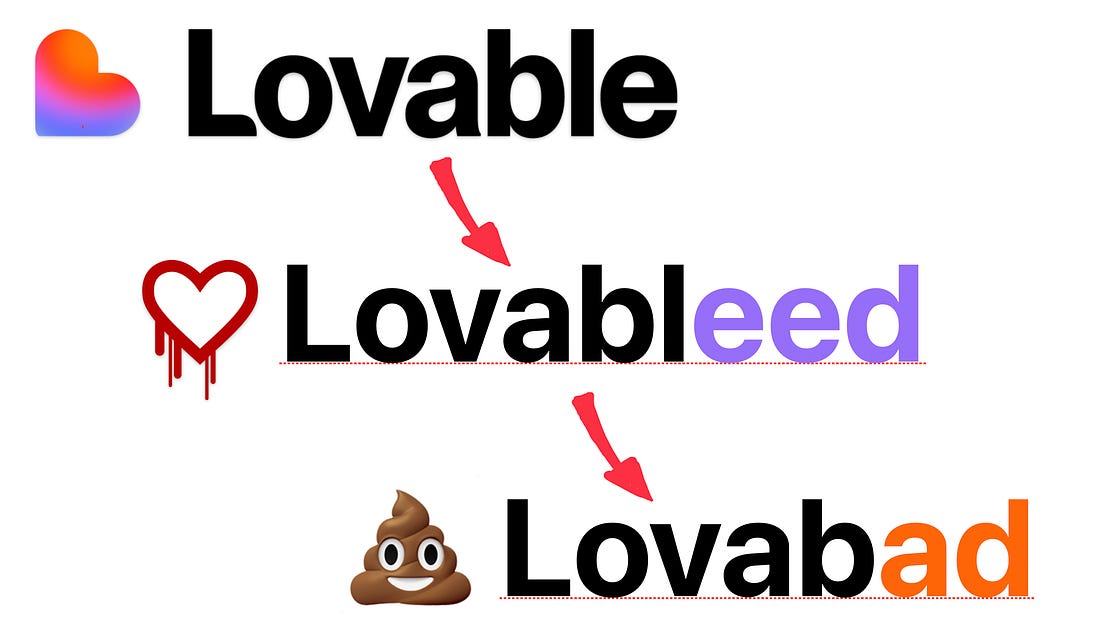
That’s why I’m interested in the Lovable case. Not because through the security incident Lovable went all the way to Lovableed⁴. But because due to the way they handled the issue, they went from Lovableed straight to Lovabad.
And for those of you who need context, this is what happened. A chronology of the eventsI’ve consulted a few sources to get a sense of the sequence of events. The ones I recommend, if you want to get into the details, are the following:
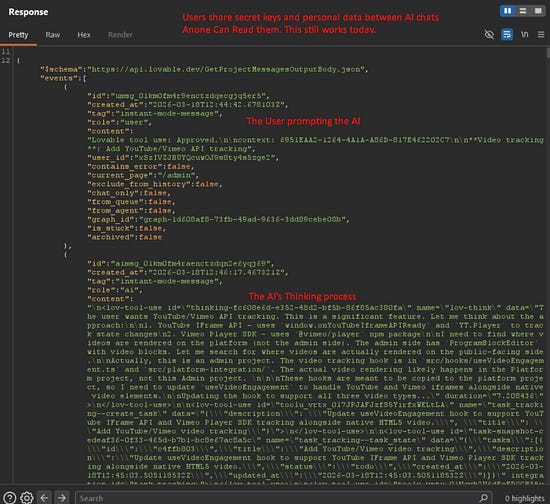
This is a short summary of what happened
What happened next is a perfect example of how not to handle a security incident as a tech company. From Lovableed to LovabadLovable first reaction? Deny the claims!
The public statement is quite clear:
And then they go on with a fuzzy and only mildly apologetic explanation about how the issue was… the documentation! The real problem with that: it wasn’t true. The vulnerability and the leak were real, and they seemed to have dismissed the report without even taking the time to check whether it was substantiated or not. One might wonder if over-exposure to AI slop made Lovable's employees treat anything they read online as hallucination and false. That would at least explain something. A few hours later, however, someone seemed to realise they had completely messed up their reading of the situation, and Lovable published a clarifying statement. Which, I can only guess, was supposed to serve as an apology and clarification.
Once you're done laughing, please read on, as there are two main things I would like to point out from the embarrasing statement.
That’s naive and borderline criminal. Treating the chat at the same level as the code means these folks either have no idea about how users use chatbots or the amount of crazy sensitive and personal details shared in there. Either that, or they’re just acting in bad faith. Yes, this is a perfect example of Hanlon’s razor, and I tend to believe its default conclusion: incompetence.
I would only accept that as an excuse if it was clearly stated, 'We have no idea what we're doing, and you shouldn't trust us with your data.’ But that wasn't the case here, so excuse not accepted. But the incompetence doesn't seem to stop here, as the statement continues with
So this is HackerOne’s fault… except that it wasn’t them who published a public statement denying the claims from the researcher. Even if it was genuinely HackerOne’s fault, which I seriously question, I would have expected two things from Lovable.
They did none of the two. Instead, the best they were able to come up with to take accountability for the embarrassing display of incompetence and arrogance, is the following:
We’ll do better? Seriously? We don’t accept such hollow promises from our five-year-old kids, as we know they’re meaningless without a clear plan and detailed list of what exactly they’ll be doing differently next time. It would be so easy to do better than that. It would have been enough to say something along these lines
There, you have it. It just needs to be genuine, honest and credible⁵. Your customers will respect you a lot more if you take accountability. They will trust you with their data more if you’re transparent about your shortcomings. They might even stay with you instead of leaving for one of the gazillions of existing competitors if you transparently shared your detailed plans for making real and concrete improvement. In a time of excessive focus on “Intelligence”, a little bit of self-reflection⁶ and caring about your users and prioritising both above your ego can go a long way in making you stand out from the pack. Especially when your brand relates to emotions. Will Lovabad turn into Lovaback? The ball is in their camp. 1 Verbatim quote from their landing page. 2 That said, I can hear you loud and clear if you’re already wondering how a company valued at such an insane amount and poised to be at the forefront of technology could fall victim to such an apparently trivial oversight. Just bear with me for a second. 3 I mean real, serious, competent researchers. Not the rookies spamming companies with slop reports looking for quick gains. 4 I might be the first one using this word. I couldn’t find any prior references to it online. You’re free to use it however you want, but if you can, please share this article too. The name is obviously inspired by the (in)famous Heartbleed vulnerability, which had massive consequences for the industry. 5 Which means the last thing you want to do is to ask AI to generate it for you. 6 Don't be afraid of making Marc Andreessen upset with your introspection; he'll still give you plenty of money if he thinks he can make a lot more in return You're currently a free subscriber to Sudo Make Me a CTO. For the full experience, upgrade your subscription.
|







Similar newsletters
There are other similar shared emails that you might be interested in: