My Advice For Engineers and Engineering Leaders to Get a New Role Faster
- Gregor Ojstersek from Engineering Leadership <gregorojstersek@substack.com>
- Hidden Recipient <hidden@emailshot.io>
Hey, Gregor here 👋 This is a free edition of the Engineering Leadership newsletter. Every week, I share 2 articles → Wednesday’s paid edition and Sunday’s free edition, with a goal to make you a great engineering leader! Consider upgrading your account for the full experience here.
My Advice For Engineers and Engineering Leaders to Get a New Role FasterThis is what I would do if I would be looking for a new role in the current market!
This week’s newsletter is sponsored by Augment Code. Ship faster with context-aware AI. Augment Code is built for real engineering teams. It understands your codebase across 10M+ lines, 10k+ files, and every repo in your stack, so it can actually help: writing functions, fixing CI issues, triaging incidents, and reviewing PRs.
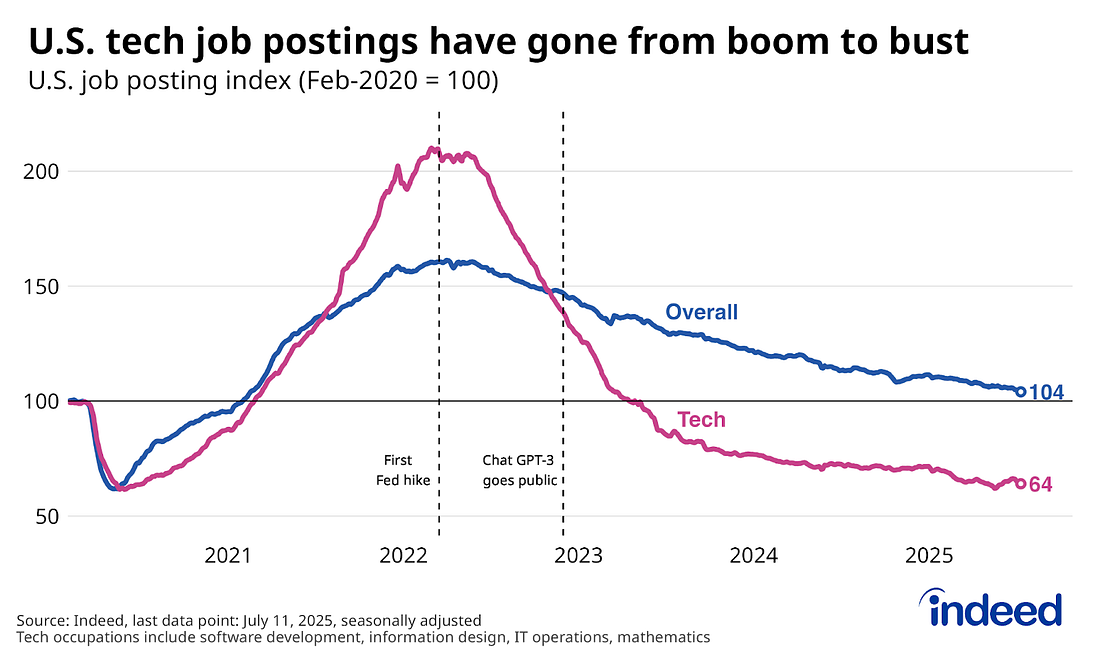
All from your IDE or terminal. No vibes. Just progress. Thanks to Augment Code for sponsoring this newsletter, let’s get back to this week’s thought! IntroThe current market for engineering roles is quite competitive, and a lot of companies are a lot more cautious when hiring. You can see how big a difference it is from 2022 and today (late 2025) in this chart:
The market has sort of stabilized, but we all know and understand how competitive it can get when looking for a new role, both as an engineer or an engineering leader. In today’s article, I’ll share my advice and my approach on what I would do if I would be looking for a new role. Let’s start! Pre-Work That Makes Your Chances HigherBefore we get to specifics of how I would approach looking for a new position right now as an engineer or engineering leader, it’s really important to understand a couple of things. I am sure you are already aware of them, as we mentioned a lot of these in previous articles before, but I think they are really important not to neglect. If you haven’t focused on some of these yet and you are looking for a new role, make sure to do that asap. Now, we won’t spend a lot of time on this section as I’ve written about these things extensively before, so I’ll be more or less doing an overview and sharing the link to the relevant articles. To summarize all of these, we can say that you want to increase your credibility as much as possible. Credibility is a cheat code for making things easier for you → more offers and overall opportunities. Let’s start with the first one: 1. Make sure that your CV is on pointThis is very important. It’s normally the first impression that a recruiter or a hiring manager gets of you. And if that impression wasn’t the best, they won’t look at anything else further. Here are 2 articles that would help you with this: This one is a bit older and less extensive, but still has some solid advice in there:
I may do another article in the future to write about optimizing your CV, so stay tuned. Here is also a CV that I recommend taking a look at as a good example. From my friend Jordan Cutler: LINK TO RESUME. 2. Make sure that you update and optimize your LinkedIn profileFor me, personally, LinkedIn has been huge for my career, as almost all the roles I got were through LinkedIn. Either people contacted me directly, referred me, or I applied to a specific role. And having a good profile that makes a good first impression goes a long way. Here are 3 great articles for that:
3. Writing online will increase your chances furtherThis is very important to understand, as any proof of what you know or what you did will increase your chances substantially. It gives more confidence to the hiring manager or recruiter to move further.
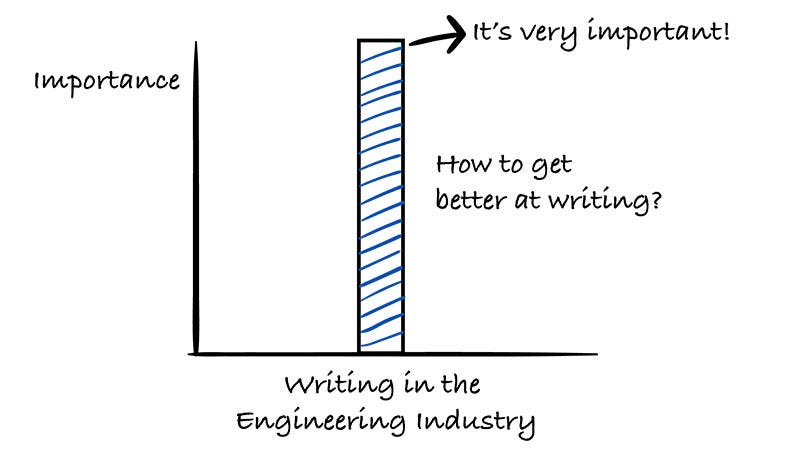
Writing a blog or a newsletter is always a good idea, and I highly recommend it. It has done wonders for me. When I was a full-time CTO, and I was writing online for some time, I saw the difference with the stakeholders, my fellow leadership team, and my team as well. It was much easier for me to get the buy-in on certain decisions and approaches. This is also a good article to read:
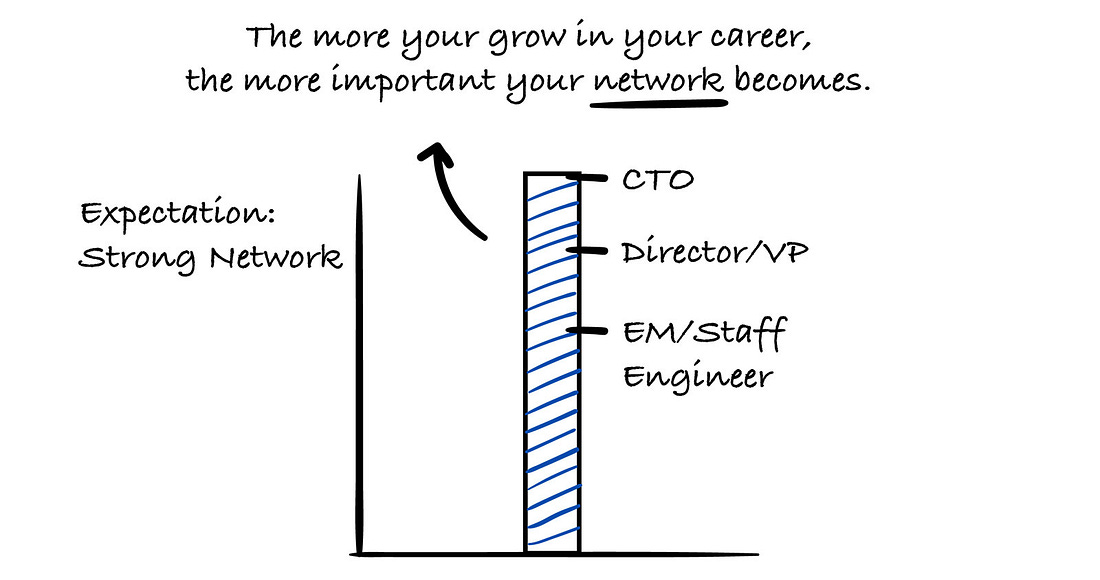
Now, let’s go to the next one. 4. Focus on building your networkReferrals are the best way to get a new job these days, especially if you are looking for an engineering leadership role. The higher the position is in the company, the more important the referrals become.
The thing is that the higher the position a person has in the company, the more potential impact they can have on people inside the company. And you want to de-risk the decision as much as possible. It’s a much riskier decision hiring someone that you just know through the interviewing process, instead of someone that was recommended by the person that you trust. Read more in this article:
And also David Weiss mentioned in this article, that his network was the biggest reason for him getting a new role faster. Read the article here:
Now, let’s get to the last but definitely not the least. 5. Prepare for InterviewsVery important to do at least some research on the company, prepare questions, and most importantly, prepare for specific interviews. If you have a technical interview, make sure to go over some of the most common questions and prepare your answers. And also very important to prepare your introduction. In most interviews, you’ll be asked to tell a bit about yourself, and it’s important to do that well, as it’s some sort of first impression of you on the interview. If you’ll be doing a behavioral interview, you can do a lot of things to prepare to do well on the interview. You can prepare the stories and structure your answers. To help you with this, make sure to read these articles:
Also, check out this GitHub repo with a list of questions I have been asking on the behavioral interviews I have conducted:
Now, let me share a bit about how I got my first full-time role as an engineer. Even though that’s not completely ationable for you, I promise that it’ll all make sense reading the whole article! How I Got my First Full-Time Role as an EngineerThis is what I have mentioned already in the article How I Grew From Engineer to CTO. After my first two student jobs as an engineer, I started to apply for my first full-time engineering position. How did I get my first full-time role? I remember it like it was yesterday. I’ve applied to the role and the first interview went well. I was invited to the second interview. Before that interview, I designed + coded a new website for them. I designed it with Photoshop and built it with HTML + CSS + JS and a bit of PHP. They liked it and gave me good feedback, and they offered me the position. I was ecstatic. This is how the site looked like:
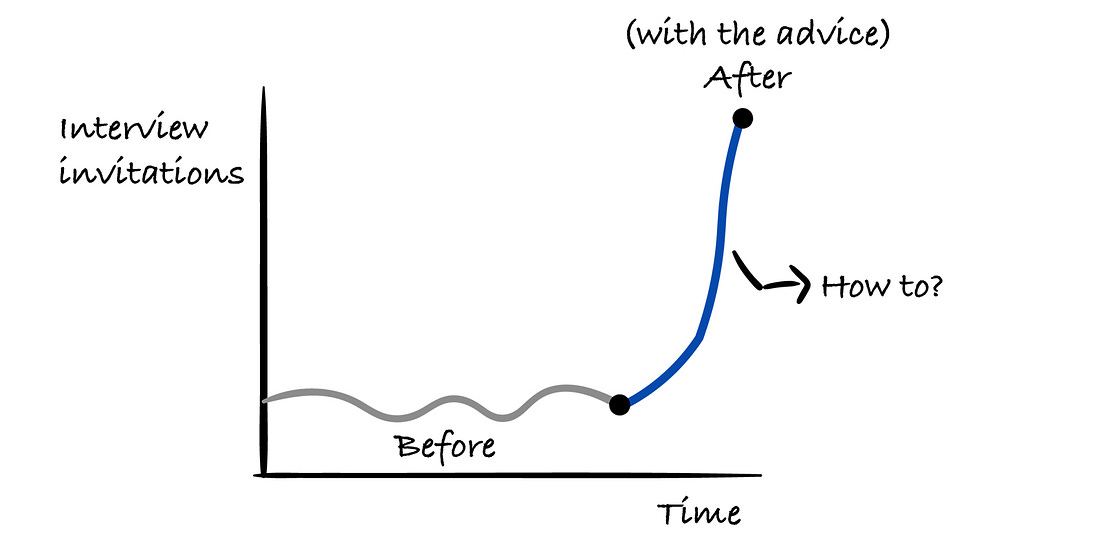
As a self-taught engineer, I knew I needed to show something more than just sending a CV and hoping for the best, as I didn’t have a lot of experience. And this is my exact advice for finding a new role faster:
I like to call this having an unfair advantage, because you automatically stand out from others, assuming they don’t do something similar. And yes, even though I did that 10 years ago and it was much easier to get a role back at that time, I still didn’t have a lot of experience and no university degree. I would compare that to what most engineers and engineering leaders are facing these days. There are just a lot fewer roles today and more competition, so you need to showcase yourself a lot better in order to get the role. Now, let’s put this advice into practice. This is What I Would Do to Get a New Role FasterSo, now that we understand the concept, let me share the exact step-by-step process I would take if I would be looking for a new role. And yes, it’s very important to understand that focusing on all of the 5 things we mentioned above (pre-work section) will make your chances a lot higher. So, assuming we have focused on that already, let’s go to the first thing I would do.
The reason for this is that the strategy called “spray and pray”, where you just send infinite CVs to infinite companies, normally doesn’t work so well, as companies receive a LOT of submissions. Especially, the reason for this is that there has been an increase of “AI products”, where they offer automatic submissions to the roles, and a lot of people are using that, so that has even decreased the odds of this tactic working. So, very important to find the top 3-5 roles that make the most sense to you. Let’s go to the second step next.
Normally, a person who is hiring will be listed in the job ad, especially if you are looking at the job submission through LinkedIn. I would contact that person through LinkedIn, and ask them a few questions about the role. Something that would be interesting for me to know and that would give me a better overview of what I can expect. Also, this is a good way to know if the role is still available. Now, we wait for their response, and after we get the response, if we are happy with it, I would proceed with the following.
|













Similar newsletters
There are other similar shared emails that you might be interested in: